
Lieferung heute & morgen

Qualitätsgarantie

Willkommens-Angebote freischalten: KOSTENLOSE Lieferung | Bis zu 80 % RABATT | Kostenlose 30-Tage-JoyPlus-Testphase
App herunterladen
Depending on your household, a kitchen blender may be used to make smoothies, purée soups, chop vegetables or knead dough. This is where buyers often make the wrong choice: a device is selected because it has a high wattage, even though its jug, blades or accessories are not suited to the intended use.
An overview of the key pitfalls:
Before comparing prices, you should establish the main purpose of the appliance:
The stated power is measured in watts. It should be considered together with the speed settings and the appliance’s construction. A powerful blender with 900 or 1,000 watts may be designed for hard or frozen ingredients. However, the filling quantity and operating time must still comply with the instructions.
For lighter tasks, an appliance with lower power is often sufficient. When choosing a mixer for kneading dough, a stable base, suitable gearing and the right dough hook are more important. A pulse or turbo function supports short, intensive processing stages, but does not replace the permitted continuous operating time.
Capacities of 0.6 to 0.7 litres are practical for individual portions. Families are generally better served by 1.5 litres or more. Food mixers commonly have bowls with capacities of 4 to 6 litres. The maximum capacity must not be confused with the quantity actually recommended for processing.
You should also look for:
Some compact appliances are expressly not intended for boiling-hot liquids. In such cases, soups should be allowed to cool before blending and processed according to the manufacturer’s instructions.
A blender for chopping should have a suitable container and a blade designed for this purpose. A whisk is useful for cream or egg whites, while a dough hook is needed for bread, pizza or yeast dough.
Before buying, check:
A dishwasher-safe blender can reduce the cleaning required. However, the motor unit must never be placed in water or in the dishwasher.
The following selection matches specific models to typical usage scenarios. The information is based on the respective product descriptions and technical specifications.
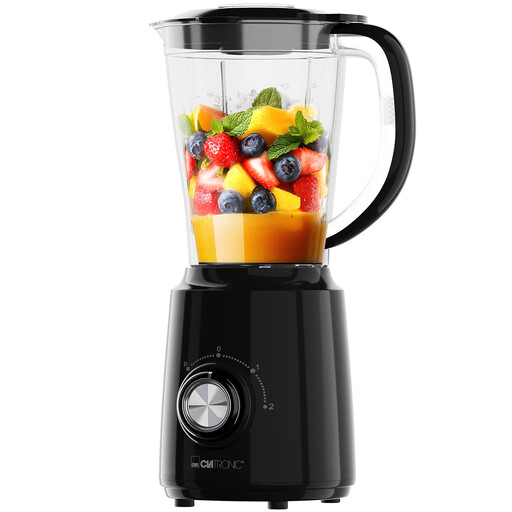
Why this product suits this profile: This countertop blender has a 1.5-litre container, three speed settings plus a pulse/turbo function, and an ice-crush function for a range of household tasks.
The choice is not based on motor power alone: the BPA-free container is removable, the stainless-steel blades can be removed for cleaning, and a safety switch prevents operation without the container in place.
1.5-litre capacity, refill opening in the lid and four-blade stainless-steel assembly.
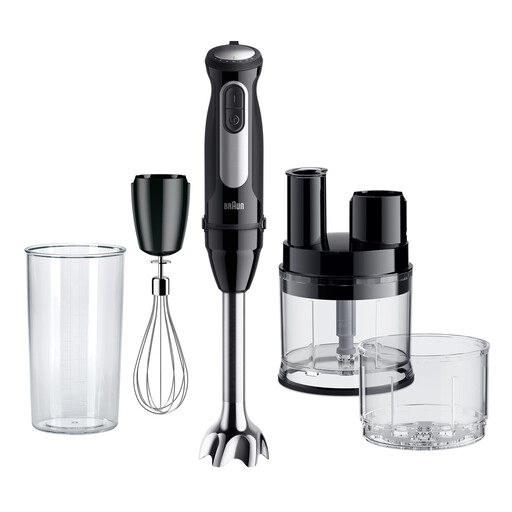
Why this product suits this profile: This hand blender combines 1,000 watts with 25 speed settings, a turbo mode and several attachments for puréeing, slicing, chopping and whipping.
The variable speed control allows more precise adjustment for soft ingredients, dips or coarse chopping. The EasyClick Plus system makes it easier to change attachments.
25 speed settings plus turbo and a BPA-free 600-ml measuring beaker; dishwasher-safe parts according to the product information.
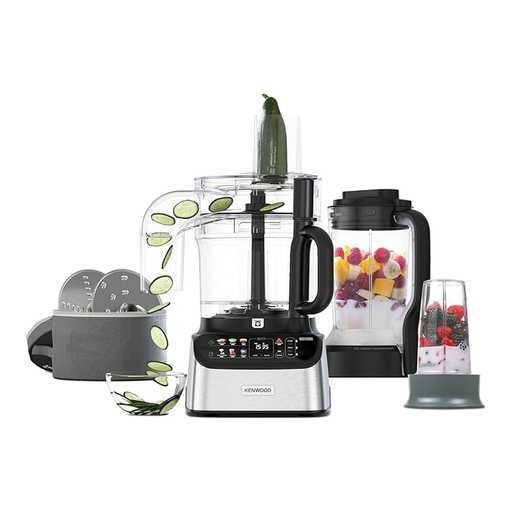
Why this product suits this profile: This appliance combines a 3-litre bowl with a 1.5-litre blender, integrated scales, a timer and accessories for slicing, grating, kneading, puréeing and juicing.
Instead of buying separate appliances for every task, this multifunctional appliance combines several processing functions. The OneTouch programmes and timer provide clear, consistent processes.
1,000 watts, heat-resistant 1.5-litre blender and dishwasher-safe parts according to the product information.
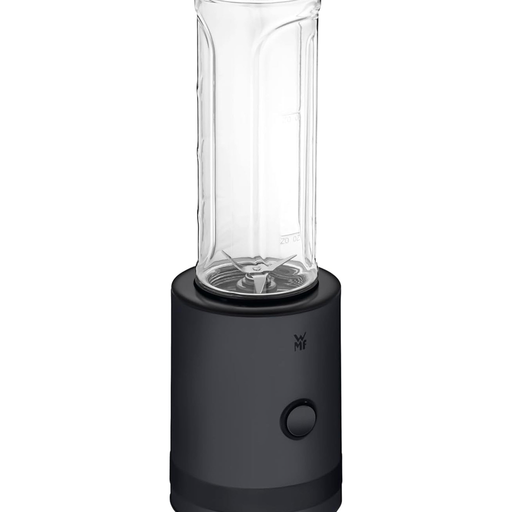
Why this product suits this profile: This compact smoothie maker uses 0.6-litre containers that also serve as drinking bottles and come with leak-proof lids.
The small capacity is clearly intended for individual portions, preventing unrealistic expectations about family-sized quantities. According to the product description, the containers are dishwasher-safe.
Two 0.6-litre containers, 300 watts and a four-part stainless-steel blade assembly according to the product information.
We have compiled a complete, regularly updated list of products that fully meet these strict selection criteria and the safety regulations applicable in the EU.
A hand blender is particularly practical for this, as ingredients can be puréed directly in the pan or a suitable container. When preparing baby food, you should consider small portions, suitable foods and the instructions for the appliance in question. Hot liquids may only be processed if this is expressly permitted in the instruction manual.
For smoothies and soft ingredients, lower power ratings are often sufficient, depending on the quantity. For ice, frozen fruit or frequent chopping, 600 to 1,000 watts may be suitable. When kneading dough, the dough hook, gearing, stability and recommended dough quantity are also important.
There is no reliable way to give a general lifespan. It depends on build quality, frequency of use, cleaning and compliance with the maximum operating time. Avoiding overloading, handling the blades carefully and drying the accessories after use can reduce typical wear risks. You should check the specific warranty and service conditions before buying.