
Lieferung heute & morgen

Qualitätsgarantie

Willkommens-Angebote freischalten: KOSTENLOSE Lieferung | Bis zu 80 % RABATT | Kostenlose 30-Tage-JoyPlus-Testphase
App herunterladen
A kitchen brush should remove food residue without requiring unnecessary amounts of water, cleaning product or effort. However, not every washing-up brush is suitable for every surface. Hard bristles can damage coatings, a short handle places your hands close to hot water, and a brush head that does not dry properly can develop unpleasant odours.
That is why it is worth taking a close look at the material, bristle stiffness, handle design and intended area of use before buying. This helps prevent the kitchen brush from becoming impractical after a short time or proving unsuitable for your pots and pans.
A particularly stiff pot brush is suitable for burnt-on residue on robust stainless steel or cast iron. However, it is not automatically suitable for coated pans, delicate plastic surfaces or glass. Claims such as ‘for all surfaces’ should therefore be checked against the specific safety instructions.
A sustainable bamboo washing-up brush may have a bamboo handle and plant-based fibres. Bamboo should be rinsed after every use and allowed to dry completely in the air. Persistent moisture or standing water can damage the material. Sustainability and care requirements should be considered together when comparing products.
A multi-brush set with different brush heads or materials is practical if you regularly have a variety of cleaning tasks. For everyday washing-up, however, a single washing-up brush is often sufficient. A stainless steel pot cleaner or wire brush is not intended for delicate coatings, even if the product is marketed as versatile.
For plates, cups and ordinary food residue, nylon or soft plastic bristles are often sufficient. A kitchen brush with stiffer plant fibres, such as sisal or Tampico, may be suitable for more stubborn residue on robust surfaces.
Metal bristles or stainless steel spirals are intended for heavy soiling. They can remove rust, baked-on residue and burnt-on food, but carry a higher risk of scratching. Before using the brush for the first time, test it on an inconspicuous area.
A long, ergonomic handle keeps your hands further away from hot water and cleaning products. Short handles, on the other hand, provide more precise pressure, for example when cleaning small saucepan bases or hard-to-reach areas.
The shape is also important. An S-shaped wooden handle can feel comfortable in your hand during longer scrubbing sessions. A compact pot brush is easier to store in drawers or beside a small sink.
Before buying, check whether the kitchen cleaning brush is approved for non-stick coatings, stainless steel, aluminium, glass or ceramic. Some products are explicitly unsuitable for coated cookware.
After use, the bristles and handle should be rinsed. The brush should then be allowed to dry completely. Bamboo products should not be left in water for long periods. If you notice bristle loss, cracks or deformation, replacing the brush is advisable.
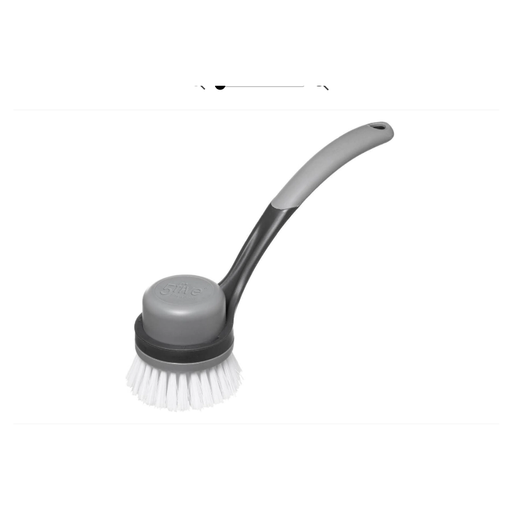
Why this product suits this profile: This compact washing-up brush is designed for everyday cleaning of dishes, pots and pans, and has a practical handle.
The product description mentions soft fibres and use on dried-on residue. This makes its intended everyday use clearer than with a brush marketed as universally suitable.
Practical handle; soft brush fibres according to the product description.
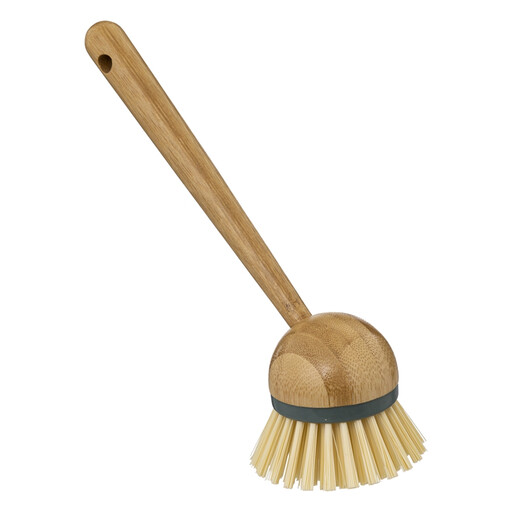
Why this product suits this profile: The bamboo handle and plant-based fibres appeal to households looking for carefully selected materials and reduced plastic use in a kitchen brush.
The care instructions recommend rinsing and air-drying. They also advise against using the brush with harsh chemicals or on hot surfaces.
Bamboo handle; plant-based fibres such as sisal or Tampico according to the product description.
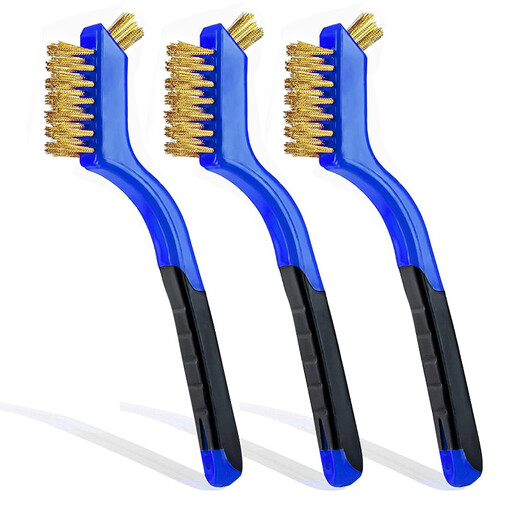
Why this product suits this profile: Three brush materials cover different tasks, such as cleaning robust items, tools or barbecue areas.
The different bristles are separated by hardness and intended use. This means you do not have to treat every surface with a metal scrubbing brush.
Nylon, brass and stainless steel bristles; three brushes in the set according to the product details.
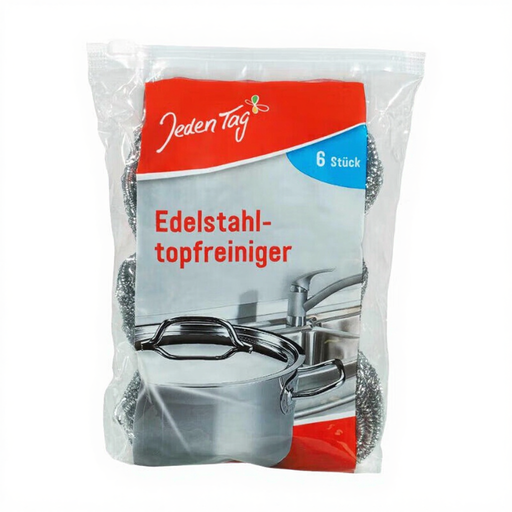
Why this product suits this profile: This set of six stainless steel spirals is designed for robust pots, pans and kitchen utensils with heavy, baked-on residue.
The product details explicitly advise checking delicate surfaces beforehand and avoiding excessive pressure. This clearly distinguishes its intended use from that of a standard washing-up brush.
Six pieces per pack; made from 100% stainless steel according to the product description.
We have put together a complete, regularly updated list of products that fully meet these strict selection criteria and the safety regulations applicable in the EU.
Its lifespan depends on how often it is used, the material, cleaning products and drying conditions. Regular visual checks are more useful than applying a general time frame. Loose bristles, cracks, deformation or a persistent odour are signs that the brush should be replaced.
This depends on the product. For example, the Dishwashing Brush 6x7.8 cm is stated to be unsuitable for dishwashers. Bamboo handles should generally not be exposed to high levels of moisture or standing water for extended periods. Always follow the relevant care instructions.
Depending on the surface, grease and burnt-on residue can be tackled with a stiff kitchen cleaning brush, a suitable pot cleaner or a stainless steel spiral. With coated pans, avoid metal and soak the pan first. A washing-up sponge or soft brush is usually gentler on the material.