
Lieferung heute & morgen

Qualitätsgarantie

Willkommens-Angebote freischalten: KOSTENLOSE Lieferung | Bis zu 80 % RABATT | Kostenlose 30-Tage-JoyPlus-Testphase
App herunterladen
A chopping board is an everyday kitchen essential. Yet eye-catching product claims, unsuitable dimensions and incorrect care instructions can all lead to a disappointing purchase. When choosing a kitchen chopping board, make sure the material, cleaning requirements and intended use all suit your needs – whether you’re preparing vegetables, bread, meat or cheese.
An antibacterial chopping board might sound like an easy way to maintain hygiene. But the label alone doesn’t explain the conditions under which this property applies. Residue, moisture and inadequate cleaning can still affect how hygienically the board can be used.
That’s why it’s important to choose a board with:
Replace the board if it has deep grooves, heavy discolouration, mould or cracks.
A large chopping board gives you more room to work, but it also needs a sufficiently large worktop and a suitable place for storage. A 50 × 35 cm bamboo board can be handy when you have a lot to prepare, but it’s heavier to move than a compact kitchen chopping board.
Before you buy, check:
A dishwasher-safe chopping board is a convenient choice for many households. Wood and bamboo, however, usually shouldn’t go in the dishwasher: heat, water and prolonged exposure to moisture can cause them to warp or crack. So ‘easy to clean’ doesn’t automatically mean ‘dishwasher-safe’.
A wooden chopping board made from beech or walnut has a natural surface and can last a long time with proper care. The Suncha beech wood board measures 34 × 24 × 2.2 cm and is designed for slicing, chopping and dicing. According to the product information, it should be washed by hand with warm water and soap, dried straight away and occasionally treated with food-safe mineral oil.
A bamboo chopping board is often sturdy and relatively hard. This can help larger models stay firmly in place. Bamboo shouldn’t be left to soak or cleaned in the dishwasher, though. When choosing a board, the care instructions matter more than general claims such as ‘easy to care for’ or ‘especially hygienic’.
Depending on their design, plastic, stainless steel and combination-material boards can be easier to clean. A double-sided chopping board can also provide separate surfaces for different foods. The key is to check whether the manufacturer explicitly states that it’s dishwasher-safe.
For smaller kitchen tasks, a board measuring around 30 × 20 cm to 36 × 25 cm is often enough. For families, preparing dough or working with larger quantities, models from around 40 × 30 cm are a better choice. Greater thickness can make a board sturdier, but it also adds weight and takes up more space.
A chopping board with a handle is easier to carry or hang up. Make sure the handle is designed in a way that doesn’t unnecessarily reduce the usable cutting area.
A chopping board with a juice groove can catch liquid from fruit, vegetables or meat around the edge. The groove doesn’t replace thorough cleaning, though. A double-sided chopping board can make it easier to keep ingredients separate, as long as you keep both sides clean.
A chopping board set with several sizes is useful if you often prepare different ingredients at the same time. Check whether the boards really serve different purposes or simply include several of the same size.
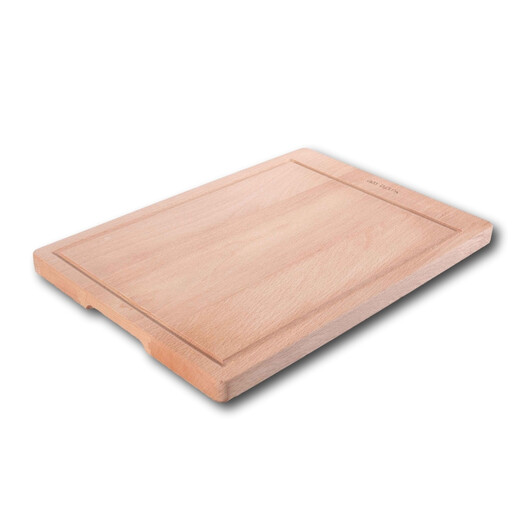
Why it suits this profile: Its compact size makes it a good fit for everyday food preparation in smaller kitchens and for anyone looking for a traditional wooden chopping board.
The precise dimensions give you a clear idea of how much space it needs. The care instructions explicitly recommend hand-washing and drying it straight away.
Beech wood, 34 × 24 × 2.2 cm, suitable for slicing, chopping and dicing.
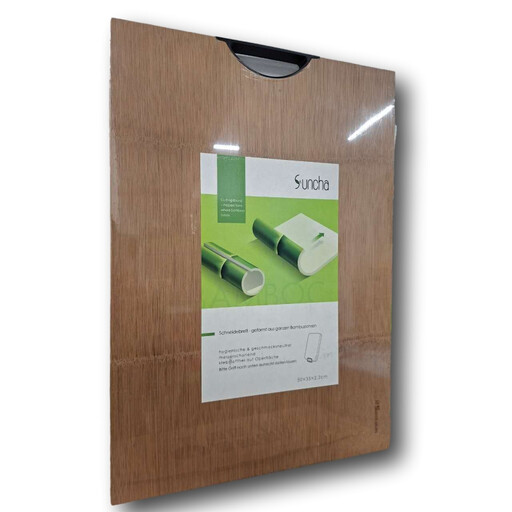
Why it suits this profile: Its solid bamboo construction and generous work surface make it a good choice for households that regularly prepare large quantities of ingredients.
The dimensions and 1.99 kg weight show that you’ll need enough worktop and storage space before you buy. The hand-washing instructions are clearly stated.
50 × 35 × 2.6 cm, integrated handle, designed for chopping, working with dough and serving.
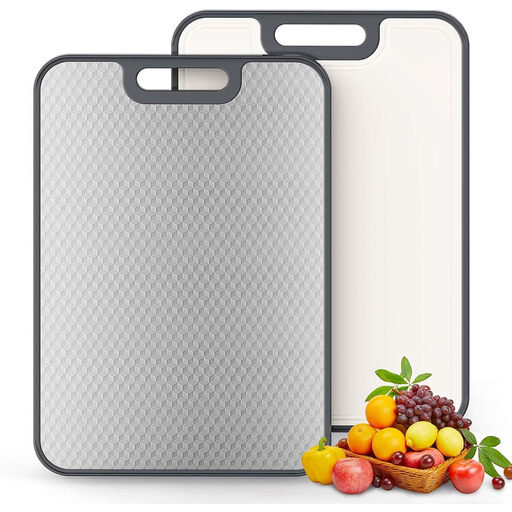
Why it suits this profile: Its stainless steel and wheat straw PP construction, combined with a double-sided design, may appeal if you want to keep different types of food separate.
The two sides make it easy to assign one to meat and the other to vegetables. According to the product information, this model is dishwasher-safe; check the manufacturer’s specific instructions before use.
17 × 12 inches, stainless steel and wheat straw PP, double-sided design and stated dishwasher-safe suitability.
We’ve put together a complete, regularly updated list of products that meet these strict selection criteria and the safety regulations in force in the EU.
Three habits are key to getting the longest possible life from your board:
Wooden boards can last a long time, depending on how they’re used and cared for. It’s not possible to give a reliable fixed lifespan, though, as the intensity of use, exposure to moisture, cleaning method and material thickness all make a difference.
A double-sided chopping board or two separate boards make it easier to keep raw animal products apart from vegetables. After use, both sides should be cleaned thoroughly and dried.
Generally, no. Heat and prolonged exposure to moisture can cause wood and bamboo to crack or warp. Always follow the specific care instructions for the product.
Replace a board if its surface has deep grooves, cracks, splinters, mould or permanent warping. Strong smells that remain even after cleaning may also be a sign that it’s time for a new one.