
Lieferung heute & morgen

Qualitätsgarantie

Willkommens-Angebote freischalten: KOSTENLOSE Lieferung | Bis zu 80 % RABATT | Kostenlose 30-Tage-JoyPlus-Testphase
App herunterladen
A kitchen chopping board has to cope with a lot every day: chopping vegetables, slicing bread, preparing meat or cutting up fruit for children and babies. Yet many shoppers choose mainly by colour and price. This can lead to common buying mistakes: the board is too small, slips while you’re chopping or is difficult to care for properly because of its material.
Check these three common pitfalls before you buy:
A wooden chopping board made from walnut or solid wood provides a firm work surface and can also be used as a serving board. However, wood shouldn’t be left in water for long and generally shouldn’t go in the dishwasher. After washing, stand it upright to dry completely. Replace it if it develops cracks, severe warping or splinters.
A bamboo chopping board is often relatively lightweight and can be used for vegetables, bread and general food preparation. If a bamboo model carries an FSC label, check the care instructions too: it may need to be hand-washed and oiled occasionally. The certification describes where the material comes from; it doesn’t automatically mean the board is easy to care for.
A stainless steel chopping board is non-porous and less likely to absorb smells or liquids than materials with an open-pore surface. It can usually be cleaned with water and washing-up liquid. However, stainless steel can be harder on delicate knife blades. With a board made from two materials, a softer side can be useful for fruit and vegetables.
For a chopping board made from wheat straw fibre and PP, check the specific information provided by the manufacturer. Claims such as “food-safe” or “BPA-free” should come from the product description rather than being assumed as a matter of course.
For many households, a board measuring between around 30 × 20 cm and 43 × 28 cm is a practical starting point. If you often prepare several ingredients at once, you may prefer a large chopping board measuring around 36 cm or more in length. Check beforehand that the board will fit in your sink and that you have somewhere to dry it.
A chopping board with a handle is easier to move from the worktop to the table and can be hung up to save space. However, a handle doesn’t replace a non-slip base. On a smooth worktop, a damp cloth or a suitable non-slip mat can help keep the board steady.
It’s a good idea to use separate surfaces for raw meat, fish and ready-to-eat foods. A double-sided chopping board can help you keep them separate by assigning each side a clear purpose. It’s even more important to clean and dry both sides thoroughly after use.
Also look out for:
For parents preparing baby food or baby-led weaning meals, a separate baby chopping board or a small, clearly designated set is a sensible choice. Keep sharp accessories out of children’s reach.
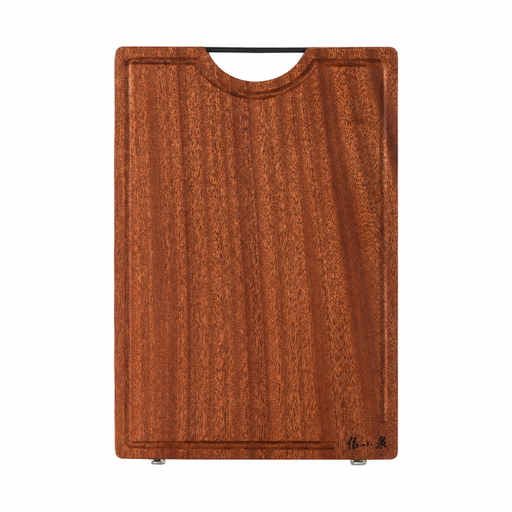
Why it suits this type of buyer: Measuring 400 × 280 mm, this rectangular wooden board gives you a clearly defined work surface for everyday kitchen tasks. It’s a good choice if you’re looking for a single board without extra accessories.
The exact dimensions make it easier to choose the right size, rather than relying on product photos alone. Follow the care instructions and avoid soaking it or putting it in the dishwasher.
Solid wood and a rectangular 400 × 280 mm surface; suitable for general food preparation.
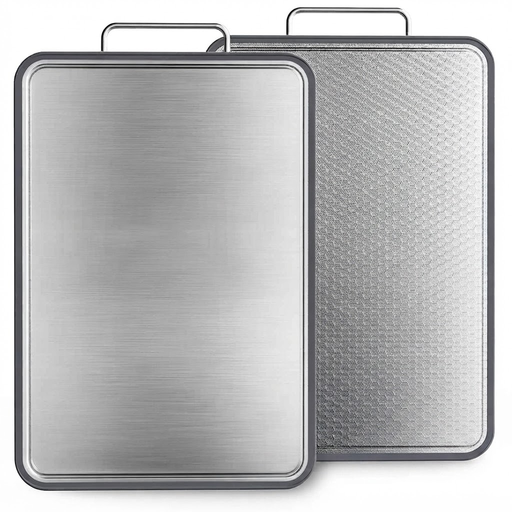
Why it suits this type of buyer: This stainless steel board measures 435 × 281 × 10 mm and has a juice groove on both sides, as well as a handle. It’s aimed at households that prioritise easy cleaning and keeping different materials separate.
The product description specifies a non-porous stainless steel surface, cleaning with water and washing-up liquid, and juice grooves on both sides. This gives you clear details to assess instead of relying on broad assumptions about hygiene.
Stainless steel on both sides, a juice groove on each side and an integrated handle for carrying or hanging.
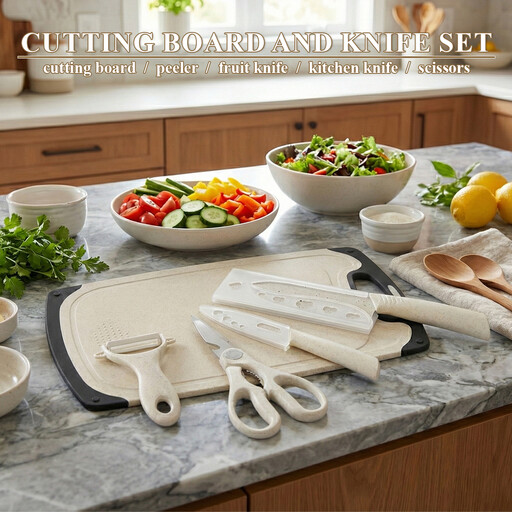
Why it suits this type of buyer: This set combines a compact board with child-friendly kitchen accessories, including knives, safety scissors, a peeler and protective covers. It’s designed for preparing small portions for babies and toddlers.
Its compact size is handy for portioning soft foods. You’ll still need to use the protective covers and store the accessories out of children’s reach.
Five food-preparation items; the product description states that the materials are BPA-free and that the non-absorbent surface is easy to clean.
We’ve put together a complete, regularly updated list of products that meet these strict selection criteria and fully comply with the safety regulations in force in the EU.
For better separation, you can use a double-sided chopping board or two separate boards. The key is not to prepare raw foods on the same side as ready-to-eat ingredients without thoroughly cleaning the surface in between.
Its lifespan depends on the material, how often you use it and how well you care for it. Store wooden and bamboo boards in a dry place, and treat them with a suitable food-safe oil when needed. Whatever the material, replace a board if it develops deep cracks, splinters, severe warping or a persistent smell.
A juice groove can catch liquid from meat, tomatoes or very juicy fruit. Before buying, check the overall dimensions and the width of the usable chopping surface. A groove isn’t essential, though, for dry ingredients such as bread or herbs.