
Lieferung heute & morgen

Qualitätsgarantie

Willkommens-Angebote freischalten: KOSTENLOSE Lieferung | Bis zu 80 % RABATT | Kostenlose 30-Tage-JoyPlus-Testphase
App herunterladen
A kitchen chopping board has to stand up to a lot of daily use: chopping vegetables, slicing bread, preparing meat or rolling out dough. Yet when buying one, people often focus only on the surface and design. The real drawbacks often become apparent later – such as warping, a slippery underside or difficult cleaning.
This guide from the Joybuy Product Recommendation Officer will help you see past the marketing claims and choose a kitchen board that suits your household.
An antibacterial chopping board is no substitute for thorough cleaning or keeping different foods separate. When you see claims such as “antibacterial” or “hygienic”, check what they are based on and whether specific details about the material or testing are provided. What matters most is a smooth, undamaged surface and the ability to dry the board completely after use.
A large chopping board gives you plenty of room, but it also needs enough worktop and storage space. A 50 × 35 cm board can be useful for families or more extensive food preparation, but it is harder to move and may not fit every sink. Before buying, measure your worktop, sink width and storage space.
A juice groove can catch liquid when you are cutting fruit, vegetables or a roast. However, it reduces the usable flat surface and makes working with dough more difficult. A chopping board with a handle is easier to carry or hang up, but the handle can take up extra space while you are chopping. Choose features that suit the way you plan to use the board.
A bamboo chopping board is relatively lightweight and stable, and is often chosen for its smooth surface. Claims such as “made from one piece” or “glue-free” should be stated clearly in the product description. Bamboo should generally be washed gently by hand and not left in water for long periods.
A wooden chopping board made from beech, walnut or acacia can last for a long time with the right care. However, wood is sensitive to moisture, heat and harsh cleaning products. Cracks, severe warping or splinters are clear signs that you should stop using the board.
Stainless steel is resistant to moisture and easy to wipe clean. However, a hard metal surface may be less kind to your knives. A double-sided model with a plastic or fibre-composite side lets you use each side for a different purpose. So, check the specific materials on both sides when comparing double-sided chopping boards.
Boards measuring around 30 × 24 cm to 45 × 30 cm are versatile options for everyday kitchen tasks. If you regularly prepare large quantities, you could consider a 45 × 32 cm or 50 × 35 cm board.
Thickness affects both stability and weight. Boards around 18 to 26 mm thick are generally more stable on the worktop than very thin chopping mats. However, thicker boards are heavier. If you are choosing a butcher’s block for heavier-duty chopping, look for a non-slip base and a sturdy construction.
Check that the care instructions are clear before you buy. Many wooden and bamboo products should be:
Products intended for food contact should also include details of the materials and the manufacturer’s safety instructions. A general marketing claim is no substitute for specific product information.
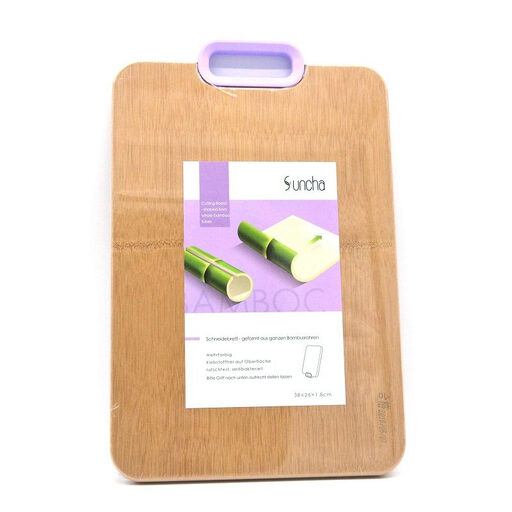
Why this product suits this profile: Its medium size is well suited to everyday chopping without taking up too much space. The integrated handle makes it easier to carry and hang up.
The dimensions and thickness are clearly stated, so you can check before buying whether the board will fit your worktop and storage space.
Bamboo construction, 18 mm thickness and an integrated handle; hand-washing is recommended.

Why this product suits this profile: Its generous size is suitable for both food preparation and serving. The juice groove is designed to catch liquid when cutting or carving.
The double-sided design lets you use each side separately. The care instructions clearly state that it should be hand-washed.
45 × 30 × 1.9 cm, an integrated juice groove and a reversible surface; can also be used as a serving board.
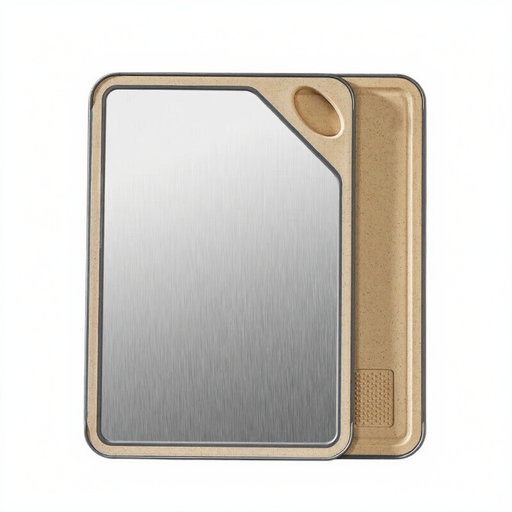
Why this product suits this profile: The two different sides let you use the board flexibly with different foods. Its size also makes it suitable for smaller kitchens.
The materials used on each side are clearly described, helping you avoid using a hard surface for every chopping task.
304 stainless steel on one side, a wheat straw fibre and PP composite on the other, plus a hanging hole.
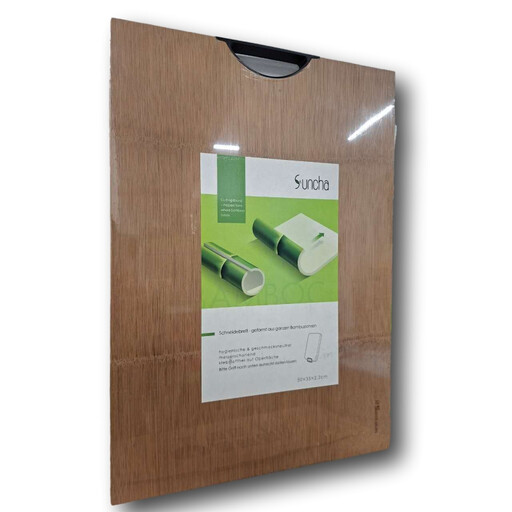
Why this product suits this profile: The large, 26 mm-thick surface gives you room to prepare several ingredients. The product description also recommends it for preparing dough and pasta.
The dimensions and weight of 1.99 kg are stated, so you can check in advance whether it will be practical to carry and store at home.
Single-layer bamboo construction, a 50 × 35 cm surface and an integrated handle; not suitable for the dishwasher.
We’ve put together a complete, regularly updated list of products that meet these strict selection criteria and fully comply with the safety regulations applicable in the EU.
A wooden or bamboo board should be cleaned and dried completely after every use. It is a good idea to use a separate side or board for raw animal products. A bread board can be reserved for baked goods, while a serving board should ideally be kept away from strongly coloured or very wet ingredients if its surface is delicate.
Replace the board if you notice cracks, splinters, deep cuts, signs of mould or persistent warping. A chopping mat made from plastic or composite material may be easier to clean, but it should also be replaced if deep grooves develop.
It depends on how you plan to use it. Bamboo and wood are suitable for chopping and, in some cases, serving, but they need to be washed by hand and dried thoroughly. Stainless steel is more resistant to moisture; if you chop frequently, consider how it may affect your knife blade. A double-sided model can meet different needs.
For one person or a small kitchen, around 30 × 24 cm is often enough. Families and frequent users may prefer a board 40 to 50 cm long, as long as their worktop, sink and storage space can accommodate it. A large chopping board should also be thick enough to sit securely.
There is no reliable way to give a set lifespan. It depends on the thickness of the material, how often you use it, and how you clean and care for it. Drying it regularly, cleaning it gently and using food-safe care oil on suitable types of wood can help keep it in good condition. Stop using a wooden chopping board if it develops cracks or splinters.