
Lieferung heute & morgen

Qualitätsgarantie

Willkommens-Angebote freischalten: KOSTENLOSE Lieferung | Bis zu 80 % RABATT | Kostenlose 30-Tage-JoyPlus-Testphase
App herunterladen
A kitchen chopping board needs to do more than simply hold ingredients while you prepare them. It should sit securely, offer enough space, be gentle on your knife blade and be easy to clean in a way that suits its material. Models also vary considerably in their wood type, thickness, handle, surface and care requirements.
Many disappointing purchases come down to three common marketing traps:
A wooden chopping board offers a grippy surface and, depending on its design, can be used for both chopping and serving. Beech is a popular choice for everyday use. The Suncha Beech Wood Cutting Board measures 34 × 24 × 2.2 cm. According to the product information, it should be cleaned with warm water and mild washing-up liquid, then dried straight away. The manufacturer advises against soaking it or putting it in the dishwasher.
A bamboo chopping board is often relatively lightweight and stable. The Suncha Solid Bamboo Cutting Board with handle measures 50 × 35 × 2.6 cm and weighs 1.99 kg, according to the product description. Its generous surface makes it a good choice for larger food prep jobs or working with dough. It should also be washed by hand.
With a walnut chopping board, the attractive grain and potential to use it as a serving board are just as important as its practical use. Care still matters: don’t leave wood wet for long periods, and replace the board if it develops significant cracks, splinters or warping.
The right size depends on your kitchen and the portions you usually prepare:
Thickness affects both weight and stability. Thin boards are easier to store, but may move around more depending on the material. Thicker models tend to sit more firmly, but take up more room. Before buying, check the internal dimensions of your drawers, kitchen cupboards and sink.
A chopping board with a handle is easier to carry from the worktop to the dining table and can be hung up to save space. However, a long handle takes up extra room. If you’re considering a round chopping board, also check that it sits securely on your worktop and offers enough usable space for long ingredients.
A double-sided chopping board gives you two clearly separate surfaces, for example, one for meat and one for vegetables. This can help you avoid using the same surface for different food groups one after the other. Make sure you clean both sides thoroughly and dry them completely after use.
The term antibacterial chopping board should be viewed in context: a promoted material or surface property is no substitute for good kitchen hygiene. Models made from stainless steel, plastic or wheat-straw fibre may be easier to care for than wooden boards, especially if the manufacturer specifically states that they are dishwasher-safe.
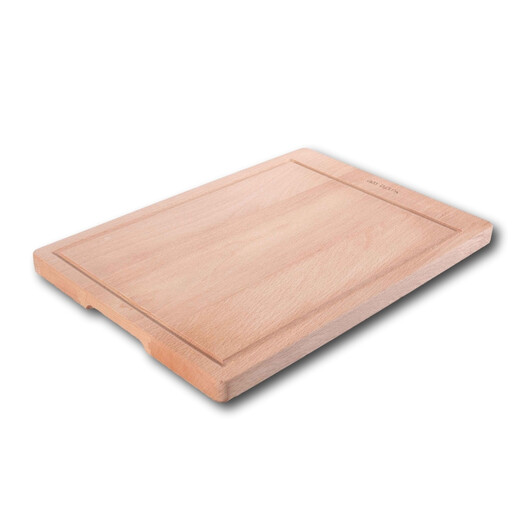
Why this product suits you: Its medium size is ideal for everyday chopping and takes up less storage space than a large board.
The precise dimensions make it easier to check whether the board will suit your kitchen. The care instructions specifically rule out the dishwasher and prolonged soaking.
Beech wood, 2.2 cm thickness and dimensions of 34 × 24 cm.
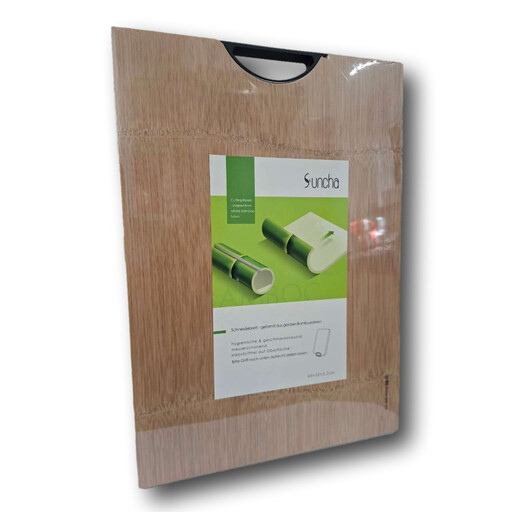
Why this product suits you: The 26 mm-thick bamboo construction offers plenty of room for larger prep jobs and can also be used for serving.
The product information clearly states the dimensions, weight and hand-wash instructions. This helps you plan for the extra space and care it requires before buying.
45 × 32 cm working surface, 26 mm thickness and an integrated handle.
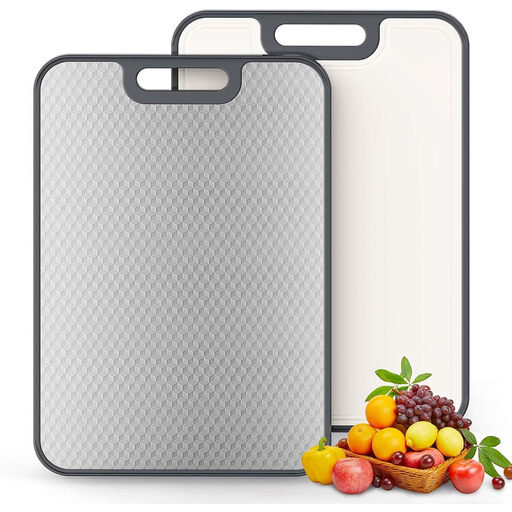
Why this product suits you: Its separate stainless steel and wheat-straw fibre PP sides are a good choice for households that want to keep meat and vegetables separate during food preparation.
The care instructions allow for hand washing or dishwasher cleaning. This helps avoid the mistaken assumption that wooden boards can always be put in the dishwasher.
Double-sided design, 17 × 12-inch format and, according to the product information, dishwasher-safe.
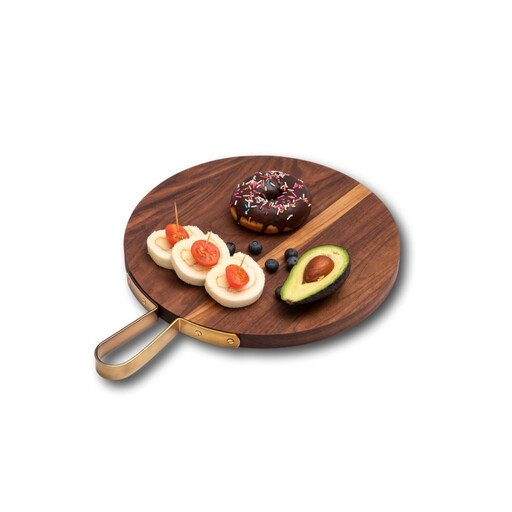
Why this product suits you: The round design, with a 31 cm diameter, is ideal for serving and for kitchens where a handle is useful for carrying or hanging the board up.
The diameter is clearly stated. The care instructions make clear that the walnut wood should not be soaked or washed in the dishwasher.
31 cm diameter, 20 mm thickness and a long integrated handle.
We’ve put together a complete, regularly updated list of products that meet these strict selection criteria and the applicable EU safety regulations.
When choosing a chopping board set or a single board, make sure its care requirements suit your kitchen routine from the outset:
It depends on how you plan to use it. Wood and bamboo offer a classic surface and can also be used for serving, but they need to be washed by hand. Stainless steel or plastic combinations are worth considering if easy cleaning and separate sides are important to you. Always check the specific manufacturer’s instructions rather than relying on the material name alone.
For small kitchens, a board of around 30 × 20 cm is often enough. A medium size of around 34 × 24 cm is versatile. If you regularly prepare large quantities, bread or dough, you may prefer a large chopping board of around 45 × 32 cm or more. Measure your worktop, sink and storage space first.
There’s no set lifespan that applies to every board. It depends on the material, how often you use it, the pressure from your knives and how well you care for it. Storing it dry, cleaning it appropriately and avoiding unnecessary heat or prolonged soaking can help it last longer. Don’t continue using a board if it shows visible signs of damage.