
Lieferung heute & morgen

Qualitätsgarantie

Willkommens-Angebote freischalten: KOSTENLOSE Lieferung | Bis zu 80 % RABATT | Kostenlose 30-Tage-JoyPlus-Testphase
App herunterladen
A kitchen cleaver can be useful when cutting up meat, vegetables or certain hard ingredients. However, not every chopping knife is suitable for every task. A lightweight chopper knife for vegetables works differently from a heavy meat cleaver for portioning. If you focus only on striking blade styling or claims such as “extra sharp”, you can easily overlook important details.
Many chopping knives look sturdy, but are primarily designed for vegetables, herbs and boneless meat. A thinly ground chef’s knife can be damaged by hard materials. Even with a meat and bone cleaver, the product details should clearly state which types of bones and ingredients it is intended for.
Frozen food, very hard bones or levering with the blade will generally increase the risk of chips. If there is no clear information about the intended use, it is best to exercise caution.
A forged kitchen knife can offer a solid construction. However, the type of steel, blade thickness, grind, handle attachment and care instructions are also important when choosing a knife. A stainless steel kitchen knife is more corrosion-resistant than many unprotected carbon steels, but it still needs to be cleaned and dried after use.
Extra weight can help with certain chopping movements, but it also places more strain on the wrist and forearm. For vegetables and boneless meat, a well-balanced, easy-to-control model is often more practical than an especially heavy cleaver. Therefore, pay attention to the actual dimensions and, where stated, the weight.
For many households, blades measuring around 17 to 20 cm are a good starting point. They provide enough surface area for cutting and chopping without becoming unnecessarily cumbersome. Longer models measuring around 28 to 31 cm can be useful when cutting up larger pieces, but they need more space on the chopping board.
A broad, relatively tall blade is suitable for straight chopping and can be used to scoop up chopped vegetables. A classic chef’s knife, on the other hand, is more versatile for rocking, slicing and finely chopping ingredients. A rocking knife serves a specific purpose and is not a substitute for a kitchen cleaver when cutting up larger pieces of meat.
For a stainless steel kitchen knife, information about the type of steel used is helpful. The COOKER KING model, for example, is listed as being made from 7Cr17MoV stainless steel with a stated hardness of 58 ± 2 HRC. Values such as these provide a technical reference point, but they are not the sole indication of actual cutting performance in everyday use.
A straight grind makes controlled cutting easier. The ZWILLING Professional S Meat Knife is listed with a 20 cm forged stainless steel blade and FRIODUR ice hardening. At the same time, the product description expressly states that the knife should not be used for bones, frozen food or other hard objects.
The handle should feel secure in your hand, even with clean, dry hands. A full tang or sturdy riveted construction can offer design advantages, provided this is stated in the product details. Balance between the handle and blade is also important during longer cutting sessions.
Check the cleaning instructions before buying. The Victorinox Grand Maître Chopper/Cleaver is described as dishwasher-safe. The ZWILLING Professional S Meat Knife and the ZWILLING PRO LE BLANC Meat Knife, on the other hand, are intended to be washed by hand. Drying the knife immediately helps reduce exposure to water and residue on the blade and handle.
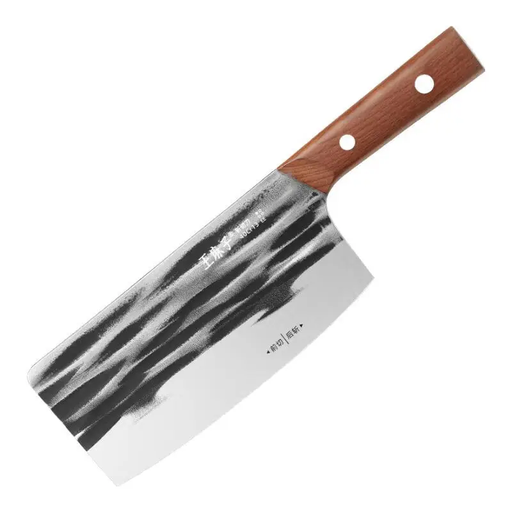
Why this product suits this profile: Described as a stainless steel household kitchen knife, this model is aimed at buyers looking for a simple chopping knife for everyday food preparation.
The stainless steel specification is clearer than a purely promotional claim about sharpness. Check the specific manufacturer’s information before using it on bones.
Household design; stainless steel blade according to the product name; intended for basic cutting and chopping tasks.
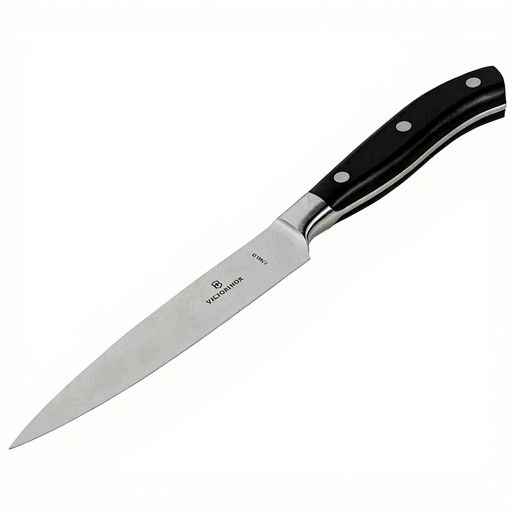
Why this product suits this profile: The product details specify a 15 cm blade, a weight of 198 g, a straight grind and a forged construction. This makes it suitable for controlled cutting tasks in domestic or professional kitchens.
The specific dimensions and weight make it easier to assess how the knife will handle. It is not automatically intended for hard bones.
Forged construction; 15 cm blade; dishwasher-safe according to the product information.
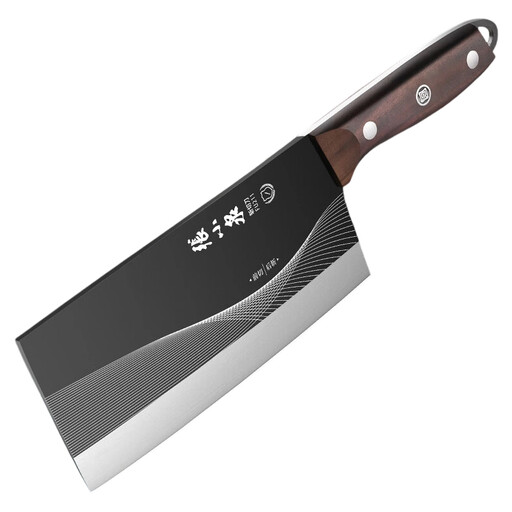
Why this product suits this profile: Its stated length of 313 mm and the name Bone Cutting Knife will appeal to buyers specifically looking for a meat cleaver for particular cutting tasks.
The specialist intended use is clear from the product name. Before using it, check the suitable types of bone, blade thickness and safety information.
Stainless steel according to the product name; 313 mm design; explicitly described as a bone-cutting knife.
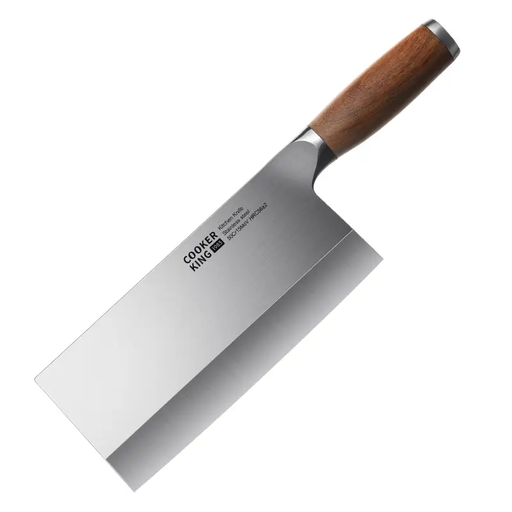
Why this product suits this profile: This model is described as having a 7-inch blade, 7Cr17MoV steel, a 15° double bevel and a pakkawood handle. It is aimed at users who want to handle vegetables, meat and other kitchen tasks with a robust kitchen knife.
The steel, hardness rating, grind and handle material are all specified clearly. The description lists intended uses, but this does not replace checking whether it is suitable for the particular bones you plan to cut.
Forged 7Cr17MoV stainless steel; 15° double bevel; triple-riveted full-tang construction according to the product description.
We have put together a complete, regularly updated list of products that fully meet these strict selection criteria and the safety regulations applicable in the EU.
This depends on its construction and the manufacturer’s specifications. A model described as a Bone Cutting Knife may be intended for particular cutting tasks. A standard chef’s knife or meat knife, on the other hand, is generally designed for boneless meat. Do not use the blade on hard materials unless the manufacturer expressly permits it.
The lifespan of the edge depends on the steel, grind, use, chopping board and care. Regular honing with a sharpening steel or whetstone can help maintain the knife’s working sharpness, provided the method is suitable for the particular grind. Hard surfaces, bones and incorrect levering movements can damage the edge much more quickly.
No. Weight can help when chopping, but it also makes the knife harder to control and can cause fatigue during prolonged use. The key factors are a suitable intended use, a secure grip, balanced handling and the stated blade dimensions. For vegetables and boneless meat, a well-controlled model that is not excessively heavy will often be sufficient.