
Lieferung heute & morgen

Qualitätsgarantie

Willkommens-Angebote freischalten: KOSTENLOSE Lieferung | Bis zu 80 % RABATT | Kostenlose 30-Tage-JoyPlus-Testphase
App herunterladen
A kitchen cleaver can be useful for chopping vegetables, herbs and meat. At the same time, cleavers, chopper knives and classic meat cleavers differ considerably in terms of blade geometry, weight and intended use. If you focus only on attention-grabbing descriptions such as “extra sharp” or “professional”, you may end up buying a knife that is not suited to your kitchen.
These three purchasing mistakes are particularly common:
A 190 mm cleaver offers a well-balanced size for many households. The blade is long enough to handle larger pieces of vegetables or portions of meat in a single stroke, while generally remaining more compact than a large cleaver. Models measuring 170 mm are suitable for users who value manoeuvrability.
Longer options, such as a 280 mm chopper or a 313 mm bone cleaver, can be useful for larger ingredients and specific tasks. Before buying, you should check:
A Chinese cleaver often has a broad, rectangular blade. This shape can be useful for picking up chopped ingredients. However, it is not automatically suitable for working with bones.
With a stainless steel cleaver, easy cleaning and resistance to moisture are the main benefits. However, stainless steel is not one single material. Specifications such as “400 Stainless Steel”, “7Cr17MoV” or “Special Steel” should ideally be considered alongside other product information.
A forged cleaver is made from a shaped piece of steel. Some models also specify hardness values, a full tang or a particular heat treatment. These details can provide an indication of the construction and durability, but they do not replace assessing whether the knife is suitable for the intended use.
The grind is also important. A thin, precisely ground cutting edge can be suitable for vegetables and boneless meat. For hard materials, however, the blade must be explicitly designed for that purpose. A meat cleaver for steaks or roasts is not the same as a bone cleaver.
A safe handle should sit securely in your hand, even when your hands are dry. Look for:
Most high-quality kitchen knives should be cleaned by hand and dried immediately. Even if a product is described as rust-resistant, salt, acids, moisture and the dishwasher can damage the surface or handle. A blunt blade also requires more force and can slip more easily. Sharpening with a honing steel or whetstone should be suitable for the particular cutting-edge geometry.
The following models meet different requirements. The information is based on the product details currently available. Before buying, also check the dimensions, weight, items included and latest care instructions on the product page.

Why this product suits this profile: This model is described as a household knife for cutting meat and vegetables, making it suitable for shoppers looking for a versatile kitchen cleaver for everyday preparation tasks.
The product name limits its intended use to meat and vegetables. It should therefore not be used on bones or frozen food unless the manufacturer specifically states that it is suitable.
Positioned as a household knife for cutting and chopping tasks; manufacturer and EU responsible-person details are listed on the product page.
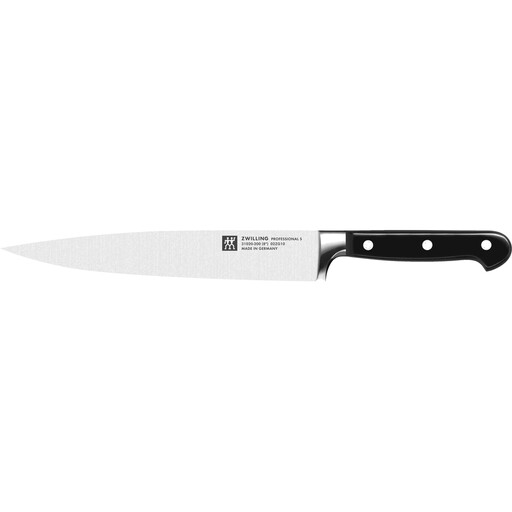
Why this product suits this profile: According to the product details, this 20 cm meat cleaver features a forged stainless steel blade, FRIODUR ice hardening, a finger guard and a three-rivet handle.
The technical specifications state the blade length, material, weight and care instructions. This reduces the uncertainty created by vague descriptions such as “professional”.
20 cm blade, 213 g weight, forged stainless steel and integrated finger guard; hand washing is expressly recommended.
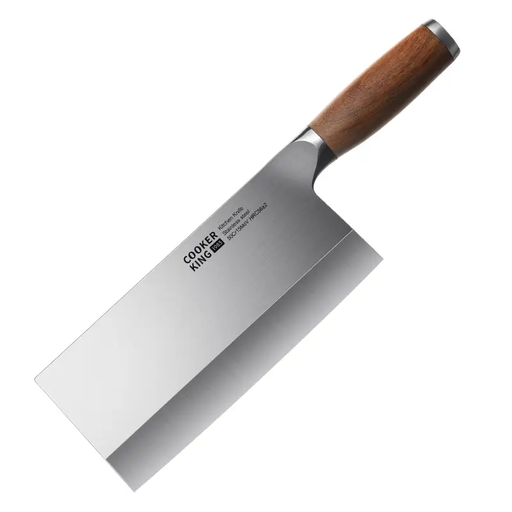
Why this product suits this profile: This model is intended for users looking for a heavier kitchen cleaver for preparing meat and vegetables. The specifications include 7Cr17MoV stainless steel, 58 ± 2 HRC, full-tang construction and a pakkawood handle.
The product details provide specific material and hardness information rather than making only general sharpness claims. Even so, for very hard bones, the rule remains: use it only if the manufacturer expressly approves it for this purpose.
The specifications include a 15° double bevel, full tang with three rivets and a moisture-resistant pakkawood handle.
We have put together a complete, regularly updated list of products that fully meet these strict selection criteria and the safety regulations applicable in the EU.
A cleaver should be used with controlled movements on a stable, non-slip chopping board. Keep your free hand outside the cutting line. Cut with a straight, controlled movement and avoid twisting sideways unless the blade is designed for this.
For a long service life, we recommend that you:
For this combination, a medium-sized model measuring approximately 170 to 200 mm is usually suitable. A suitable blade thickness, a secure handle and clear manufacturer information about the intended use are key. A cleaver for meat and vegetables is not automatically a bone cleaver.
Edge retention depends on the steel, hardness, cutting angle, use and chopping surface. Salt, acids, hard boards and improper cleaning can put additional strain on the blade. Regular sharpening using a method suitable for the material helps maintain cutting performance; without consistent conditions of use, it is not possible to provide a reliable specific service life.
Not necessarily. Some product pages expressly recommend hand washing, as heat, detergents and contact with other items can put strain on the blade and handle. The care instructions provided by the individual manufacturer are decisive. After washing, the knife should be dried immediately and stored safely.