
Lieferung heute & morgen

Qualitätsgarantie

Willkommens-Angebote freischalten: KOSTENLOSE Lieferung | Bis zu 80 % RABATT | Kostenlose 30-Tage-JoyPlus-Testphase
App herunterladen
A kitchen cleaver should make quick work of chopping vegetables, mincing herbs and cutting meat. But kitchen cleavers, meat cleavers and vegetable cleavers can differ considerably in blade thickness, weight and intended use. If you focus only on a shiny finish or claims such as “professional”, you could end up with a knife that quickly proves impractical.
A 190 mm cleaver gives you a good working surface for vegetables, herbs and boneless meat. A longer blade can be useful for larger ingredients, but it takes up more space and can feel less manageable for fine cutting. A more compact model is often easier to control in a small kitchen or for occasional use.
Stainless steel can be corrosion-resistant and easy to care for. However, the precise steel grade, blade hardness, construction and edge geometry are still important. A product description that says “stainless steel cleaver” is no substitute for details on cleaning, sharpening and intended use. Most importantly, not every stainless steel knife is designed for bones, frozen food or hard skins.
A heavy meat cleaver can transfer extra force to the edge when chopping firm ingredients. However, a heavier knife can put more strain on your hand and wrist during longer periods of food preparation. A good balance between the blade, handle and centre of gravity is therefore more important than simply choosing the heaviest knife.
Blades between around 150 and 200 mm are often suitable for everyday kitchen tasks. A 190 mm cleaver gives you enough surface area to cut and chop vegetables, herbs and boneless meat. A broad blade can also provide a flat surface for scooping up chopped ingredients.
A Chinese cleaver is usually broad and versatile, while a Japanese cleaver may have different edge geometry and weight distribution, depending on the model. Country of origin alone is no guarantee of quality. The specific measurements and the manufacturer’s stated intended uses are what matter.
A forged cleaver is made by shaping the blade from a single piece of material. This can help create a strong connection between the blade and handle, but it does not, by itself, tell you how sharp or durable the knife will be. Also look for:
A meat cleaver for bones or very hard ingredients is not the same as a lightweight vegetable knife. Many kitchen cleavers are specifically intended for vegetables, herbs and boneless meat. Be sure to read the product description carefully before buying.
The handle should sit securely in your hand when dry and have no sharp joins or edges. A finger or hand guard can help prevent your hand from slipping towards the blade. Hand-washing with warm water and mild washing-up liquid is often the gentler option. Even if a model is described as dishwasher-safe, heat, detergents and contact with other cutlery can put strain on the edge.
The models below differ in length, material specifications and intended use. Their suitability is based on the product information available and should be considered alongside your own needs.

Why this product suits this profile: Its name suggests a versatile household knife for cutting meat and vegetables. It could be a good choice if you’re looking for a kitchen cleaver for everyday food preparation.
The stated uses help you distinguish a household knife from a dedicated bone or heavy-duty cleaver.
Intended for meat and vegetables; information on the manufacturer’s responsibilities is provided.
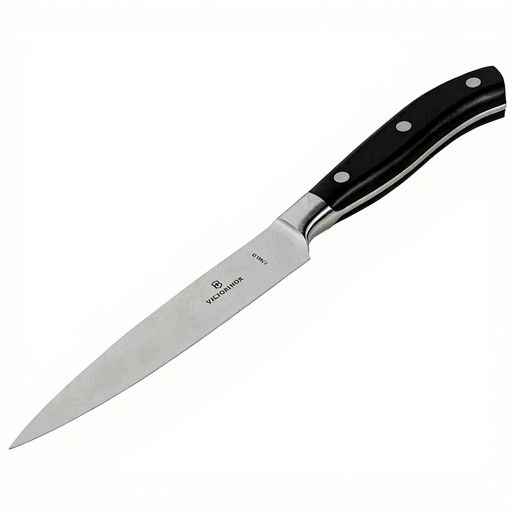
Why this product suits this profile: This model is described as a forged knife with a 15 cm blade, a straight edge and a weight of 198 g. The seamless transition from blade to handle and the stated finger guard are useful features for controlled kitchen work.
The specific blade length and weight make it easier to assess than broad claims about “professional quality”.
Forged construction; 15 cm blade; described as dishwasher-safe in the product information.
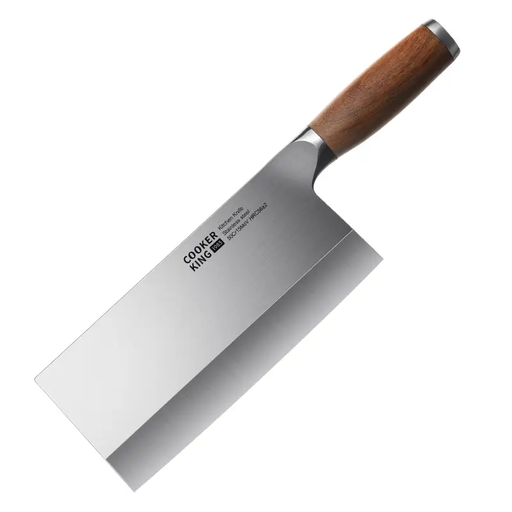
Why this product suits this profile: This model is listed as having 7Cr17MoV stainless steel, a stated hardness of 58 ± 2 HRC, full-tang construction and a 7-inch blade. It’s aimed at buyers who want to compare material and construction specifications in detail.
Details on the steel, hardness and 15° double bevel provide a technical basis for assessing the knife, rather than relying on marketing claims.
Specified 7Cr17MoV stainless steel; full-tang construction; moisture-resistant pakkawood handle, according to the product description.
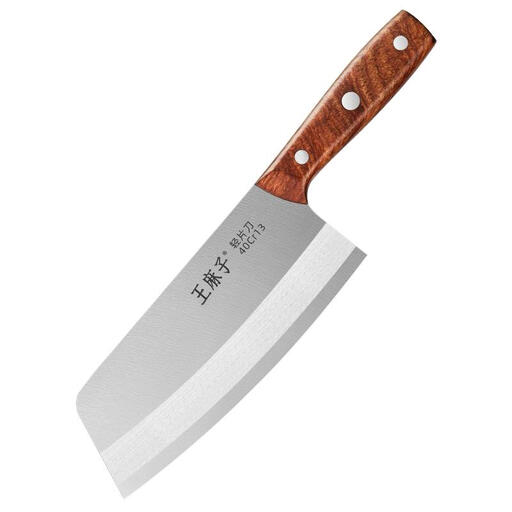
Why this product suits this profile: According to the product description, the 190 mm blade is intended for vegetables, herbs and boneless meat. The ergonomic handle described may be useful for repeated cutting motions.
Its stated use for boneless ingredients sets it apart from a meat cleaver designed for bones and particularly hard materials.
190 mm blade; specified for vegetables, herbs and boneless meat; handle described as ergonomic.
We’ve put together a complete, regularly updated list of products that meet these strict selection criteria and fully comply with the safety regulations in force in the EU.
Not every kitchen cleaver is designed for this. Many models are suitable for vegetables, herbs and boneless meat. For bones, you’ll need a meat cleaver specifically designed for the job, and you should follow the manufacturer’s instructions.
Blades between around 150 and 200 mm are practical for many household tasks. A 190 mm model gives you a larger working surface, while a 15 cm blade may be easier to manoeuvre on a smaller chopping board.
Hand-washing, drying the knife straight away and using a suitable chopping board can help reduce unnecessary wear. Depending on the edge geometry, you can use a honing steel or whetstone to sharpen it. Always follow the manufacturer’s care instructions.