
Lieferung heute & morgen

Qualitätsgarantie

Willkommens-Angebote freischalten: KOSTENLOSE Lieferung | Bis zu 80 % RABATT | Kostenlose 30-Tage-JoyPlus-Testphase
App herunterladen
A kitchen cleaver can be useful for chopping vegetables, herbs and meat. Its large, usually rectangular blade distributes pressure evenly and provides plenty of surface area for scooping up chopped ingredients. At the same time, Chinese cleavers, kitchen hatchets and classic meat cleavers differ significantly in their design and intended use.
However, many buyers focus primarily on a sharp blade or striking product description. Other details can be just as important. Three common buying pitfalls are particularly relevant:
A Chinese chef's knife with a blade length of around 18 to 21 cm is often used as a versatile Asian kitchen knife for vegetables, herbs, fish and meat. The wide blade makes it easier to scoop up chopped ingredients. For highly precise work, a lighter model with a shorter blade may be easier to control.
A meat cleaver or kitchen hatchet designed for bones, on the other hand, requires a suitably robust construction. So check the product description carefully. If the manufacturer only mentions vegetables and boneless meat, the knife should not be used for bones, frozen food or hard objects.
For a stainless steel cleaver, corrosion resistance and easy cleaning are typical benefits. One example from our selection is the COOKER KING model made from 7Cr17MoV stainless steel, with a stated hardness of 58 ± 2 HRC. Hardness is a technical indication of the steel's resistance. However, it does not replace information about the actual edge geometry or care requirements.
Carbon steel can offer excellent edge retention, but requires more attention. The blade should be dried immediately after washing to prevent marks or corrosion. Stainless steel is usually easier to care for, but even a rust-resistant knife should not be left in water or acidic residues for long periods.
A secure handle should remain stable in your hand, even during longer cutting tasks. Wooden handles have a traditional feel, but generally should not be soaked for extended periods or cleaned in the dishwasher. Depending on the design, plastic or Pakkawood handles may offer greater resistance to moisture.
Also pay attention to:
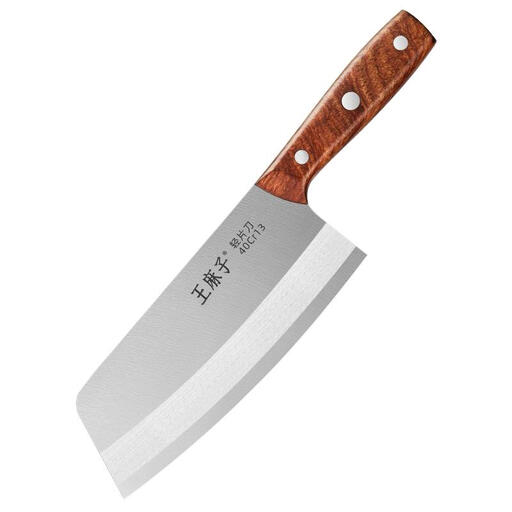
Why this product suits this profile: The 190 mm blade is designed for slicing, chopping and mincing vegetables, herbs and boneless meat. This makes it appealing to shoppers looking for a versatile Chinese chef's knife for everyday kitchen tasks.
The stated blade length makes the intended use clearer. It should not be used as a kitchen hatchet for bones or frozen food.
190 mm blade and, according to the product description, a lightweight design for easy manoeuvrability during everyday food preparation.
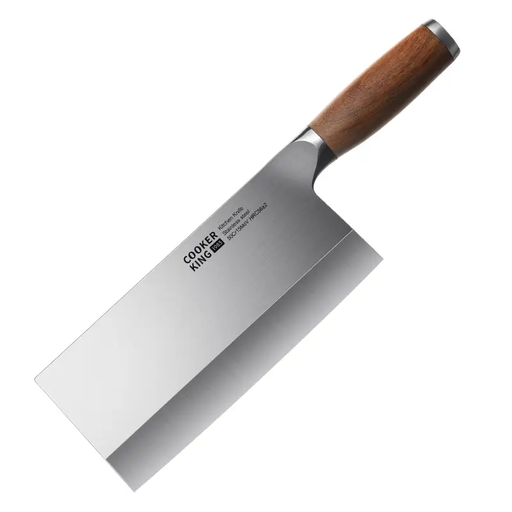
Why this product suits this profile: This model combines 7Cr17MoV stainless steel, a stated hardness of 58 ± 2 HRC, a Pakkawood handle and a full-tang construction.
Specific material and hardness details are more useful than vague claims about sharpness. The care instructions call for immediate cleaning and regular sharpening.
15° double bevel, mirror-polished blade and moisture-resistant Pakkawood handle, according to the product specifications.
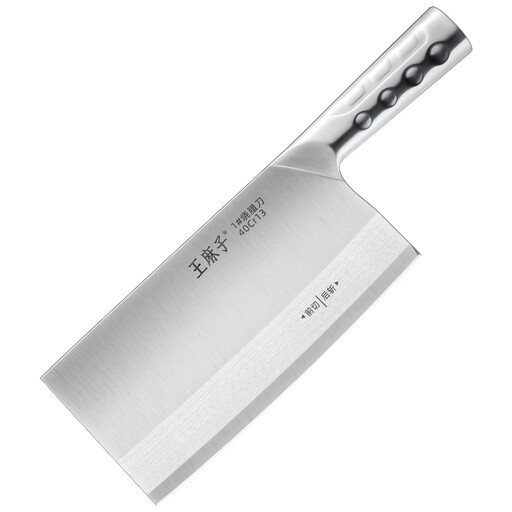
Why this product suits this profile: The 210 mm blade provides plenty of working area for larger quantities of vegetables, herbs and meat. The wooden handle is aimed at users who prefer a traditional design.
The larger blade is clearly designed for extensive food preparation. When working with bones, only the applications expressly intended by the manufacturer should be followed.
210 mm blade and stated wooden handle; suitable for slicing, chopping and mincing larger quantities.
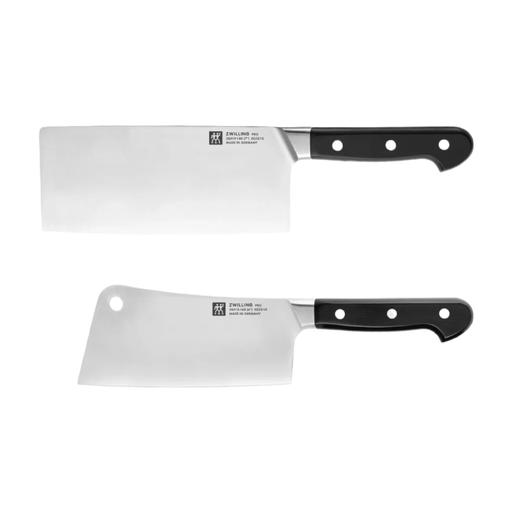
Why this product suits this profile: The set contains a Chinese chef's knife with an 18 cm blade and a cleaver with a 16 cm blade for different food preparation tasks.
The two knives separate versatile cutting tasks from heavier chopping work. This reduces the temptation to use a single knife for every application.
FRIODUR ice-hardened special steel and SIGMAFORGE forging process, according to the product description; two clearly designated blades.
We've put together a complete, regularly updated list of products that fully meet these strict selection criteria and the safety regulations applicable in the EU.
Even a professional kitchen knife remains reliable and easy to handle only when used correctly. Use a stable, non-slip surface and keep both the handle and your hands dry. Do not use twisting movements when cutting through hard materials. A knife with a damaged or chipped edge should not be used further.
Care includes:
Whether a model is dishwasher-safe depends on the product specifications. With wooden handles and many forged kitchen knives, hand-washing is the gentler option for the materials.
Depending on its design, a Chinese cleaver is suitable for slicing and chopping vegetables, herbs, fish and meat. The wide blade also makes it easier to scoop up chopped ingredients. It should only be used for bones or frozen food if the manufacturer expressly approves this application.
Edge life depends on the steel, cutting angle, frequency of use, chopping board and care. A general time frame cannot be relied upon. Soft cutting surfaces, hand-washing and regular sharpening can help keep the edge in its intended condition.
Stainless steel is generally less susceptible to moisture and discolouration in everyday use. Carbon steel may require more care and should be dried immediately after washing. With both materials, suitable cutting surfaces, safe storage and the manufacturer's instructions are essential.