
Lieferung heute & morgen

Qualitätsgarantie

Willkommens-Angebote freischalten: KOSTENLOSE Lieferung | Bis zu 80 % RABATT | Kostenlose 30-Tage-JoyPlus-Testphase
App herunterladen
A kitchen colander is a staple in many homes, but it often only gets a proper test when you first put it to work: it tips over in the sink, the holes let food through or the handle gets uncomfortably hot when you’re draining pasta. If you focus only on the price or a product description that promises to do everything, you could miss some important details.
Whether you’re looking for a draining colander, a kitchen draining basket, a strainer or a classic pasta colander, make sure the material, drainage, stability and intended use all suit your needs before you buy. The tips below will help you tell the difference between marketing claims and features that make a practical difference.
Small holes can be useful for rice and small pieces of vegetable. However, water may drain more slowly when you’re rinsing pasta or larger quantities of food. If the holes are too large, rice grains, berries or pulses may fall through. So it’s not just the number of holes that matters, but their size and even distribution.
A round colander without a base can slip around in the sink or on the worktop. It’s easy to underestimate the weight, especially when it’s full of filled pasta or wet vegetables. A sturdy base, side handles or extendable rests can help prevent it from tipping over.
The label “stainless steel sieve” alone doesn’t tell you much about the finish or how to care for it. Look for smooth edges, clear information about the material and cleaning instructions. For plastic models, details such as food-safe plastic and BPA-free are important. If the manufacturer says a product isn’t suitable for very hot food, don’t use it to drain food straight from a saucepan.
304 stainless steel or 18/8 stainless steel is listed for several of the products featured here. This designation describes the composition of the steel, but it doesn’t tell you how well the product is made. Look for:
Water marks can appear on a stainless steel colander after washing. This is usually just a change in appearance. A soft sponge and thorough drying will help care for the surface. Abrasive cleaners or steel wool can scratch polished finishes.
A compact pasta colander with a handle is usually enough for a single portion. Families will generally need a larger draining colander with plenty of capacity. Before you buy, check:
A square colander can fit neatly into the corners of a fridge or cupboard. An extendable kitchen draining basket is a practical choice if you use sinks of different sizes.
Not every kitchen drainer is designed for piping-hot food. Use plastic models only in line with the manufacturer’s instructions. Colanders with wooden handles or bamboo lids often need different care. These parts usually need to be washed by hand and dried thoroughly.
For everyday use, helpful features include clear dishwasher-safe instructions, removable seals and holes that are easy to reach and clean. A rice colander should have holes small enough to hold back the grains while letting water and starch drain away.
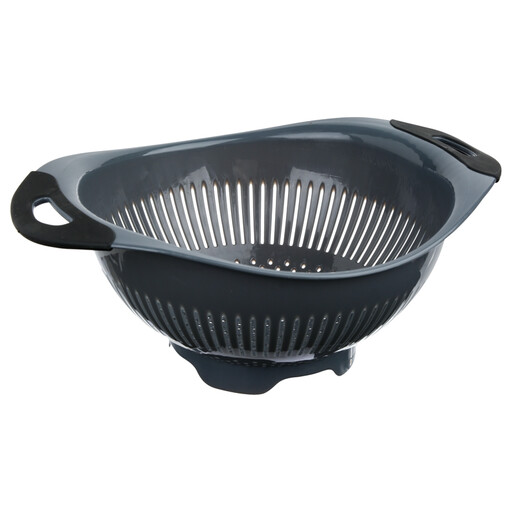
Why it’s a good fit: With a 2.5-litre capacity, it’s suitable for vegetables, fruit and pasta in a typical family home. The TPR handle is designed to be held with wet hands.
The handle is designed to help prevent slipping. The product description also says it’s suitable for washing and draining food.
2.5-litre capacity; lightweight at 0.162 kg according to the product details.
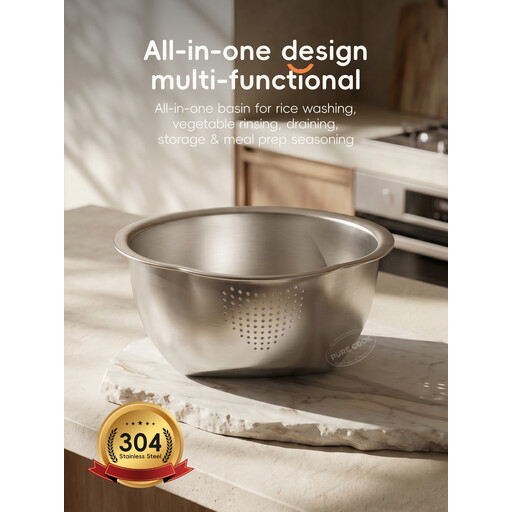
Why it’s a good fit: According to the product description, this rice colander is made from uncoated 304 stainless steel and has side handles and a sloping base.
The closely spaced, evenly distributed holes are designed for rice, fruit and vegetables. Smooth edges reduce the risk of contact with sharp burrs.
27 cm diameter; dishwasher-safe according to the manufacturer, with two side handles.
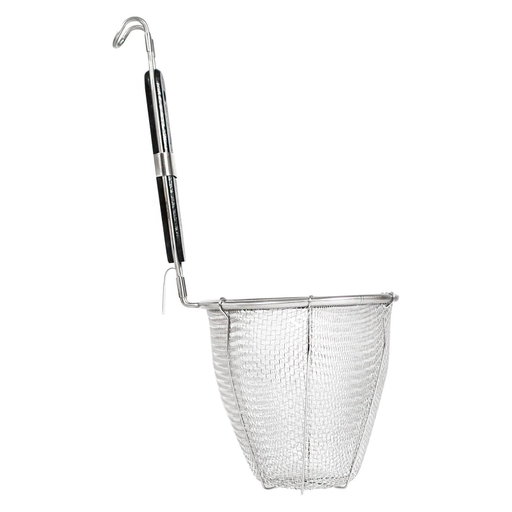
Why it’s a good fit: This pot-hanging strainer is designed for noodles, ramen, pasta and blanched foods. According to the product description, the handle is 20 cm long.
The hooks can rest on the rim of a saucepan to hold the strainer in place. This means you don’t need to transfer the food into a large colander.
13.5 cm diameter; weighs 175 g according to the product description.
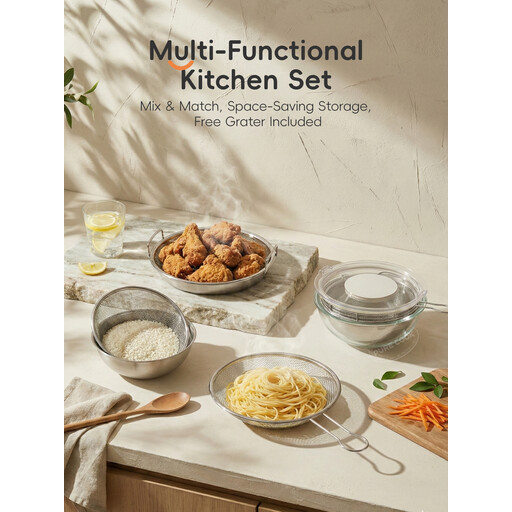
Why it’s a good fit: This set combines bowls, a colander, a grater and lids. The nesting pieces can make them easier to store in a kitchen cupboard.
Having several sizes means you won’t have to use a colander that’s too small for larger quantities. Check how much storage space you have before buying.
The bowls and colander are made from 304 stainless steel; stackable and dishwasher-safe according to the product description.
We’ve put together a complete, regularly updated list of products that meet these strict selection criteria and fully comply with the safety regulations in force in the EU.
For rice, a rice colander with closely spaced, small holes is a good choice. A sturdy rim and side handles make it easier to rinse rice under running water. Also check that the diameter fits your sink.
It depends on how you plan to use it. Stainless steel offers a sturdy, heat-resistant construction, while plastic is often lighter and easy to handle. What matters most is the manufacturer’s specific information about the material, temperature and cleaning.
Larger models with a capacity of around 2.5 litres or more are handy for several portions of pasta or vegetables. If storage space is limited, a stackable set or an extendable kitchen draining basket may be a better fit. Before buying, check both the capacity and the size of your sink.