
Lieferung heute & morgen

Qualitätsgarantie

Willkommens-Angebote freischalten: KOSTENLOSE Lieferung | Bis zu 80 % RABATT | Kostenlose 30-Tage-JoyPlus-Testphase
App herunterladen
A kitchen colander is a staple in many households. Use it to drain pasta, wash fruit and vegetables, rinse rice or drain salad leaves. Yet unclear size descriptions, unsuitable hole sizes and flimsy handles can all lead to disappointing purchases.
This buying guide explains what households, families, keen cooks and small food businesses should look for in a draining colander, pasta colander or vegetable washing colander.
A compact colander is easy to store, but can quickly overflow when you’re draining larger portions. A small handled strainer is often enough for a single portion of berries or rice. For family meals, a diameter of around 22 to 27 cm or a capacity of approximately 2 litres or more is usually more practical.
Height matters too. A deep colander can hold more food, but will also take up more room in a drawer or kitchen cupboard.
Descriptions such as ‘robust’, ‘rust-resistant’ or ‘extra sturdy’ don’t tell you much on their own. Instead, check:
A stainless steel kitchen colander isn’t automatically suitable for every use. For example, a colander with a plastic frame may have limited heat resistance.
A foldable kitchen colander saves storage space, but it’s not always the right choice for heavy or very hot food. With an extendable sink colander, the support arms need to fit the width of your sink. So, before buying, compare your sink’s dimensions with the colander’s maximum load capacity.
Stainless steel holds its shape, resists odours and is suitable for many kitchen tasks. The stainless steel models featured here include details such as 18/10 stainless steel, 304 stainless steel or stainless steel mesh. These specifications are more informative than a general description such as ‘metal’.
Plastic models are often lighter and can be handy for fruit, vegetables or smaller quantities. If the colander has a plastic frame, check the guidance on temperature. A product’s material details don’t replace its specific instructions for use.
The size of the holes determines which foods the colander can hold:
For rice, a purpose-made rice strainer with fine holes is usually more suitable than a coarsely perforated colander.
A flat base keeps the colander stable while you wash or drain food. Side handles make it easier to carry, while a long handle gives you more distance from hot pans. If you choose a model with a wooden handle, follow the care instructions.
Check the cleaning guidance too. Some products are listed as dishwasher-safe, while others should be washed by hand. Dry stainless steel thoroughly after cleaning. Scouring products and metal brushes can damage the surface or fine mesh.
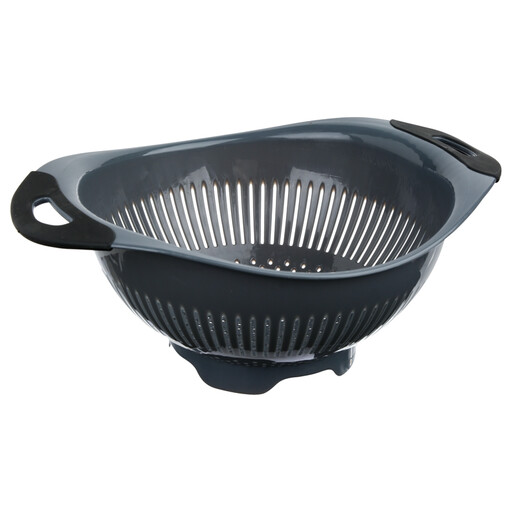
Why it suits this type of user: Its 2.5-litre capacity is suitable for everyday portions, while the TPR handle is designed to provide a secure grip, even with wet hands, according to the product details.
The capacity is clearly stated, making it easier to compare with your household’s needs than a vague size description.
2.5-litre capacity, TPR handle, lightweight at 0.162 kg, and measures 31.6 × 24.3 × 12.5 cm.
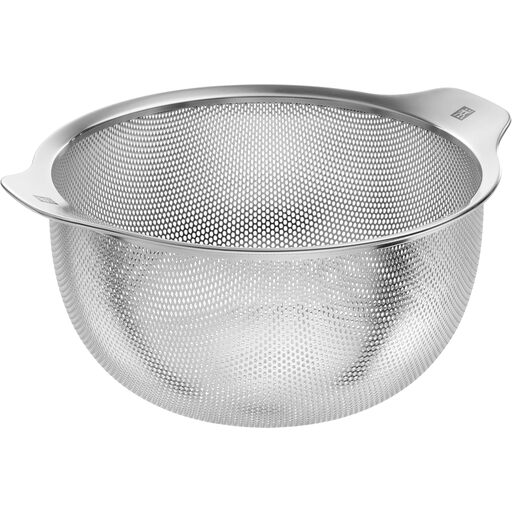
Why it suits this type of user: The 24 cm size and integrated side handles are designed for draining larger quantities of pasta or vegetables. The product is made from 18/10 stainless steel.
The diameter, material and handle design are all clearly described. This makes it easier to check the details before buying and reduces the risk of choosing a colander that’s too small.
18/10 stainless steel, 24 cm diameter, integrated handles and, according to the product details, dishwasher-safe.
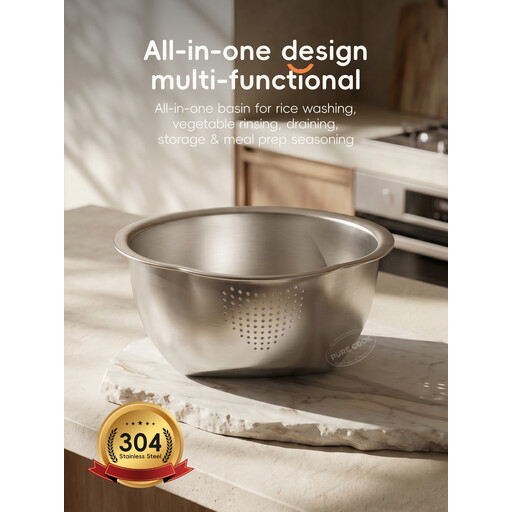
Why it suits this type of user: According to the product description, its sloped base, side handles and fine holes make it suitable for rice, quinoa, fruit and vegetables.
The product details specify the material, diameter and intended uses. This makes it easier to distinguish the rice strainer from a pasta colander with larger holes.
304 stainless steel, 27 cm diameter, fine holes and two side handles.
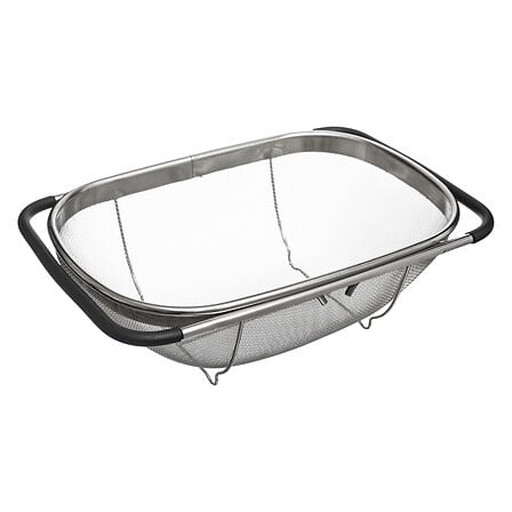
Why it suits this type of user: The extendable design is made to fit sinks of different widths and can be stored away compactly after use.
Its adjustable length solves the problem of a fixed-size draining basket. Even so, check that it fits the width of your sink before use.
3.6-litre capacity, extends to up to 53.5 cm and has a stainless steel construction.
We’ve put together a complete, regularly updated range of products that meet these strict selection criteria and the safety regulations in force in the EU.
A small colander with a capacity of around 0.5 to 1 litre is often enough for individual portions. Families will usually find 2 to 3 litres more useful. If you’re draining pasta for several people or large quantities of vegetables, look for a diameter of around 24 cm or more too.
Fine holes are best for rinsing rice, so the grains don’t fall through. A purpose-made rice strainer or fine-mesh stainless steel strainer is usually a better choice than a pasta colander with larger holes.
Its lifespan depends on the material, build quality and care. Dry stainless steel models after cleaning and avoid using harsh scouring products on them. High temperatures or regular heavy use can affect the lifespan of plastic parts. Always follow the manufacturer’s specific guidance and use the product as intended.