
Lieferung heute & morgen

Qualitätsgarantie

Willkommens-Angebote freischalten: KOSTENLOSE Lieferung | Bis zu 80 % RABATT | Kostenlose 30-Tage-JoyPlus-Testphase
App herunterladen
A kitchen colander needs to do more than simply let water drain through a few holes. Depending on your household, you might use it to wash fruit and vegetables, drain rice or pasta, hold dishes or save space in a cupboard. Families, keen cooks and commercial kitchens all have different requirements.
Many disappointing purchases come down to three common pitfalls:
Before you buy, it’s worth checking the actual dimensions, the material and what you plan to use it for. The word ‘multifunctional’ on its own doesn’t tell you how practical a kitchen colander will be in everyday use.
First, measure the inside width of your sink and the available space on your worktop. A sink colander should rest securely and mustn’t tip when you fill it. Extendable models can suit sinks of different widths, but they need secure support on both sides.
A folding colander, an extendable draining basket or a stackable model can be useful in a small kitchen. However, check that the folding joints are easy to reach and can be cleaned thoroughly.
A stainless steel colander is resistant to moisture and suitable for food and dishes. If a model is specified as being made from 304 stainless steel, that’s a specific material grade, not just a general description such as ‘metal’. Rounded edges help reduce the risk of scratches when you take it out.
PP plastic models can be lighter and easier to carry. Check that they have sturdy handles, a strong base and a stable footing. If you plan to use one in direct contact with food, follow the manufacturer’s guidance on its intended use.
A colander or pasta strainer needs sufficiently large, evenly spaced holes. Holes that are too small can slow drainage, while holes that are too large won’t work well for rice or small food items.
Useful features include:
A vegetable washing basket used every day should be rinsed after use and left to dry completely. For stainless steel, avoid harsh abrasive cleaners and scouring pads unless the manufacturer says otherwise.
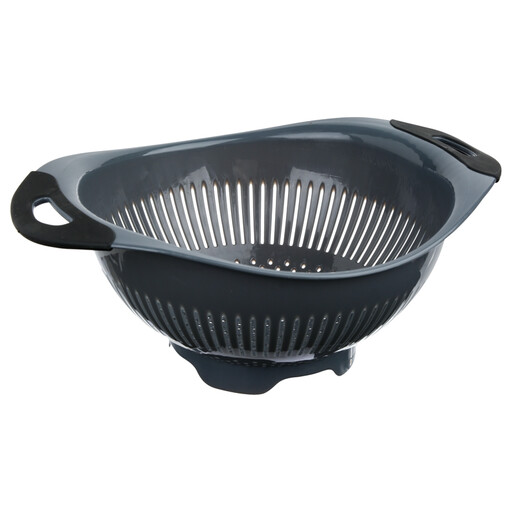
Why this product suits this user type: With a stated capacity of 2.5 litres, this plastic basket is suitable for washing vegetables and fruit, and draining pasta in the home.
The stated capacity and TPR handle make it easier to judge the size than a measurement alone, with no volume specified.
2.5-litre capacity, PP plastic, TPR handle and a stated weight of 0.162 kg.
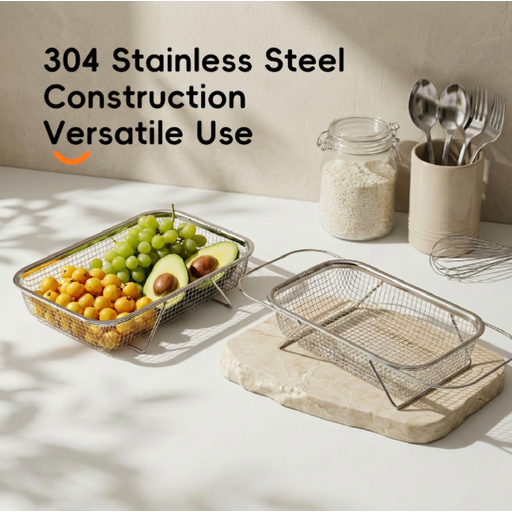
Why this product suits this user type: Made from stated 304 stainless steel, this extendable model is a good choice if you prioritise the material, adjustability and compact storage.
Its extendable design helps address the problem of finding the right width. Even so, make sure it is positioned securely across the sink before loading it.
304 stainless steel, extendable design, dimensions of 29.5 × 6.9 cm and closely spaced holes according to the product details.
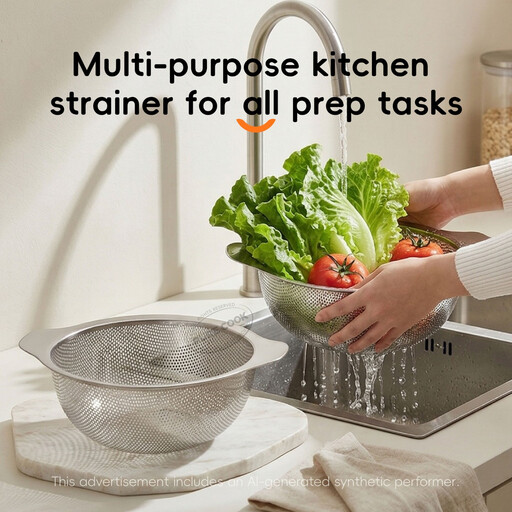
Why this product suits this user type: Designed for fruit, vegetables, rice and dishes, as well as storing food in the fridge, this basket is suited to versatile households and kitchens where it will be used frequently.
The integrated double handles mean there are no loose parts to come away. Smooth edges and evenly spaced holes make the basket easier to handle and help water drain away.
Food-grade stainless steel according to the product details, double handles and dimensions of 27.3 × 22.6 × 9.1 cm.
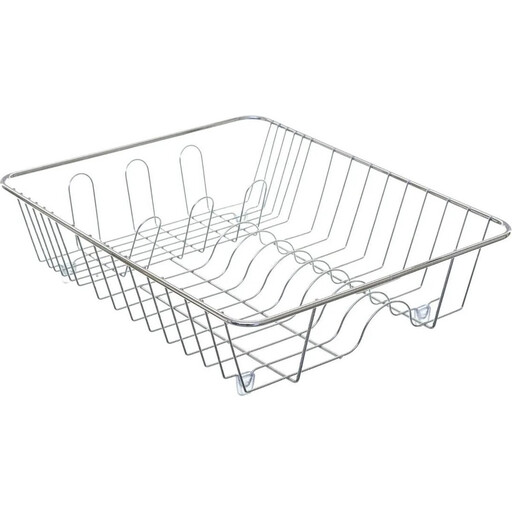
Why this product suits this user type: This dish rack is designed for wet dishes and, according to the product details, has space for up to 10 plates and a cutlery holder.
The raised edge is designed to catch draining water, while the fixed outer dimensions make it easy to check the space it needs before you buy.
Steel and ABS plastic, cutlery holder, dimensions of 39 × 33.5 × 10.5 cm and a stated capacity of 10 plates.
We’ve put together a complete, regularly updated list of products that meet these strict selection criteria and fully comply with the safety regulations in force in the EU.
How long a colander lasts depends on its material, how heavily it’s used, how it’s cleaned and how it’s stored. Don’t leave it full of water for long periods. After draining, remove any food residue and let the surface dry.
When using a dish drainer, arrange plates and glasses so the weight is evenly distributed. Don’t place metal sink accessories on a hob or in the oven unless they are specifically approved for that use. High temperatures are also suitable for plastic only if the manufacturer says so.
No. The key things to check are the inside measurement, rim width and support points. For an extendable model, its minimum and maximum lengths need to suit your sink. Also check that the tap or depth of the sink won’t get in the way.
A pasta strainer with sufficiently large, evenly spaced holes is suitable for pasta. A vegetable washing basket can also work, as long as the holes let water drain away and the basket can be held securely. Smaller holes are better for rice.
Rinse it with water after use and, if needed, use a mild cleaning product. Leave it to dry completely afterwards. Abrasive cleaners and hard sponges can scratch the surface, so only use them if the manufacturer specifically recommends it.