
Lieferung heute & morgen

Qualitätsgarantie

Willkommens-Angebote freischalten: KOSTENLOSE Lieferung | Bis zu 80 % RABATT | Kostenlose 30-Tage-JoyPlus-Testphase
App herunterladen
A kitchen colander is one of the most frequently used utensils in the home. It helps you drain pasta, wash fruit and vegetables, and rinse rice. Yet it’s often only after buying one that you find out whether it really suits your kitchen. A diameter that’s too small can make it awkward to use, unstable handles can make a full colander difficult to manage, and poorly positioned holes can slow down drainage.
As a Joybuy Product Recommendation Officer, I assess product information against clear, practical criteria. Rather than making blanket promises, I focus on which features suit different households and ways of using a colander.
A tall colander might look spacious at first glance. But for pasta or larger quantities of vegetables, the diameter matters too. A narrow, deep model may be less practical when transferring food than a wide draining basket. A compact colander is often enough for a single-person household or small portions. Families usually need more capacity and a stable base.
The term stainless steel kitchen colander describes the material in general. More useful details include specifications such as 18/10 stainless steel or 304 stainless steel (18/8). These refer to the composition of the stainless steel alloy. They still don’t replace checking the finish, edges, handles and care instructions.
A stainless steel colander should also be dried thoroughly after cleaning. Abrasive cleaners, steel wool and hard metal brushes can scratch the surface. Always follow the manufacturer’s instructions for coated or specially finished surfaces.
An extendable sink draining basket can save space in a small kitchen. However, whether it fits depends on the length and shape of your sink. Before buying, measure the inside width of your sink and check that the colander will rest securely across it. It mustn’t tip when loaded with water, fruit or crockery.
For everyday use, you can choose from stainless steel, plastic or combinations of different materials:
Look for smooth, neatly finished edges. Sharp edges are an avoidable safety risk, especially if several family members use the colander regularly.
The size of the holes affects whether a model is suitable as a vegetable colander, rice colander or pasta colander. Small, evenly spaced holes are better at holding back smaller foods. This is particularly useful for rice, quinoa and berries. Larger holes often let water drain quickly, but may not be suitable for small grains.
If you want to use a colander in a saucepan, look for a sufficiently long handle and a hook or hanging support. These models can be useful for blanching food or lifting out smaller portions. Don’t use them on a hot hob or directly over an open flame unless they’re specifically designed for this.
Stackable, extendable or collapsible models can be useful if you have limited drawer space. Colanders in different sizes may fit inside one another, as long as they’re designed to stack. When it comes to cleaning, check the product details: some models are listed as dishwasher-safe, while others should be washed by hand to protect the surface or wooden handles.
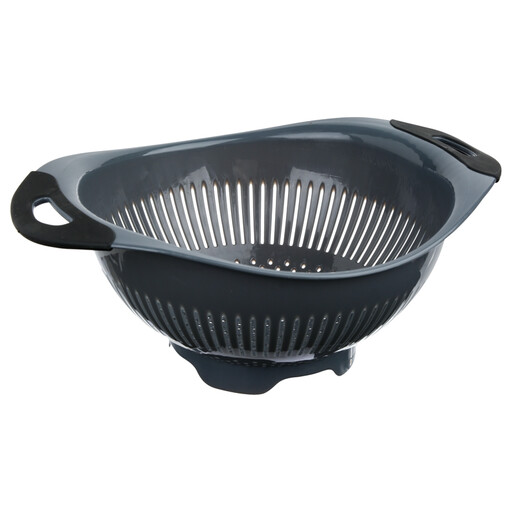
Why this product suits this profile: This plastic model has a 2.5-litre capacity and, according to the product description, is suitable for washing vegetables, draining pasta and rinsing fruit. That makes it a practical option for everyday family portions.
The stated capacity and product dimensions give you a clearer idea of how much it holds than a general size description alone. According to the product details, the TPR handle is non-slip.
2.5-litre capacity, a light weight of 0.162 kg and a TPR handle for a secure grip.
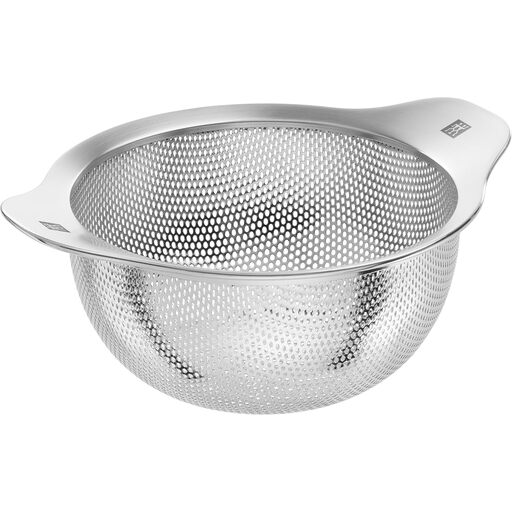
Why this product suits this profile: According to the product details, this 16cm model is made from 18/10 stainless steel and combines a sieve, colander and bowl in one. Its flat base makes it easy to stand on the worktop.
The 18/10 material specification, sturdy base and two handles give you concrete details to consider, rather than vague claims about quality.
18/10 stainless steel, a flat base, two stainless steel handles and stackable sizes, according to the product description.
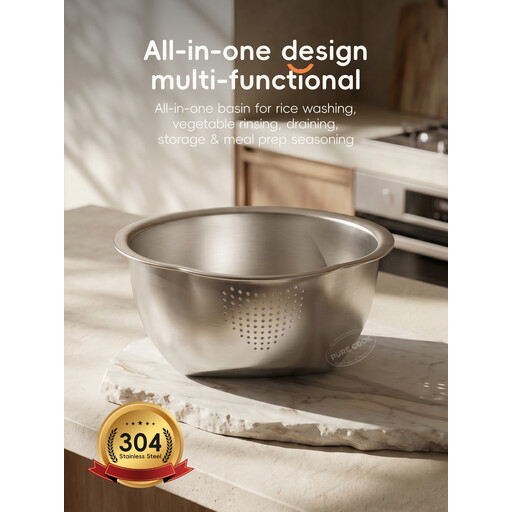
Why this product suits this profile: This 27cm model is designed for rice, quinoa, fruit, vegetables and other food preparation tasks. Side drainage holes and an angled base help with draining.
The specific 304 stainless steel (18/8) specification, size and evenly spaced holes make it easier to compare with colanders described in more general terms.
304 stainless steel, a 27cm diameter, side drainage holes and dishwasher-safe according to the product details.
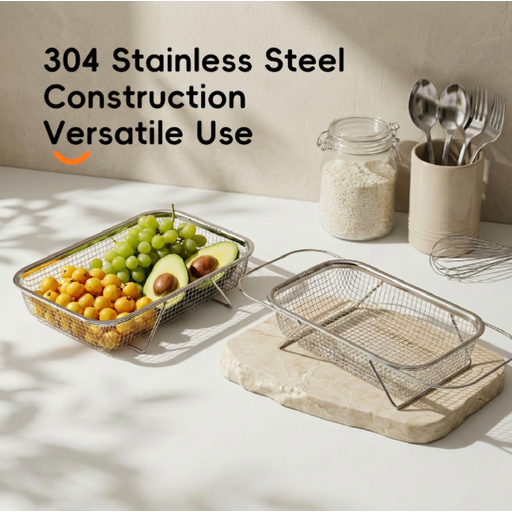
Why this product suits this profile: According to the product details, this extendable colander measures 29.5 × 6.9 cm and can be adjusted to fit over the sink. That makes it practical for rented homes and kitchens with limited storage space.
You can check the width of your sink against the extendable design before buying. This reduces the risk of choosing a freestanding colander that doesn’t fit.
Extendable design, 304 stainless steel (18/8) according to the product details, and space-saving storage.
We’ve put together a comprehensive, regularly updated list of products that meet these strict selection criteria and fully comply with the safety regulations in force in the EU.
A compact model with a capacity of around 0.5 to 1 litre is often enough for small portions and berries. For pasta, salad or family-sized portions, a larger diameter and a capacity of at least 2 litres are more practical. The key is to make sure the colander sits securely in your sink, bowl or saucepan.
A rice colander should have evenly spaced, sufficiently small holes. Also look for smooth edges and a stable base. A pasta colander with large holes may not be suitable for loose rice, quinoa or small berries.
It depends on the product. According to their product details, some stainless steel models and plastic colanders are dishwasher-safe. For models with wooden handles, special finishes or unclear care instructions, hand-washing with a mild detergent is the gentler option. Dry the colander thoroughly after every wash.