
Lieferung heute & morgen

Qualitätsgarantie

Willkommens-Angebote freischalten: KOSTENLOSE Lieferung | Bis zu 80 % RABATT | Kostenlose 30-Tage-JoyPlus-Testphase
App herunterladen
A kitchen colander is one of the most frequently used kitchen essentials. It washes fruit and vegetables, drains rice and pasta and, depending on the design, can also hold dishes. Even so, not every model suits every household. In small kitchens, compact dimensions matter, while families and catering businesses are more likely to need greater capacity and durability.
An extendable sink colander is often described as universally compatible. In practice, sinks vary considerably in width, rim shape and depth. Before buying, compare the inside measurements of your sink with the stated adjustable width of the draining basket. The colander must also rest securely on the rim so it doesn’t shift when you add heavy food.
A kitchen strainer with very fine holes will hold back small ingredients, but may drain more slowly when you’re handling larger quantities. Evenly spaced, finer holes are useful for rice, quinoa and small pulses. For pasta or larger pieces of veg, however, a larger drainage area is more important. Choose a hole size that suits what you’ll use the colander for most.
“Stainless steel” doesn’t mean the same specification for every product. A specific description such as 304 stainless steel or 18/8 stainless steel is more informative than a general reference to metal. Smooth edges, an uncoated surface and clear cleaning instructions are important too. Only put a dishwasher-safe colander in the dishwasher if the product description explicitly says it’s suitable.
A range of materials can be used for products that come into regular contact with food:
Smooth, burr-free edges make a colander easier to handle. For stainless steel, avoid abrasive cleaners, steel wool and harsh scouring pads if the manufacturer advises against them.
An fruit and vegetable colander for everyday use doesn’t necessarily need to be large. A compact 0.5-litre model may be enough for individual portions. Families may prefer 2 to 3 litres, while a 3.6-litre model offers more room for larger quantities of pasta or vegetables.
Look out for:
A sink draining basket with telescopic arms saves storage space and can be used over the sink. Before filling it, check that both support surfaces rest securely on the sink rim. Don’t put heavy pans or large quantities into a small, extendable model unless its maximum load is specified.
A fixed colander is simpler to use regularly on the worktop or in a bowl. For campers, lightweight plastic models with a folding or extendable design may be more practical.
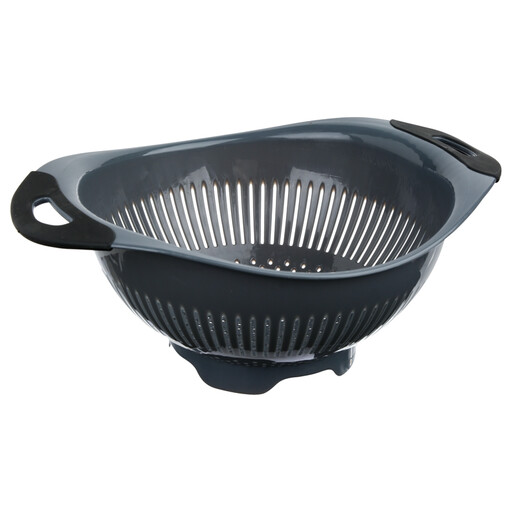
Why this product suits this profile: This plastic model has a 2.5-litre capacity and a TPR grip, making it suitable for vegetables, fruit and pasta in a family home.
Its capacity is clearly stated, making it easier to judge whether it’s big enough for typical household portions.
2.5-litre capacity, lightweight design and TPR grip; stated as dishwasher-safe in the product details.
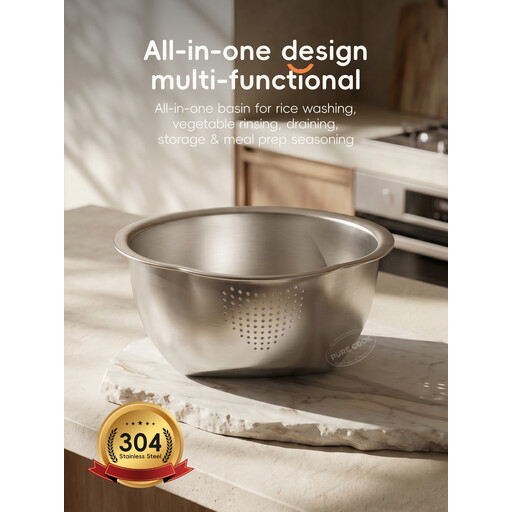
Why this product suits this profile: This 27 cm model is designed for rice, quinoa, fruit and vegetables, and can also be used to drain dishes.
The material, diameter, hole pattern and cleaning instructions are all specified, rather than described in vague terms.
304 stainless steel, smooth polished edges and side handles; stated as dishwasher-safe in the product description.
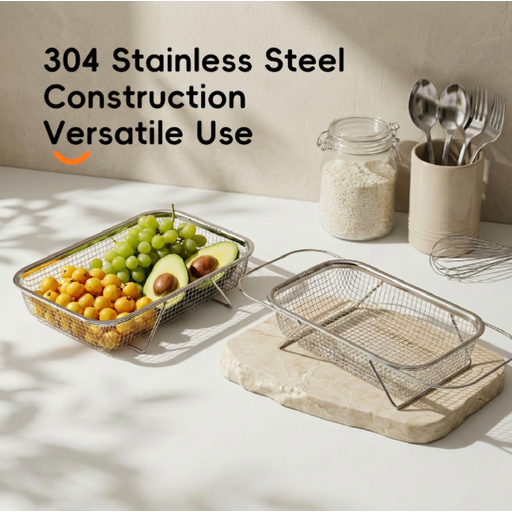
Why this product suits this profile: Its adjustable design can be used over the sink and stored away to save space when not in use.
Its dimensions of 29.5 × 6.9 cm and extendable design make it easier to check the space it needs and how it can be stored.
304 stainless steel, adjustable length and evenly spaced drainage holes.
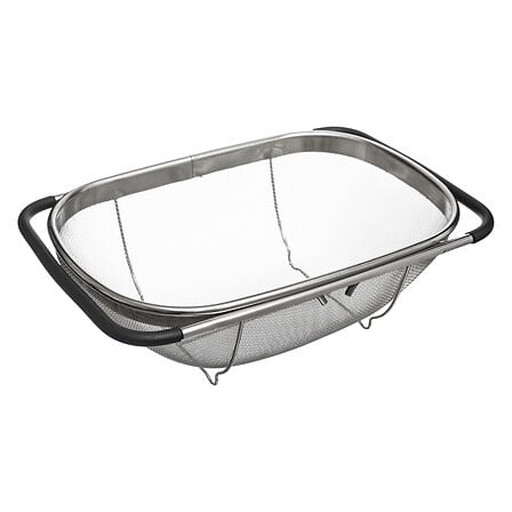
Why this product suits this profile: Its larger capacity and extendable design make it a good fit for households, keen cooks, and food service or catering where larger quantities need to be handled.
Its 3.6-litre capacity and 53.5 cm length make it easy to check whether it’s suitable for larger portions.
Extendable stainless steel design, 3.6-litre capacity and an ergonomic handle, according to the product details.
We’ve put together a complete, regularly updated list of products that meet these strict selection criteria and the safety regulations in force in the EU.
After use, remove any food scraps and rinse the kitchen strainer with water. For stainless steel, use mild washing-up liquid and a soft sponge. Let the colander dry completely afterwards, especially around handles, edges and joins. Plastic models should not come into contact with direct heat, hot hobs or unsuitable cleaning products.
Lifespan depends on more than the material. Overloading, dropping the colander, storing it somewhere damp for long periods and using abrasive cleaning products can damage the surface or joints. If you have an extendable model, also check regularly that its support surfaces still grip securely.
For rice and quinoa, finer, evenly spaced drainage holes are useful. A model with side handles or a sturdy rim makes it easier to wash rice under running water. Its suitability ultimately depends on the hole size and capacity.
Measure the usable inside width of your sink from rim to rim, then compare it with the adjustable length of the draining basket. Also check the depth of the supporting surface, as well as any taps or dividers that could restrict the space.
Not every stainless steel model is automatically dishwasher-safe. Always check the product description. Even if the manufacturer says it’s suitable, avoid abrasive tablets or harsh programmes if gentler cleaning is recommended.