
Lieferung heute & morgen

Qualitätsgarantie

Willkommens-Angebote freischalten: KOSTENLOSE Lieferung | Bis zu 80 % RABATT | Kostenlose 30-Tage-JoyPlus-Testphase
App herunterladen
Kitchen cutting tools should make everyday food preparation easier. In practice, however, unclear material specifications, designs that are difficult to clean and missing safety features often lead to the wrong purchase. This applies to everything from a simple vegetable slicer to an electric food slicer or a comprehensive kitchen knife set.
Multi-functional kitchen gadgets often promise a wide range of slicing, grating and shredding options. What matters, though, is whether the attachments you need are easy to access and can be cleaned hygienically after use. A vegetable slicer or mandoline with hard-to-reach gaps can create more work in everyday use than a simple, single-purpose tool.
The term “stainless steel” does not automatically describe the overall quality of a product. Check which parts are actually made of stainless steel, whether the handles are non-slip and whether the plastic components are intended for food contact. For a chopping board, size, thickness, stability and care instructions also matter.
Sharp blades, rotating blades and electrical appliances need suitable safety features. A finger guard for a mandoline, a food holder for a slicer or a protective cover for kitchen knives can make them easier to handle. In households with children, sharp tools should be kept out of reach. A baby food preparation set is not a toy either and should only be used by adults.
Look for specific details such as stainless steel, BPA-free components, food-safe plastics or the exact combination of materials. A double-sided chopping board can be practical for preparing meat and vegetables, as it provides separate work surfaces. Cleaning instructions are just as important: not every product with a stainless steel blade is dishwasher-safe.
Measure the space available in your drawer, cupboard or on your worktop. A large bread slicer or food slicer needs a permanent spot and a stable surface. A compact kitchen grater, kitchen scissors or potato cutter is better suited to a small kitchen. Non-slip feet, suction cups or a stable base can make a tool easier to use, but they are no substitute for safe handling.
Think about whether you mainly want to slice vegetables, cut potatoes into chips, portion bread or cut meat and cheese into even slices. A mandoline can handle several types of cutting, while a kitchen grater is designed for grating and shredding. For an electric food slicer, details such as a cutting thickness of 0 to 15 mm, blade type and power are more useful than general marketing claims.
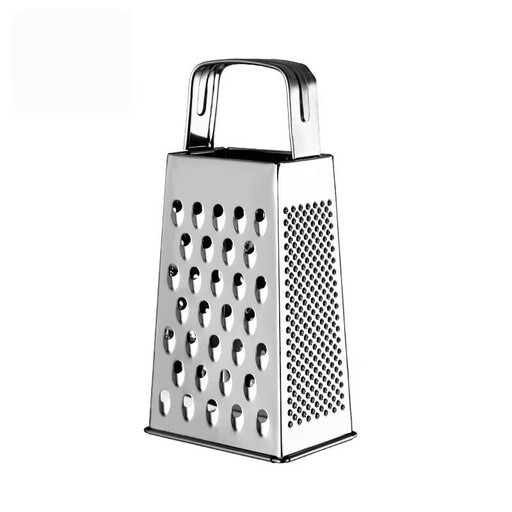
Why it suits this profile: This four-sided kitchen grater offers a range of grating and cutting surfaces in a compact design, making it suitable for vegetables, cheese and other appropriate foods.
Its straightforward four-sided design makes the different functions clear, without the need to buy several separate tools.
Four-sided design and stainless steel, according to the product name; a space-saving alternative to several grating tools.
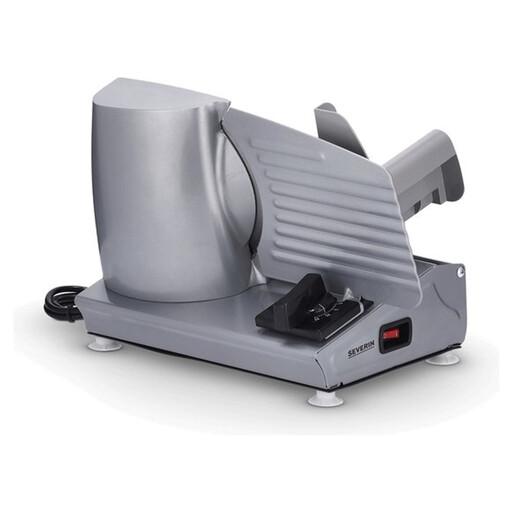
Why it suits this profile: For households that regularly portion bread, cheese, cold meats or cooked meat, this electric slicer offers clearly defined technical specifications and a choice of blades.
The cutting thickness is adjustable from 0 to 15 mm. A finger guard, food holder and illuminated safety switch are all specifically listed.
180-watt motor, two removable stainless steel blades and a 2-year manufacturer’s warranty, according to the product details.
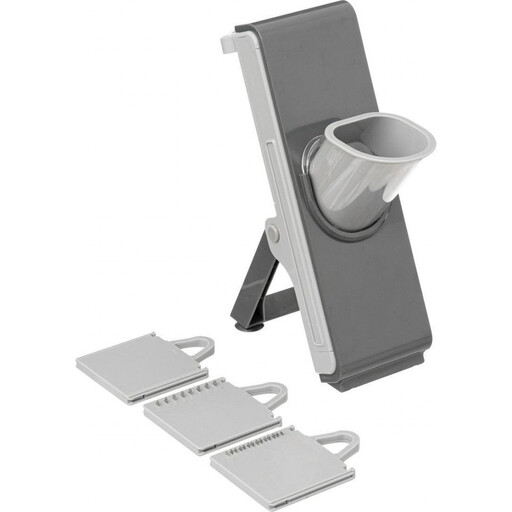
Why it suits this profile: If you often prepare fruit and vegetables as slices, strips or pieces, this tool offers several cutting functions.
The included pusher and finger guard address a common safety issue with exposed slicing blades.
Stainless steel blade, compact dimensions of 26,5 × 15 × 9,5 cm and dishwasher-safe, according to the product details.
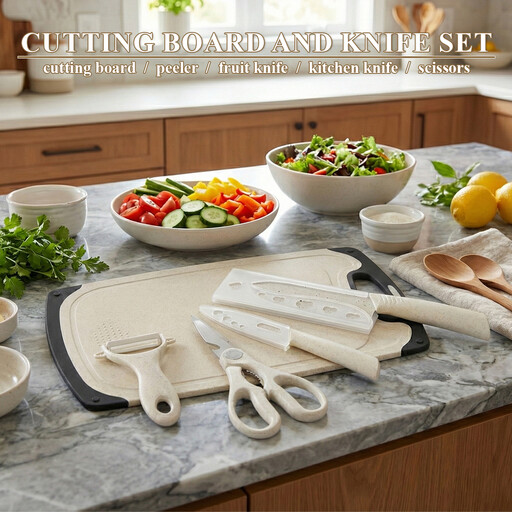
Why it suits this profile: This set combines a chopping board, knife, fruit knife, scissors and Y-shaped peeler for preparing soft fruit, steamed vegetables and small portions.
Protective covers, blunt safety scissors and a compact design support the controlled food preparation required when the set is used by adults.
Five pieces, BPA-free according to the product description, and a space-saving work surface.
We’ve put together a complete, regularly updated list of products that fully meet these strict selection criteria and the safety regulations in force in the EU.
For everyday food preparation, a sturdy chopping board, a kitchen knife, kitchen scissors and a kitchen grater are often enough. If you eat vegetables regularly, a vegetable slicer or mandoline may be useful. If you often portion bread or cold meats, remember to allow extra space for a bread slicer or food slicer.
Their lifespan depends on the materials, how often you use them and how well you care for them. Avoid using blades on hard surfaces, and dry them thoroughly after cleaning. For each product, check whether hand-washing is required, whether replacement blades are available and whether the manufacturer offers a warranty. A wooden knife block should not be soaked in water.
Running costs depend on the power consumption and how long you actually use the appliance. A 180-watt appliance uses 0,18 kilowatt hours in an hour of operation in theory. At home, a food slicer is usually switched on for just a few minutes at a time. You should also factor in cleaning, safe storage and the possible cost of replacing blades.