
Lieferung heute & morgen

Qualitätsgarantie

Willkommens-Angebote freischalten: KOSTENLOSE Lieferung | Bis zu 80 % RABATT | Kostenlose 30-Tage-JoyPlus-Testphase
App herunterladen
Whether you’re preparing vegetables, herbs, bread, cheese or meat, kitchen cutting tools vary considerably in how they handle, the materials they’re made from, how much cleaning they need and how much space they take up. A seemingly good-value purchase can quickly become impractical if the tool isn’t suited to the task. Overly complicated multifunction appliances, hard-to-clean parts and unclear information about blades or spares are among the most common causes of disappointing purchases.
This buying guide explains what households, home cooks and professional kitchen users should look for before buying.
A multifunction slicer with lots of attachments may sound versatile at first. In practice, however, you may only use two or three of them regularly. The extra parts need additional storage and must be cleaned thoroughly after use.
So start by thinking about the foods you prepare most often:
For a small kitchen, a carefully chosen vegetable slicer, vegetable peeler or mini chopper may be more useful than a large set.
A sharp blade alone doesn’t make a cutting tool practical for everyday use. A sturdy handle, good control and a suitable work surface are important too. With vegetable slicers and graters, you should be able to guide food across the cutting surface with control. With a kitchen knife, blade length, balance and the join between the blade and handle also matter.
Check the product information for details of the handle material, dimensions and weight. A heavy knife can become tiring during longer preparation sessions, while a very light model may be harder to control when cutting firmer ingredients.
Food can get trapped around interchangeable blades, in narrow gaps and inside parts of the housing that are difficult to reach. With electric appliances, detachable parts and the motor unit need to be considered separately.
Before you buy, check:
A knife block is useful with a knife set, but it takes up worktop space. Wooden items shouldn’t be left soaking in water. Sharp tools should always be stored somewhere dry and out of children’s reach.
Stainless steel is widely used for kitchen knives, graters, herb choppers and vegetable slicers. However, the type of steel alone won’t tell you how long a blade will stay sharp. The sharpening angle, blade thickness, construction and care all affect how it performs.
A kitchen knife for vegetables needs different features from a meat slicer. A serrated blade is suitable for bread, while a different blade shape is needed for a smooth cut through fruit or vegetables. With a vegetable slicer, look for a sturdy frame and reliable hand protection.
The size determines how much you can prepare in one go. A small mini chopper with a 0.5-litre container is suitable for smaller portions, dips, herbs or chopped ingredients. For larger quantities, a manual tool without a container may be more practical, as you can use it continuously.
With an electric food slicer, the cutting width, available carriage travel and adjustable slice thickness are also important. Check that the appliance will fit in your kitchen and that the carriage can be removed for cleaning.
Use cutting tools on a stable surface. Non-slip feet, ergonomic handles and hand guards can make them easier to use. Electric appliances should only be operated with the lid correctly in place and in accordance with the instructions.
With electric models, also check:
Motor power alone isn’t a reliable guide to how well an appliance will perform for every task. What matters is whether it’s designed for the ingredients you plan to prepare.
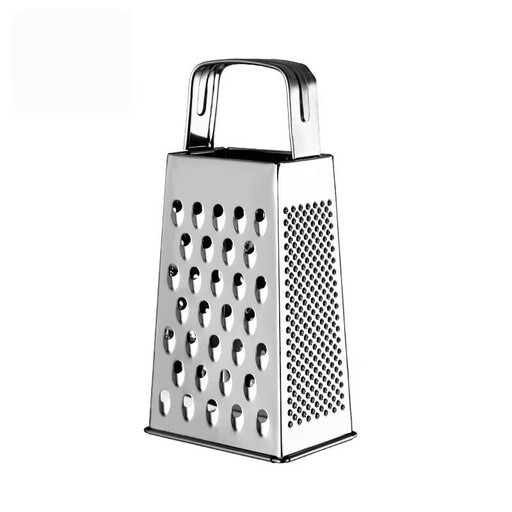
Why it suits this type of user: This four-sided grater combines several grating and slicing surfaces in one compact kitchen tool. It’s ideal for households that occasionally prepare cheese, vegetables and other ingredients.
Instead of buying several separate tools, you get four functions in one. The stainless-steel construction is clearly specified in the product details.
Four-sided design and stainless steel as the stated material; suitable for a range of slicing and grating tasks.

Why it suits this type of user: This knife combines a broad, rectangular blade with an ergonomically shaped plastic handle. It’s designed for anyone looking for one kitchen knife to use for vegetables, herbs and certain meat-cutting tasks.
The product details specify a special stainless-steel blade, an 18.5 cm blade length and a smooth, riveted handle joint. This makes key buying criteria easy to check.
8 cm-wide blade; plastic handle with riveted joint; suitable for cutting and scooping up chopped ingredients.
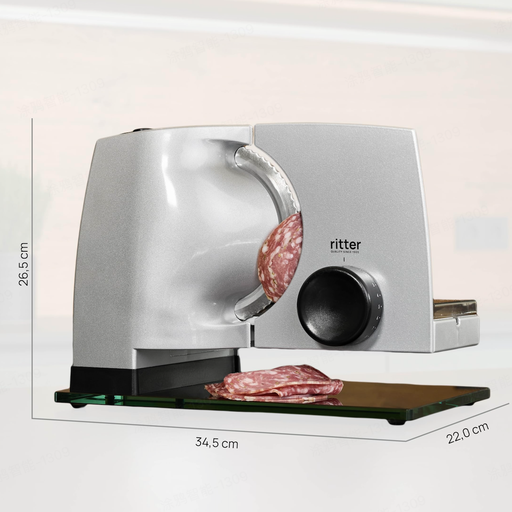
Why it suits this type of user: This electric food slicer is designed for bread, fruit and vegetables. It’s a good choice for households that regularly prepare evenly sliced food and have space for a countertop appliance.
The product details specify the slice thickness, 18 cm carriage travel, removable carriage and safety features. This makes it easier to check whether it meets your needs before buying.
Slice thickness of up to around 20 mm according to the product description; removable carriage and glass base; designed for use as a countertop appliance.
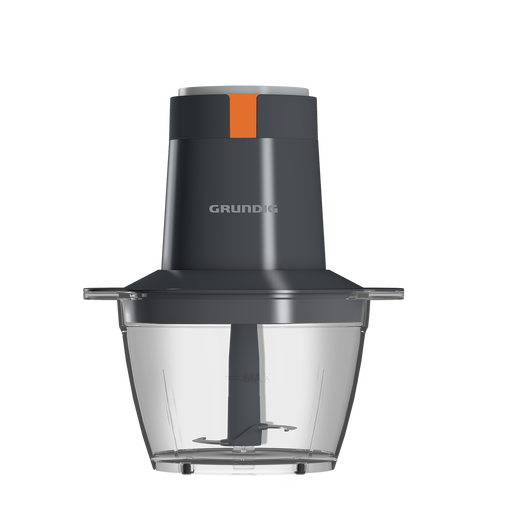
Why it suits this type of user: This mini chopper is for anyone who wants to chop small amounts of onion, vegetables, nuts or herbs using an electric appliance.
Two speed settings and a 0.5-litre glass container make its intended uses clear. The motor unit is cleaned separately.
500-watt motor, two speed settings, removable stainless-steel blades and a glass container with a 0.5-litre capacity.
We’ve put together a complete, regularly updated list of products that meet these strict selection criteria and the safety requirements applicable in the EU.
If storage space is limited, a versatile kitchen knife, a vegetable peeler and a compact grater are often enough. If you regularly chop ingredients, you could also choose a small mini chopper. Check the dimensions and how the individual parts can be stored before you buy.
Their lifespan depends on the materials, how heavily they’re used, how they’re cleaned and how they’re stored. Knives shouldn’t be left loose in a drawer. Blades shouldn’t be used for purposes they weren’t designed for, and electric appliances should only be used with the foods listed in the instructions. A blunt blade should be sharpened professionally or replaced.
As well as electricity, you may need to factor in cleaning, replacement blades and any additional accessories. An appliance with a small capacity may also mean more batches are needed. Compare the motor power, container size, availability of spare parts and the intended level of use.