
Lieferung heute & morgen

Qualitätsgarantie

Willkommens-Angebote freischalten: KOSTENLOSE Lieferung | Bis zu 80 % RABATT | Kostenlose 30-Tage-JoyPlus-Testphase
App herunterladen
A kitchen dish drainer should hold wet dishes securely, drain water effectively and keep your worktop tidy. In practice, however, many models don’t fit the sink you have or offer less space than their product images suggest. Our selection helps you avoid common buying mistakes and find the right dish drainer for your home, camping trips or commercial use.
A two-tier drainer may look like a space-saving option, but at over 50 centimetres long it may not suit a narrow kitchen. It’s not just the length and width that matter. You should also consider:
Measure the space available before you buy. The height of the tap can also be a factor if you plan to stand plates or glasses upright.
“Metal” doesn’t automatically mean stainless steel. A metal dish drainer may be made from coated steel, while other models combine stainless steel parts with plastic components. Coatings protect the surface, but abrasive sponges or damaged areas can compromise them.
For everyday use, the specific material details, the finish on the edges and the care instructions matter more than general marketing claims. Empty the drip tray regularly to prevent water from sitting in it for long periods.
A dish rack with plate holders isn’t necessarily suitable for lots of glasses or large cookware. Check whether it has a cutlery holder and how many plates, glasses or cups it can actually hold. A dish drainer with cutlery holder can make washing up easier, but it needs extra space at the side.
A single-tier model is often a good choice for small kitchens, people living alone or use on the go. Two-tier designs make use of vertical space and can hold plates, bowls and cutlery separately. Larger drainers should be assembled on a level surface. Place heavy items on the lower tier where possible, or distribute them evenly across the rack.
A drip tray should be large enough and have a raised edge to help keep water off your worktop. For example, a raised edge is specified for one compact black model. Even so, the tray doesn’t replace a direct drain into the sink: it needs to be emptied and cleaned regularly.
Smooth plastic surfaces can usually be wiped clean with a damp cloth. Don’t clean coated metal parts with harsh cleaners or scouring pads. A lightweight design is handy for camping, while a sturdy, easy-to-access construction may be more important in a commercial kitchen.
Steel offers a sturdy construction, while polypropylene or ABS plastic is often used for trays and cutlery baskets. When choosing a model, check whether the product description specifies the materials used for the rack, tray and accessories separately. Maximum load information isn’t available for every model, so only place heavy pans or pots on a rack if its design and the manufacturer’s guidance suggest it’s suitable.
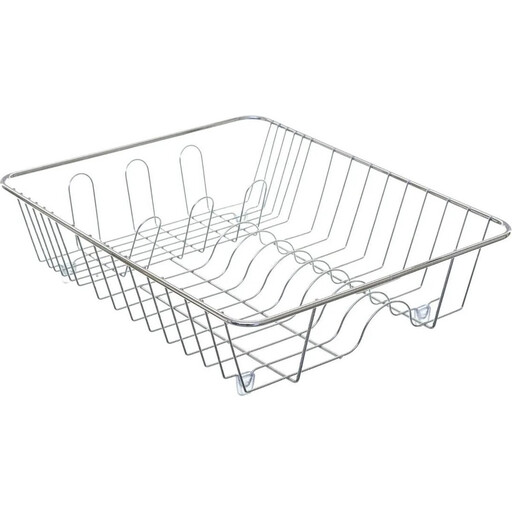
Why this product suits this profile: Its compact size makes it a good fit for smaller worktops, everyday use in the kitchen and camping trips. It’s listed as holding up to ten plates and includes a cutlery basket.
The dimensions are clearly stated. The raised edge is designed to help catch water, and the product description recommends cleaning it with a damp cloth.
Steel and ABS plastic construction, space for six glasses and a weight of 610 g.
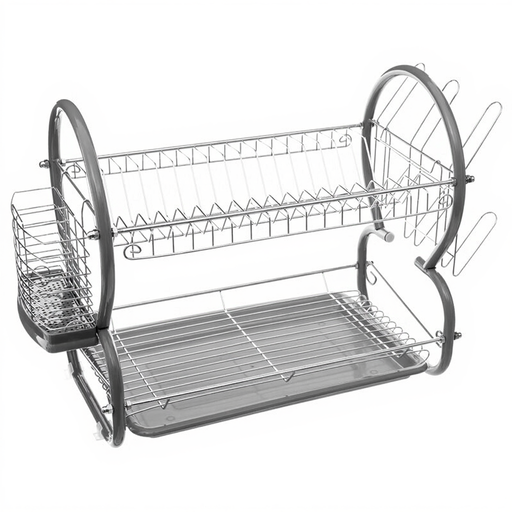
Why this product suits this profile: The two-tier design makes good use of vertical space. Measuring 55.5 × 25.5 × 38 cm, it has room for plates, glasses and cutlery.
The product details specify a powder-coated CR steel construction. It’s designed to be assembled on a level surface, with the drip tray fitted correctly and weight distributed evenly.
Two tiers and a design made for long-term use; the drip tray can be emptied regularly.
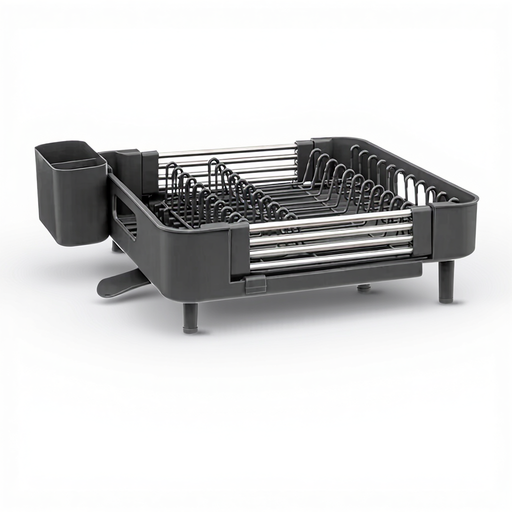
Why this product suits this profile: Measuring 50 × 35 × 13 cm, this model is a good option for households that wash up regularly. It’s listed as having a capacity of 20 items.
The product details list the dimensions, weight and materials separately. This makes it easier to check whether it will fit your worktop before you buy.
The draining section is listed as stainless steel, the unit weighs 1.57 kg and its interior can accommodate larger loads of washing up.
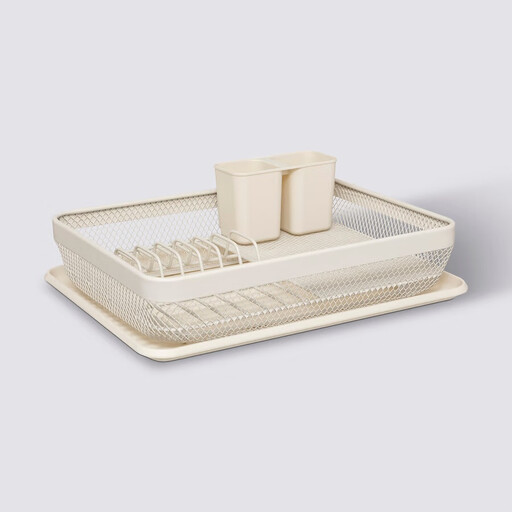
Why this product suits this profile: Its single-tier design needs less vertical clearance, making it a good fit for kitchens where a two-tier dish rack won’t fit beneath the wall units.
The dimensions of 43 × 31.3 × 12.8 cm make it easy to check whether it will fit your available space. It also comes with a polypropylene cutlery holder.
Steel rack, polypropylene drip tray, space for six glasses and a weight of 1.25 kg.
If you want to protect the drain area as well as dry your dishes, you can add a sink drain grid. According to the product details, this set of two stainless steel grids, each seven centimetres in diameter, is designed for sinks, draining boards, restaurants, cafés, hotels and commercial kitchens. It’s not a dish rack, but an accessory for the sink area.
We’ve put together a complete, regularly updated list of products that meet these strict selection criteria and fully comply with the safety regulations in force in the EU.
First, measure the available worktop space and allow for clearance from the wall, tap and wall units. A single-tier model is often enough for smaller households. For a larger household, a two-tier rack can make better use of the space available.
A suitably sized drip tray with a raised edge helps reduce the risk of water spilling over the sides. Make sure it’s fitted correctly, and empty and clean it regularly. The rack will generally be more stable when placed on a level surface.
Steel or stainless steel provides a sturdy base. Plastic is often used for drip trays and cutlery holders. Look for clear information about the materials, suitable care instructions and a design that suits the amount and type of dishes you need to wash.