
Lieferung heute & morgen

Qualitätsgarantie

Willkommens-Angebote freischalten: KOSTENLOSE Lieferung | Bis zu 80 % RABATT | Kostenlose 30-Tage-JoyPlus-Testphase
App herunterladen
A kitchen dish drainer should hold wet dishes, channel away water and take up as little worktop space as possible. In practice, though, problems are common: the drainer feels unstable, the drip tray overflows or the stated dimensions don’t fit the space available.
As a Joybuy Product Recommendation Officer, I’ve picked out the key things to consider and matched suitable models to different needs. This should make it easier to decide whether a dish drainer, a plate rack or a sink drainer basket is right for your household.
Claims such as “for the whole family” aren’t very helpful without specific measurements. What matters is the footprint, the number of plate slots and the space for cups, bowls and pans. A two-tier dish drainer makes better use of vertical space, but needs enough clearance beneath wall cabinets.
Also check whether the stated capacity refers to plates, glasses or the total amount of crockery. Some models give different figures for the number of plates and the actual overall load. Dishes shouldn’t be packed too tightly, as this can restrict airflow and prevent water from draining properly.
An integrated tray will only protect your worktop if it’s large enough and emptied regularly. Raised edges, drainage holes or a spout can make it easier to use. If you’re choosing a dish rack with a drip tray, look for one that can be removed so you can clear away limescale and water residue.
Without a suitable solution, a wet rack on a wooden worktop or beside the sink can leave persistent damp marks. Check whether water drains directly into the sink or collects in the tray.
“Metal” doesn’t automatically mean stainless steel. A stainless steel draining basket is practical for everyday use around water, but you should still check the material details and care instructions. Coated steel racks may be more vulnerable to moisture if their surface is damaged. Plastic models are often lightweight, but should be stable enough and kept away from strong heat sources.
If you’re buying a vegetable drainer or a kitchen draining basket for fruit and vegetables, it’s also important to check that the surface is suitable for the intended food contact. Any claims about material quality should be based on the manufacturer’s product description.
Before you buy, measure the space available beside or above your sink. Take into account:
A foldable dish rack is a good choice for small flats, holiday accommodation and campervans. When folded, it’s easier to store in a cupboard or drawer. For a two-tier model, make sure the base is wide enough and avoid overloading the top tier.
Non-slip feet, a sturdy frame and evenly distributed weight all help reduce the risk of tipping. Heavy pans should always go on the lower level. Place plates in the slots provided so they don’t knock against each other.
The design of the cutlery compartment also matters when choosing a dish rack. A separate cutlery-draining compartment keeps knives, forks and spoons from lying flat on top of one another. This helps them dry more evenly and makes them easier to take out.
Wash drip trays and baskets regularly with a mild detergent, then dry them thoroughly. Avoid leaving bamboo wet for long periods. Stainless steel can be cleaned with a soft sponge; abrasive products may scratch the surface.
For fruit, vegetables and smaller kitchen utensils, you could also use a vegetable drainer, a fine-mesh sieve or a sink draining basket. These options aren’t necessarily suitable for plates and pans, though.
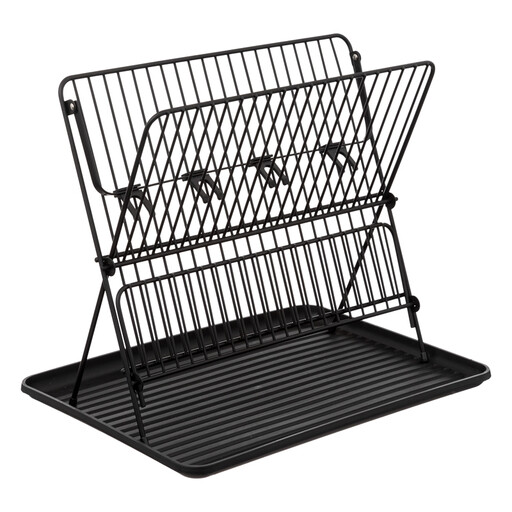
Why it suits this need: This two-tier rack makes good use of vertical space and folds flat when not in use. It’s a practical fit for smaller kitchens and spaces where you need to move it around.
The removable drip tray collects water. According to the product description, the rack is made from steel and PP; for stability, avoid overloading the top tier.
Two tiers, a foldable design and a removable drip tray.
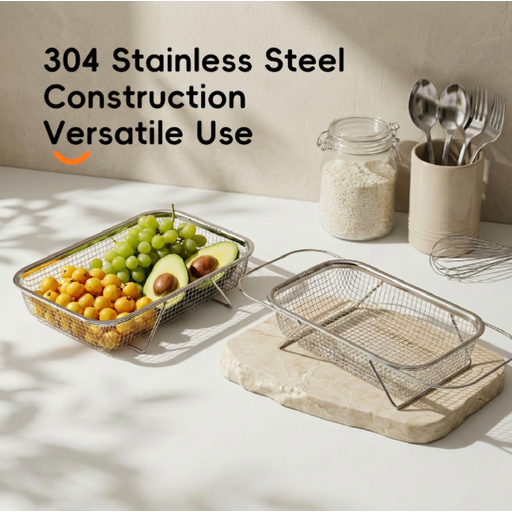
Why it suits this need: This extendable basket is designed to sit over a sink. According to the product description, it can also be used to wash vegetables or drain dishes.
The adjustable design sits over the sink, so water doesn’t need to collect on the worktop. Check that it’s secure before loading it.
Food-grade 304 stainless steel, according to the product details, and an extendable design.
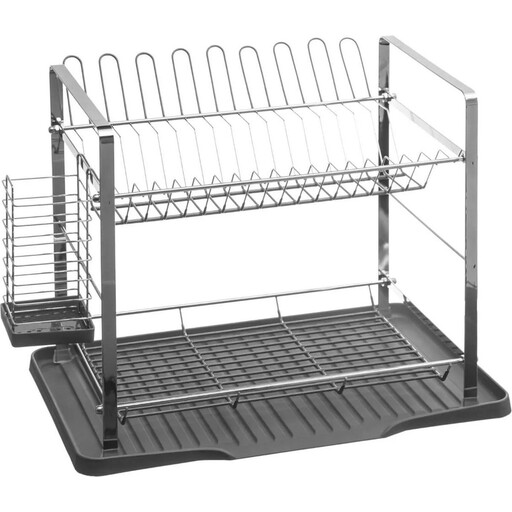
Why it suits this need: Measuring 50 × 30,5 × 34 cm and with a stated capacity of up to 17 plates, this rack is designed for households with plenty of washing up to do.
The specific dimensions make it easier to check whether it will fit. A removable cutlery tray and drip tray help keep the worktop clear of cluttered piles.
Two tiers, space for up to 17 plates according to the product details, and a non-slip base.
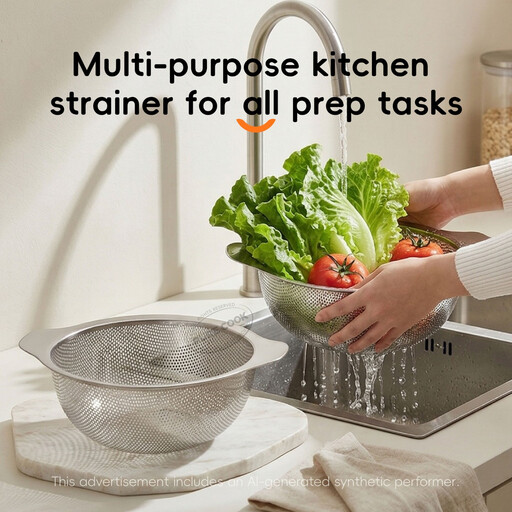
Why it suits this need: This basket has integrated double handles and is described as suitable for vegetables, fruit, rice, cutlery and dishes. It can be used in the sink, on the worktop or in the fridge.
The evenly spaced drainage holes are designed to let water run through quickly. Smooth edges and two handles make it easier to move, but you’ll still need a stable surface to set it down on.
27,3 × 22,6 × 9,1 cm according to the product details, double handles and versatile uses.
We’ve put together a complete, regularly updated list of products that meet these strict selection criteria and fully comply with the safety regulations in force in the EU.
Place the rack on a level, sturdy surface near the sink. Make sure the feet won’t slip on wet patches. If you’re using an extendable sink draining basket, both ends must rest securely on the edges of the sink. Put heavy items on the lower level or directly above the supporting parts of the rack.
Its lifespan depends on the material, how heavily it’s used and how well it’s cared for. Empty the water regularly, clean the tray and avoid harsh cleaning products. Take particular care not to leave bamboo damp for long periods. Damaged coatings or bent bars can affect stability and may mean it’s time to replace the rack.
A dish drainer doesn’t use electricity. The main tasks are emptying and cleaning the drip tray and drying the surface. Models that drain water directly into the sink can reduce the upkeep, but they need to be the right size and sit securely.