
Lieferung heute & morgen

Qualitätsgarantie

Willkommens-Angebote freischalten: KOSTENLOSE Lieferung | Bis zu 80 % RABATT | Kostenlose 30-Tage-JoyPlus-Testphase
App herunterladen
A kitchen dish drainer should hold wet dishes securely, drain water in a controlled way and keep your worktop as dry as possible. In small kitchens, when camping or in a busy catering environment, looks and price aren’t the only things that matter. The key factors are dimensions, drainage, material and actual capacity.
Many disappointing purchases come down to three common pitfalls:
Measure the available space in or beside your sink. Remember to allow for the tap, the distance from the wall and the drain opening. If you have limited worktop space, a slim dish drainer may be more practical than a large model with a higher capacity.
Always read the dimensions in the same order. For example, the 5five Black Metal Dish Drainer measures 39 × 33.5 × 10.5 cm. These measurements make it easier to check whether it will fit in your kitchen or at your campsite.
A dish rack should hold wet items above the surface, allowing air to circulate underneath. A raised edge can also help keep water within the rack. Smooth surfaces that are easy to reach are a plus when it comes to cleaning.
Before you buy, check:
A stainless steel dish drainer isn’t automatically maintenance-free, either. The specific material details and cleaning instructions still matter. If no stainless steel grade is stated, don’t assume it has particular qualities such as enhanced corrosion resistance.
A larger rack won’t solve every problem. A sink strainer can catch food scraps and help stop larger particles from going down the drain. If your drain opening is small, look for compact options with a suitable diameter.
A kitchen sponge holder keeps cleaning tools separate from your dishes. Look for drainage holes, feet and a surface that’s easy to wipe clean. A separate cutlery holder is also useful if you don’t want knives, forks and spoons mixed in with your plates.
The products below suit different spaces and ways of using your kitchen. Our selection is based on the available product information, including dimensions, materials, capacity and intended use.
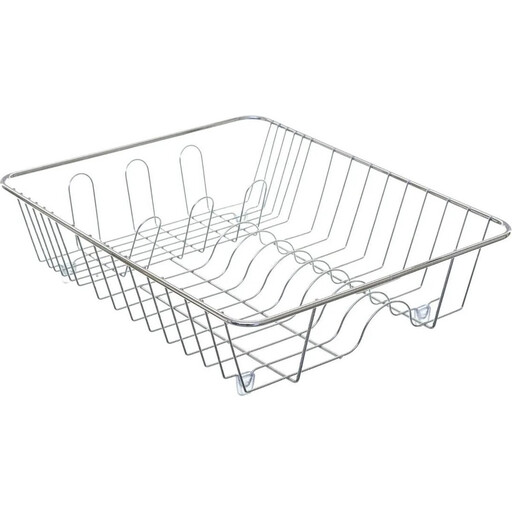
Why it suits this profile: Its clearly stated dimensions, built-in cutlery holder and suitability for both the kitchen and camping make it a straightforward choice for smaller households and changing locations.
The footprint and height are clearly specified. The raised edge is also worth considering when assessing how the rack will contain water.
Holds up to 10 plates according to the product details, with a separate cutlery holder, space for 6 glasses and a steel/ABS plastic construction.
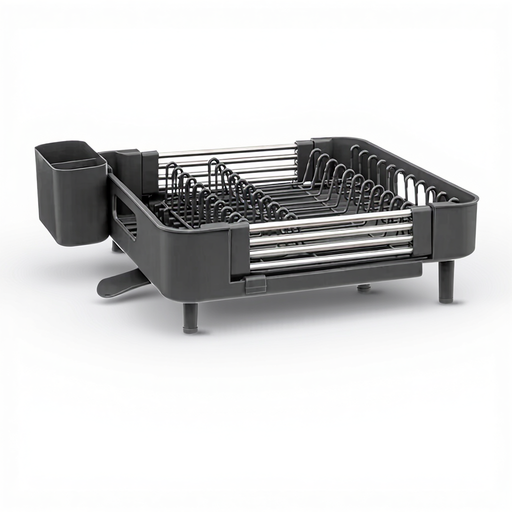
Why it suits this profile: Measuring 35 × 50 × 13 cm, this larger model is designed for households that wash up regularly and need more space.
The dimensions and stated capacity of 20 items make it easier to assess how much the rack can hold than a product description based on pictures alone.
A larger footprint, a product weight of 1,57 kg and a stainless steel drainage component according to the product details.
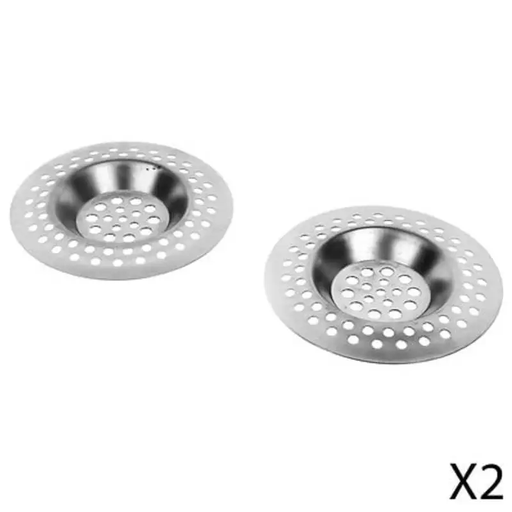
Why it suits this profile: This set of two compact strainers, each measuring 7 cm in diameter, complements a sink dish drainer at home, in a work area or in a commercial kitchen.
The diameter is specified, so you can check in advance whether the strainers will fit your drain opening instead of relying on a general size description.
A set of 2 steel strainers with a stainless steel finish, suitable for catching food scraps in domestic and catering kitchens.
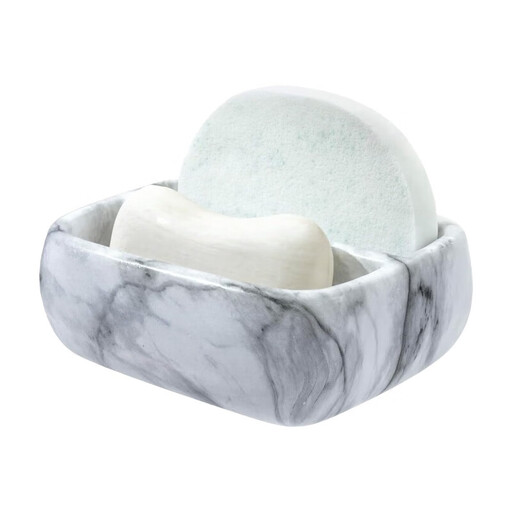
Why it suits this profile: Two separate compartments keep sponges, scourers or brushes organised beside your kitchen sink.
Separate compartments stop different cleaning tools from ending up in a jumble on the worktop. According to the product details, the surface should be cleaned by hand.
Two compartments, feet and dimensions of approximately 5.4 × 4.5 × 2.0 inches according to the product details.
We’ve put together a complete, regularly updated list of products that meet these strict selection criteria and fully comply with the safety regulations in force in the EU.
How long a kitchen dish drainer lasts depends largely on how it’s used, how much weight it carries and how it’s cleaned. Don’t leave the rack standing in a pool of water. Remove food scraps regularly and wipe the surfaces, cutlery holder and underside dry.
For metal products, only use abrasive cleaners if the care instructions specifically recommend them. Plastic parts can usually be cleaned with a damp cloth. It’s important not to load the rack beyond its stated capacity or what’s practical for everyday use. Heavy pans can bend thin bars or make the rack less stable.
It depends on the space available and how many dishes you usually wash. Measure the length, width and height of the space where you plan to put it. A compact dish rack is often enough for one or two people; larger households may benefit from multiple tiers or a model with separate sections for plates and cutlery.
Look for a drip tray, raised base or defined drainage edge. The rack should also sit level. If water can’t drain away in a controlled way, even a large rack won’t stop surfaces getting wet.
A suitable sink strainer can catch larger food scraps and help prevent the drain from getting blocked. The key things to check are the diameter, the material and how easily it can be emptied. Before ordering, make sure the strainer will fit your existing drain opening.