
Lieferung heute & morgen

Qualitätsgarantie

Willkommens-Angebote freischalten: KOSTENLOSE Lieferung | Bis zu 80 % RABATT | Kostenlose 30-Tage-JoyPlus-Testphase
App herunterladen
A kitchen dish drainer needs to do more than hold wet dishes. It should fit your worktop, direct water away efficiently and keep plates, glasses, cutlery and cookware safely separated. The design makes a real difference, especially in small kitchens, beside sinks with limited space, or when camping.
Many buyers look at colour and price first. But hidden design details are often more likely to cause problems: a drip tray that’s too small, unstable tiers or materials that are difficult to clean. The following points will help you assess a dish drying rack and find the right one for you.
A high capacity doesn’t automatically mean there’s room for plates and pans. On a compact dish rack, the gaps between the rails may be too narrow for larger plates. A two-tier model also needs enough height to fit cups and bowls on the lower tier.
Before you buy, check:
A basic tray collects water, but doesn’t necessarily direct it into the sink. Standing water can leave limescale marks and means more cleaning. If you’re choosing a dish rack with a drip tray, make sure the tray is removable and easy to reach. A spout or a rotating water guide can be useful if the rack sits right beside the sink.
It’s also important to empty and dry the tray regularly. The same applies to a kitchen dish drainer basket, which often remains in contact with leftover water after washing up.
A two-tier dish drainer makes good use of vertical space, but can tip if it’s loaded unevenly. Put heavy pots on the lower tier. Arrange glasses and plates so they don’t knock against one another or stick out over the edge.
Look for:
A stainless steel dish drainer is easy to care for and less affected by moisture. Even so, stainless steel should be dried regularly, as water marks and limescale can appear on any material. If you choose coated steel, check that the surface is undamaged.
Plastic parts such as polypropylene, or PP for short, are often used for drip trays. They’re lightweight and easy to clean. If the rack combines different materials, check that the joins don’t create hard-to-reach grooves where water can collect.
A compact, foldable dish rack can be a good choice for a one-person household or a small worktop. A two-tier model adds storage space upwards, but needs more height. Families and commercial kitchens should consider how many items they actually need to dry each day, rather than choosing by the rack’s external dimensions alone.
One example is a rack measuring 42 × 29 × 12.7 cm. This shows why it’s important to check the measurements against your own worktop. For larger models, such as one measuring 40 × 23.6 × 28.7 cm, also check whether the top tier will fit beneath your wall cupboards.
You should be able to reach every surface with a damp cloth and mild detergent. A removable drip tray makes cleaning easier. If the rack has a drainage outlet, make sure it lines up with your sink. Otherwise, water could run onto the worktop despite the outlet.
For regular use, follow this routine:
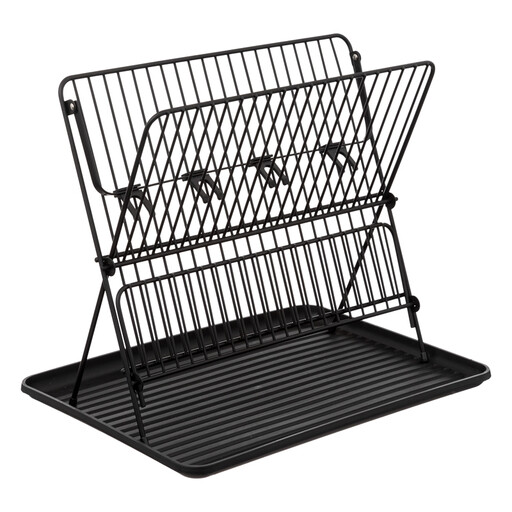
Why it suits this type of user: This two-tier model makes use of vertical space and folds flat when not in use. That makes it a practical choice for small kitchens, rented homes or occasional use.
The removable drip tray collects water. Protective sides on the top tier, along with the advice not to overload it, help reduce the risk of unstable loading.
Two tiers, a foldable design, steel and PP components, and a removable tray.

Why it suits this type of user: The combination of a stainless steel rack, PP tray and water guide makes this a good fit for households looking for a well-organised dish-drying area beside the sink for everyday use.
The stated dimensions of 42 × 29 × 12.7 cm make it easy to check whether there’s enough space. The integrated drainage tray is designed to be cleaned.
Stainless steel construction, a large drying area, removable or integrated drainage, and no assembly required according to the product description.
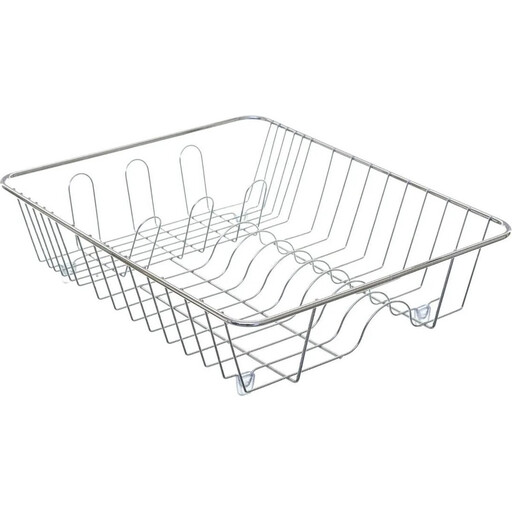
Why it suits this type of user: Its low-profile design and integrated cutlery basket make it suitable for homes, campsites or work areas where you need a straightforward dish drainer.
The external dimensions are clearly stated, so you can check the fit before buying. A raised edge is designed to help contain water.
Steel and ABS plastic, a cutlery basket, and room for six glasses and up to ten plates according to the product details.
We’ve put together a complete, regularly updated list of products that meet these strict selection criteria and the safety regulations in force in the EU.
Measure the available worktop space and leave enough room to move around the sink. If you’re buying for several people, length and width aren’t the only things to consider: check the height, the gap between tiers and the position of the cutlery basket too.
Empty the drip tray regularly, remove limescale with a suitable mild cleaning product and dry the rack after cleaning. Put heavy items on the bottom wherever possible. Don’t use harsh cleaning products on damaged coatings.
A two-tier dish drainer can increase drying capacity without taking up more floor space, but it needs more height. Before buying, measure to make sure it will fit beneath your wall cupboards and that the top tier will still be easy to reach.