
Lieferung heute & morgen

Qualitätsgarantie

Willkommens-Angebote freischalten: KOSTENLOSE Lieferung | Bis zu 80 % RABATT | Kostenlose 30-Tage-JoyPlus-Testphase
App herunterladen
A kitchen dish drying rack should hold plates, glasses and cutlery securely after washing up, drain water effectively and keep your worktop as clear as possible. In practice, size and appearance alone aren’t enough to help you choose the right one. The design, ease of cleaning and the exact measurements of the space where you plan to put it all matter.
A two-tier dish rack often offers more space, but it also needs enough clearance above it. If there’s a wall cabinet above your sink, a tall model could get in the way when you open the door or take out your crockery. So check the length, depth and height of the space, and allow for taps and opening windows.
If you’re looking at a stainless steel dish rack, the product description should specify the material as clearly as possible. Coated steel can also work well in the kitchen, provided the coating remains intact. However, scouring pads and harsh cleaning products can damage the surface. Check the care instructions, and make sure water won’t collect in hard-to-reach places.
A dish rack with a drip tray will only protect your worktop from standing water if the tray fits properly and is easy to remove. Models with a slope, drainage channel or rotating spout are practical options. A very shallow tray, on the other hand, can quickly overflow if it isn’t emptied regularly.
Measure the available space, including handles, clearance from the wall and room to move around it. For smaller kitchens, a space-saving dish rack with one tier may be more practical than a taller model. A compact rack should also leave enough room between each slot so that plates don’t knock against one another.
Common options include stainless steel, coated steel, plastic or a combination of materials:
A plate rack should hold plates as upright as possible, with even spacing between them. A separate holder for cups or glasses helps reduce the risk of delicate items tipping over. With a two-tier dish rack, it’s especially important to set it up on a level surface. Put heavier plates on the bottom, and place lighter cups and cutlery on the top tier or in a separate basket.
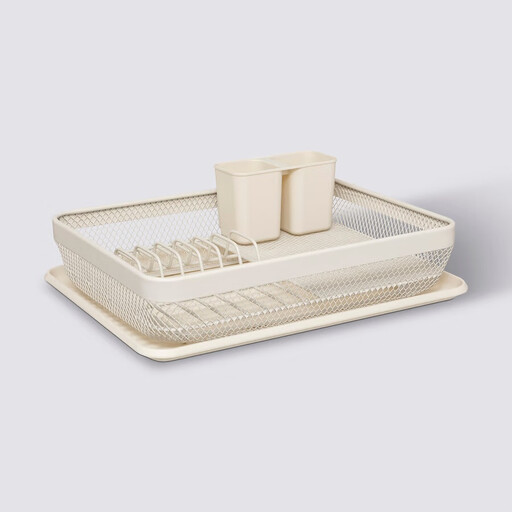
Why it suits these needs: Measuring 43 × 31,3 × 12,8 cm, this single-tier model is a good fit for households looking for a manageable amount of drying space without a tall frame. According to the product details, it comes with a steel frame, a polypropylene tray and an additional cutlery holder.
Its low profile reduces the risk of blocking a wall cabinet or opening window. The separate tray collects draining water.
A single tier, a combination of materials and a cutlery holder. The stated dimensions make it easier to plan where to put it.

Why it suits these needs: According to the product details, this dish rack is made from stainless steel and comes with a PP drip tray. It measures 42 × 29 × 12,7 cm and has a rotating water spout.
The product description specifies the materials, a removable tray and a water outlet. This makes it easier to understand how to care for the rack and how much space it needs.
Stainless steel frame, integrated tray, rotating spout and, according to the product details, a no-assembly design.
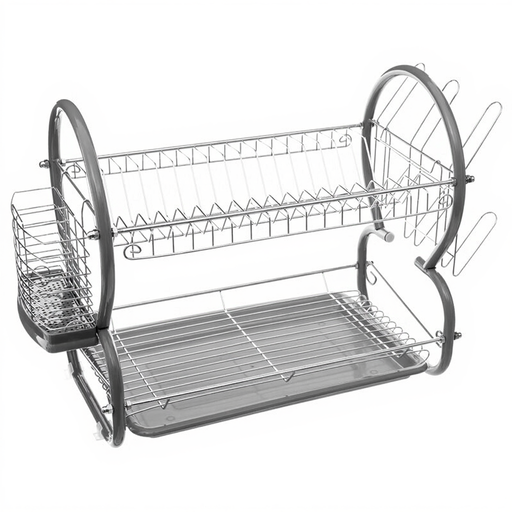
Why it suits these needs: Measuring 55,5 × 25,5 × 38 cm, this two-tier model is designed for households with more dishes to dry. According to the description, its frame is made from powder-coated CR steel.
The product details include the dimensions, coating and advice on distributing the weight evenly. This makes it easier to assess the rack before putting it together.
Two tiers, clearly stated outer dimensions and space for crockery, glasses and cutlery.
We’ve put together a complete, regularly updated list of products that meet these strict selection criteria and fully comply with the safety regulations in force in the EU.
Empty the drip tray regularly and wipe the frame and tray with a soft cloth. Allow all parts to dry completely before putting them back in place. Avoid steel wool, scouring products and harsh cleaners when cleaning coated models. Also check the joints, feet and surface for any signs of damage.
When assembling a two-tier dish rack, make sure the frame stands on a level, stable surface. Distribute heavier plates evenly, and position glasses so that they don’t rub against one another. How long a rack lasts depends on its material, exposure to moisture, load and care, so general claims about durability aren’t useful.
That depends on how many dishes you wash each day and how much worktop space you have. Measure the length, depth and height of the space where you plan to put it. Single-tier models are often easier to fit into small kitchens, while a two-tier dish rack needs more vertical space.
Both materials have their own properties. Stainless steel is often used for the frame and is easy to care for with regular cleaning. Plastic, such as polypropylene, is often used for drip trays and cutlery holders. The finish and care instructions for the specific product are what matter.
Choose a model with a well-fitting drip tray and, if available, a water outlet. The tray should be fitted correctly and emptied regularly. It also helps not to pack the dishes too tightly, so water can drain away properly.