
Lieferung heute & morgen

Qualitätsgarantie

Willkommens-Angebote freischalten: KOSTENLOSE Lieferung | Bis zu 80 % RABATT | Kostenlose 30-Tage-JoyPlus-Testphase
App herunterladen
A good dish rack is an unsung hero in the kitchen. It ensures that hand-washed dishes can dry efficiently without damaging the countertop. However, the selection is vast, and not every model lives up to its promise. Many products quickly turn out to be a regrettable purchase, causing clutter and frustration. This guide will show you what to look for to find a functional and durable dish rack for your kitchen.
Before deciding on a model, it's helpful to know the typical weak points that often become apparent in low-quality products after just a few weeks.
A careful choice based on objective criteria can eliminate these problems from the outset.
To make an informed decision, you should examine three essential features. These determine the longevity, hygiene, and functionality of your new kitchen organizer.
The material is crucial for durability and ease of maintenance.
Measure the available space next to your sink accurately before choosing a kitchen drying rack. Consider not only the width and depth but also the height, especially if you have upper cabinets.
A good drainboard keeps the countertop dry. The simplest solution is a removable tray that is emptied regularly. More advanced models feature an integrated, slightly sloped drainage channel or a swiveling spout that directs water straight into the sink. This is the most hygienic and practical solution, as it prevents standing water.
Here are some recommendations tailored to different needs and kitchen sizes.
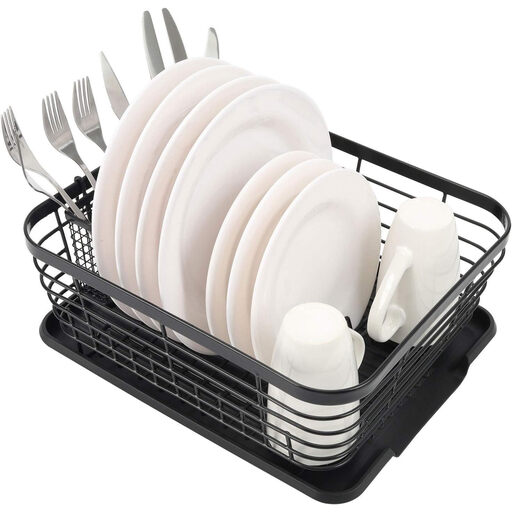
Why This Fits Their Persona: This model is designed for kitchens with limited counter space. It fits directly into most standard sinks or can be placed beside one, freeing up valuable workspace.
By being placed in the sink, it completely bypasses the problem of water pooling on the countertop. Water drips directly where it's supposed to go.
Maximum space-saving thanks to in-sink use; complete set with a cutlery holder and drainboard for flexible placement.
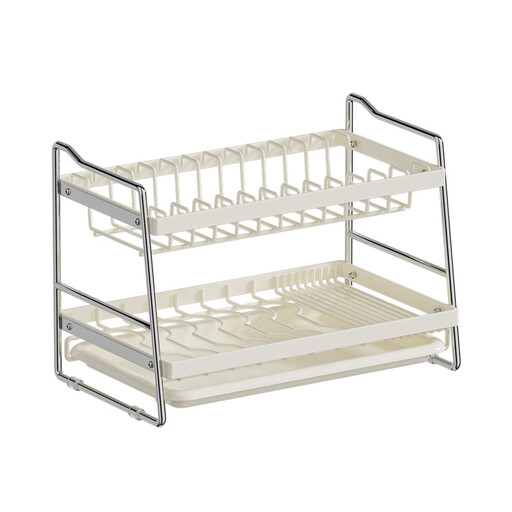
Why This Fits Their Persona: When you have a lot of dishes daily, capacity is crucial. The two-tier design doubles the drying area without blocking the entire countertop. It offers space for plates, bowls, cups, and cutlery from a full meal.
The sturdy, well-thought-out construction prevents the wobbling that is a problem with many large racks. The integrated drainboard efficiently catches water and keeps the countertop dry.
Large capacity due to the 2-tier design; integrated water drainage system for a dry countertop.
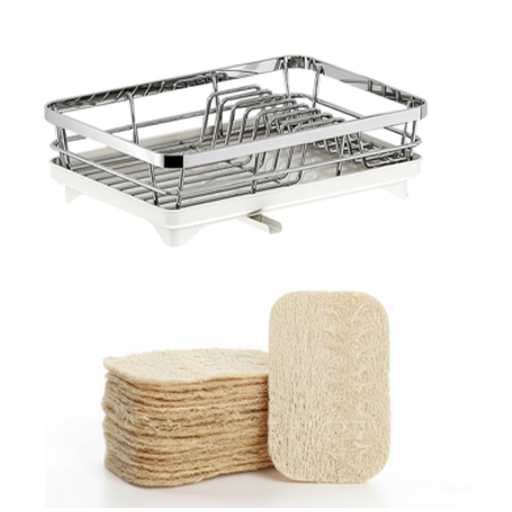
Why This Fits Their Persona: Anyone looking for a long-term, hygienic, and robust solution will find stainless steel to be the right choice. This model is designed for continuous use and maintains its shape and appearance even with daily water contact.
The rack is made of rust-resistant stainless steel, actively counteracting the most common problem—rust formation. The solid workmanship ensures a stable base without any wobbling.
Durable and hygienic material; the integrated PP drainboard efficiently drains water.
We have compiled a complete, up-to-date list of products that fully meet these strict selection criteria and all applicable safety regulations.
1. How do I prevent rust on a metal dish rack? The most effective method is to choose a model made of high-quality, rust-proof stainless steel. For coated models, be careful not to damage the coating with sharp objects. Wiping the rack dry regularly can also extend its lifespan.
2. How often should you clean a dish rack? It is recommended to thoroughly clean the dish rack, and especially the drainboard, at least once a week. This prevents the buildup of limescale and bacteria. Most racks can be easily cleaned with dish soap and warm water.
3. Where is the best place for a dish rack? The ideal spot is right next to the sink. This minimizes water dripping on the counter on the way from the sink to the rack. If your model has a direct water drain, position it so that the spout hangs over the edge of the sink. Always ensure a level and stable surface.