
Lieferung heute & morgen

Qualitätsgarantie

Willkommens-Angebote freischalten: KOSTENLOSE Lieferung | Bis zu 80 % RABATT | Kostenlose 30-Tage-JoyPlus-Testphase
App herunterladen
A kitchen dish rack should safely hold crockery, cutlery and kitchen utensils after washing up, without permanently taking over your worktop. In practice, however, the right choice depends on more than just price or design. The key factors are dimensions, water drainage, stability and where you intend to use it.
If you focus solely on capacity, you may end up buying a model that does not fit beside the sink. A shiny metal rack can also develop water marks if it is not cared for properly. An extendable dish rack is not automatically suitable for every sink either. The following criteria will help you avoid common purchasing mistakes.
A dish rack with a drip tray needs space beside the sink. Before buying, measure the available length, depth and height. Also take taps, window openings and wall units into account.
For small kitchens, a sink dish rack that rests directly over the basin can be a practical option. Models of this type require less worktop space, but they must fit the width and rim of the sink.
A shallow or poorly positioned tray can cause water to collect on the worktop. This makes cleaning more difficult and may contribute to moisture damage on sensitive surfaces. Check whether the water is channelled into a tray or drains directly into the sink.
A sink dish rack with a raised grid is particularly suitable when wet dishes need to dry directly over the sink. With a traditional dish rack and tray, it is important that the tray can be removed and accessed easily.
‘Metal’ does not automatically indicate corrosion resistance. With a stainless steel dish rack, the specific material information is more meaningful. The product description should clearly state whether stainless steel or, for example, 304 stainless steel is used.
Plastic parts such as a drip tray can be lightweight and easy to clean. However, whether they are dishwasher-safe must be explicitly stated in the product details. On the 5five model, the tray is made from polypropylene; according to the product information, the entire product is not dishwasher-safe.
First measure the available worktop space or the internal width of the sink. Also consider how the rack is divided:
An extendable dish rack offers flexible length, but this does not replace checking the support points. With an adjustable span of 29 to 44 cm, the basin must fall within this range. The width and height determine whether there is actually enough room for plates and pans.
A dish rack with a drip tray collects water beneath the rack. This protects the worktop, but the tray must be emptied and dried regularly. With a model positioned over the sink, the water drains directly into the basin. The rack must sit securely and must not slide when being loaded.
With a sink dish rack, the support surface should be wide enough. Also follow the manufacturer’s instructions regarding the maximum load. Metal edges must not protrude over the rim of the basin, where they could get in the way while you work.
The products listed describe 304 stainless steel as a rust-resistant, food-safe material. Even so, water should be allowed to drain away after cleaning. Wipe the surface dry when necessary and use a mild cleaning product. Abrasive cleaners can scratch stainless steel surfaces.
A sink organiser or kitchen sponge holder should also be positioned so that sponges and brushes are not left standing in water. For a sink strainer or sink sieve, the most important factor is the correct diameter. The stainless steel sink grids available each have a diameter of 7 cm and come as a set of two.
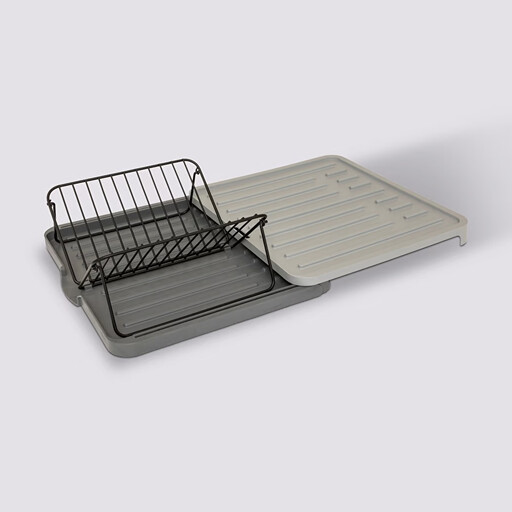
Why this product suits this profile: The fixed size of 58.2 × 36.2 × 10.3 cm is easy to plan for in households with sufficient space beside the sink. The integrated tray catches draining water.
The dimensions and material information are clearly specified. The polypropylene tray prevents water from running directly onto the worktop.
Steel rack, polypropylene tray, space for up to six glasses and a stated two-year statutory warranty.
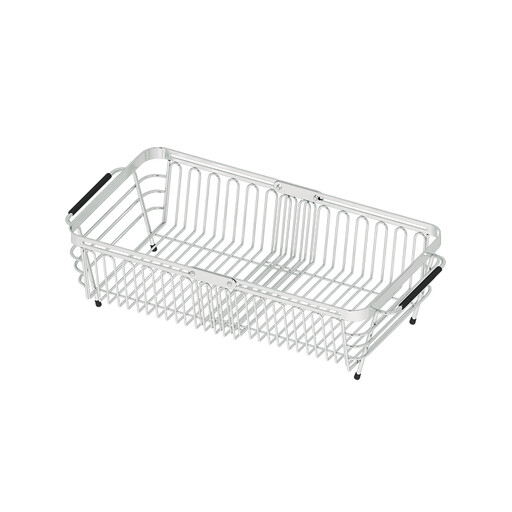
Why this product suits this profile: The extendable dish rack can be adjusted from 29 to 44 cm and used over or inside the sink. The stated material is food-safe 304 stainless steel.
The adjustable length reduces the risk of buying the wrong product for sinks of different widths. Before use, however, the support points must sit fully on the sink rim.
Adjustable length, 21.2 cm width, 10.5 cm height and a raised grid for draining water directly into the basin.
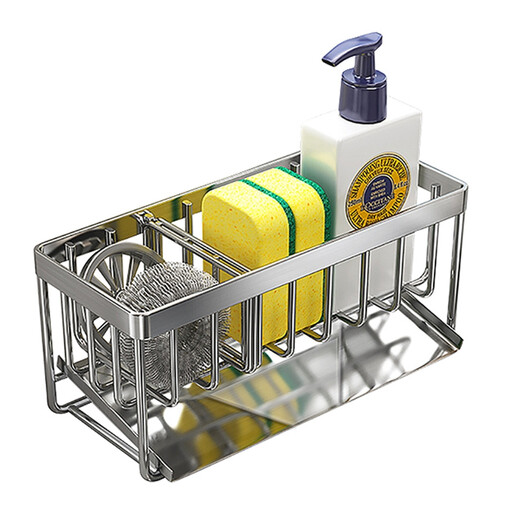
Why this product suits this profile: For households or smaller catering areas where sponges, brushes and washing-up liquid need to be kept neatly by the basin, this organiser offers a compact solution measuring 21.5 × 10.3 × 9 cm.
Its compact footprint prevents a large dish rack from taking over the entire worktop. The surface should be level and dry to prevent the organiser from tipping over.
304 stainless steel, separate storage for a sponge and brush, plus an integrated pump dispenser according to the product description.
We have put together a complete, regularly updated list of products that fully meet these strict selection criteria and the safety regulations applicable in the EU.
Empty the drip tray regularly and remove water or limescale residue with a soft cloth. For stainless steel, a mild cleaning product is usually sufficient. Dry mesh surfaces and connection points to prevent deposits from building up there.
With an extendable model, check the telescopic sections from time to time. Do not place more weight on the rack than specified in the product information. If there are sharp edges, bent supports or unstable connections, continued use is not advisable.
For limited worktop space, a model placed over the sink is often a good choice. Measure the internal or external width of the basin and check the support height. An extendable model can be beneficial if its stated span matches the sink.
A dish rack with a drip tray collects water beneath the rack. Alternatively, a raised sink dish rack directs water straight into the basin. The tray should be emptied and cleaned regularly to prevent stagnant water from remaining.
Its service life depends on the material, load, care and exposure to moisture. Look for sturdy connections, clearly specified materials and the permitted load. Regular drying and avoiding harsh abrasive cleaners can help preserve the surface and functionality.