
Lieferung heute & morgen

Qualitätsgarantie

Willkommens-Angebote freischalten: KOSTENLOSE Lieferung | Bis zu 80 % RABATT | Kostenlose 30-Tage-JoyPlus-Testphase
App herunterladen
A kitchen dish rack should hold wet dishes securely, drain water effectively and make good use of the space beside your sink. In practice, however, poor purchases are often down to unsuitable dimensions, impractical drainage channels or materials that are difficult to clean, rather than the price.
These three pitfalls are particularly common:
Households, cafés, hotels and commercial kitchens all have different requirements. Before you buy, consider the space available, how much washing-up you do each day and how easy the product is to clean.
First, measure the space beside your sink. Consider not only the length and width, but also the distance from the tap, wall and wall cupboards. For example, a model measuring 35 × 50 × 13 cm needs a worktop with sufficient width and should be positioned so that water cannot run behind the rack.
The stated capacity is also an important point of comparison. Details such as space for eight plates, six glasses or a separate cutlery holder are more useful than general marketing claims. A compact kitchen dish drainer may be enough for a one-person household. Families and businesses usually need more space and a clear separation between plates, cutlery and glasses.
A metal dish rack can be made from steel or stainless steel. Check the exact material rather than relying on the general description ‘metal’. Stainless steel surfaces are common in kitchens and can usually be cleaned with a damp cloth. If the surface is coated or painted, check whether it is prone to scratching.
Plastic parts, such as cutlery holders or feet, can reduce the weight and protect the worktop. Look for smooth, accessible surfaces without deep gaps where water and residue can collect. Cleaning instructions, such as ‘wipe clean with a damp cloth’, should suit the way you plan to use the product.
A dish rack should not leave wet dishes standing in a pool of water. A raised edge, drip tray or defined drainage direction can help keep water off the worktop. Check whether these accessories are included or need to be bought separately.
Other products can be useful for the sink itself:
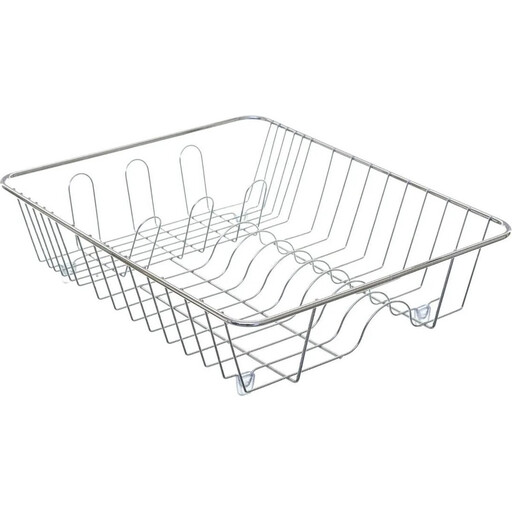
Why this product suits your needs: Its specific dimensions make it suitable for households and occasional use when camping. It holds up to eight plates and six glasses, and comes with a cutlery holder.
The capacity and dimensions are clearly specified. A raised edge is designed to help control water drainage.
Steel and ABS plastic construction, 39 × 33,5 × 10,5 cm, separate cutlery holder.
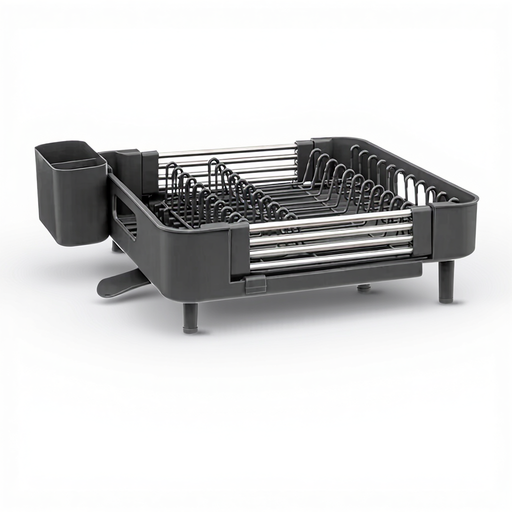
Why this product suits your needs: The combination of metal and PP is a good choice if you want a clearly defined size and an organised layout for everyday washing-up.
Its dimensions of 35 × 50 × 13 cm make it easy to check how much space you’ll need before buying. Make sure the combination of materials is suited to your worktop.
35 × 50 × 13 cm, weighs 1,57 kg, with stainless steel specified for the drainage area.
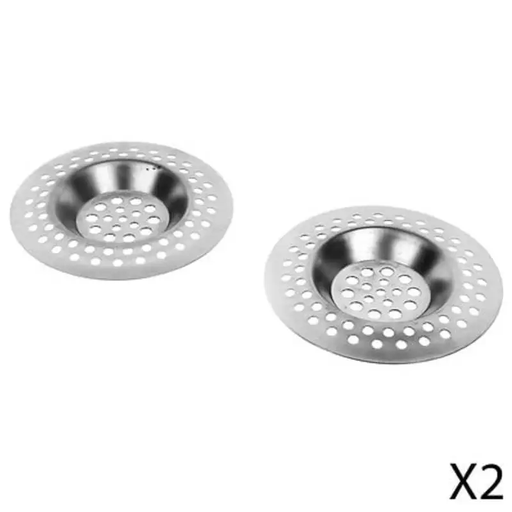
Why this product suits your needs: The two sink grids, each 7 cm in diameter, are designed as additional sink accessories for drain areas, draining boards and commercial kitchens.
The fixed diameter helps ensure a proper fit. Measure the diameter of your existing drain before buying.
Set of two, steel with a stainless steel finish, each with a diameter of 7 cm and specified for professional use.
We’ve put together a comprehensive, regularly updated list of products that meet these strict selection criteria and fully comply with the safety regulations in force in the EU.
The right size depends on the worktop space available and how much washing-up you do each day. Measure the space beside your sink, leaving a little room between the rack, wall and tap. A compact model is often enough for smaller households; if there are several people, separate sections for plates, glasses and cutlery are useful.
Look for a drip tray, raised edge or clearly defined drainage direction. The rack should stand securely and be emptied or wiped down regularly. A flat surface without any drainage can allow moisture to collect beneath the dishes.
Its lifespan depends on the material, how heavily it is used, how much moisture it is exposed to and how it is cleaned. Remove water regularly, clean hard-to-reach areas and avoid harsh cleaning products unless the manufacturer says otherwise. With metal models, keep an eye out for visible damage to the surface, as residue can build up in these areas.