
Lieferung heute & morgen

Qualitätsgarantie

Willkommens-Angebote freischalten: KOSTENLOSE Lieferung | Bis zu 80 % RABATT | Kostenlose 30-Tage-JoyPlus-Testphase
App herunterladen
A kitchen drying rack needs to hold your crockery securely, drain water effectively and take up as little space as possible. In small British kitchens, looks alone won't cut it. Dimensions, material, cleaning and the position of the water drainage all determine whether a dish drying rack is practical for everyday use.
A two-tier model can hold more crockery, but that doesn't automatically mean it takes up less space. What really matters are the external dimensions, including the drip tray and any side accessories. Before you buy, measure the free space next to your sink. Also consider the clearance to wall cabinets, windows and taps.
A tray that lets water pool can make cleaning harder and leave your work surface damp. So look for a drying rack with water drainage or a drip tray with a slight slope. A swivel spout can be helpful if the position of your sink varies depending on your kitchen layout.
"Robust" or "long-lasting" on their own aren't technical specifications. With a stainless steel drying rack, check the material grade, finish and care instructions. Plastic models can also be practical if they're stable and easy to clean. The key thing is that water doesn't get trapped in hard-to-reach joints.
Compare the length, width and height of the dish rack with the available worktop space. A two-tier model makes use of vertical space and can create more order for plates, cups and bowls. Still, check that large plates fit into the designated slots and that the upper tier is easy to reach when loading.
For narrow kitchens, a space-saving drying rack with vertical dividers could be suitable. If you wash up frequently, the design should be able to hold not just plates but also cutlery, glasses and kitchen utensils.
A drying rack with drip tray should reliably catch water or channel it towards the sink. Check:
Freestanding systems can be positioned flexibly next to the sink. A drying basket or a simple colander is better suited for individual tasks, such as rinsing fruit, vegetables or pasta.
With a plastic dish drying rack, a sufficiently sturdy construction is key. For stainless steel, smooth surfaces and cleanly finished edges matter. The load capacity shouldn't just be judged by the number of tiers, but by how you intend to use it.
Clean the drip tray and rack regularly with a suitable mild detergent. Afterwards, make sure all parts dry thoroughly. Always follow the manufacturer's instructions, especially for coated or combined materials like stainless steel and PP plastic.
The following models differ in material, design, size and intended use. Product details are based on the information provided.
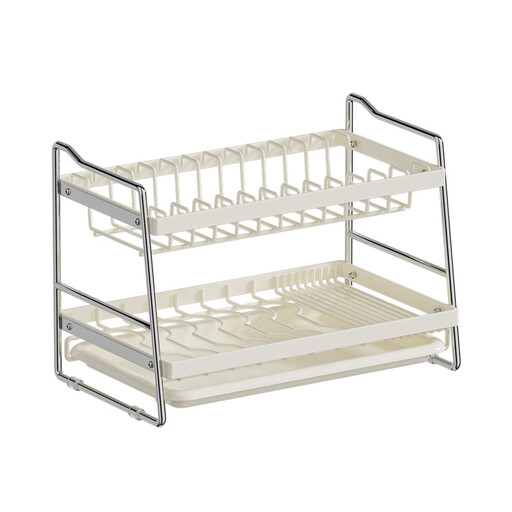
Why this product fits the profile: This freestanding model offers two tiers and measures approximately 40 × 23.6 × 28.7 cm. It's aimed at households that want to organise plates, cups and kitchen utensils on a limited work surface.
The external dimensions are stated, and integrated drip trays are part of the design. This makes it easier to compare the space needed with your own worktop before buying.
Two tiers, freestanding use and a white composite plastic according to the product description.
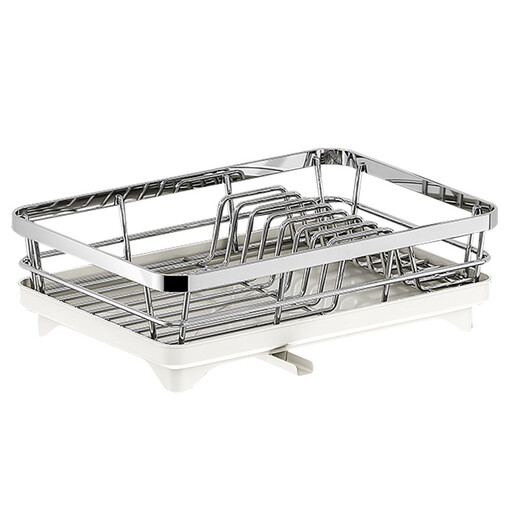
Why this product fits the profile: This model combines stainless steel with a PP drip tray and measures approximately 42 × 29 × 12.7 cm, making it suitable for a compact work surface.
The product description mentions a swivel deflector on the spout and an integrated design that requires no assembly.
Stainless steel construction, PP drip tray, cutlery slots and an adjustable water drainage spout according to the product details.
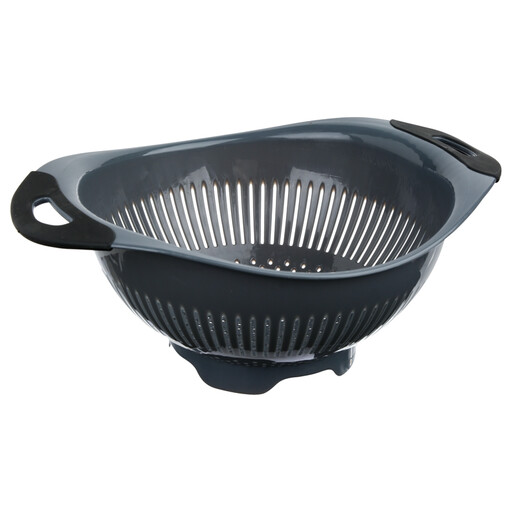
Why this product fits the profile: This colander is designed for food preparation and individual kitchen tasks. Its 2.5-litre capacity and handle make it easy to drain and rinse.
Its clear purpose prevents false expectations: this product is a colander, not a multi-tier dish rack for long-term crockery storage.
2.5-litre capacity, numerous drainage holes and a TPR handle according to the product description.
We've put together a full, regularly updated list of products that fully meet these strict selection criteria and the safety regulations in force in the EU.
Place the drying rack as close to the sink as possible, without blocking the tap or adjacent work areas. With a model that has water drainage, the spout should sit directly over the sink or a suitable collection container.
Plates belong in the designated slots, while cups and bowls should be positioned so that water can drain away. Cutlery shouldn't be left lying tightly on top of each other for long periods. Regularly remove debris from the drip tray and dry hard-to-reach areas after cleaning.
First, measure the free worktop space next to your sink. When planning, allow a little extra room for the tap and cupboard doors. A two-tier dish rack can increase capacity while keeping the footprint compact. Always compare the actual external dimensions with your own kitchen.
Both materials have different properties. Stainless steel is often chosen for its sturdy surface, while plastic models are usually lightweight and easy to handle. With combined products, the finish at the joins between the rack and drip tray is particularly important.
Choose a model with a slope, a removable drip tray or an adjustable water drainage spout. Don't stack plates flat on top of each other and clean the tray regularly. With a simple drying basket that has no drainage, remove any collected water promptly after washing up.