
Lieferung heute & morgen

Qualitätsgarantie

Willkommens-Angebote freischalten: KOSTENLOSE Lieferung | Bis zu 80 % RABATT | Kostenlose 30-Tage-JoyPlus-Testphase
App herunterladen
The selection of kitchen gadgets can be overwhelming. From gleaming stainless steel to colourful silicone, every utensil promises to make cooking and baking easier. But not every tool lives up to its advertising. Often, appealing designs hide quality defects that only become apparent with use. Before you re-equip your kitchen, it's helpful to know the common pitfalls to avoid poor investments.
Many buyers focus on appearance or a low price, overlooking crucial material and manufacturing details. Here are three common problems that lead to frustration in the kitchen:
To ensure your new kitchen gadgets are a durable and useful addition, you should check a few fundamental parameters. These objective features are often more important than brand promises.
The material is the foundation for the functionality and safety of a kitchen tool.
A good design solves a specific problem in the daily kitchen routine.
Different products are suitable depending on your cooking habits and standards. Here are some recommendations tailored to specific user profiles.
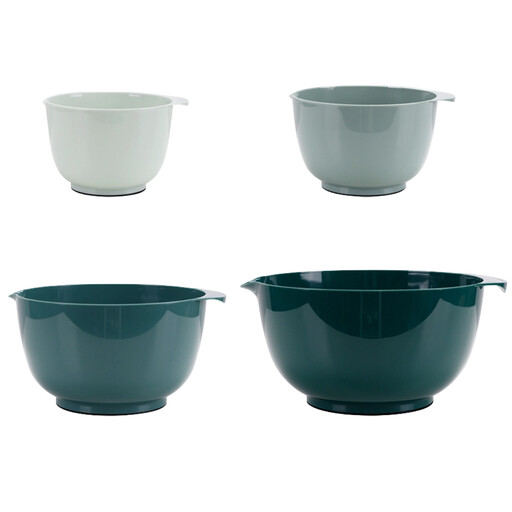
Why This Fits Their Persona: Ideal for anyone seeking a solid starter kit for baking and meal prep. The set covers various sizes and is stackable to save space, which is a major plus in smaller kitchens.
This set solves the problem of impractical individual pieces. The non-slip base ensures stability while mixing, and the BPA-free material is designed for safe food contact.
Key Advantage: Stackable design for space-saving storage. Pros: Non-slip base for a secure stand.
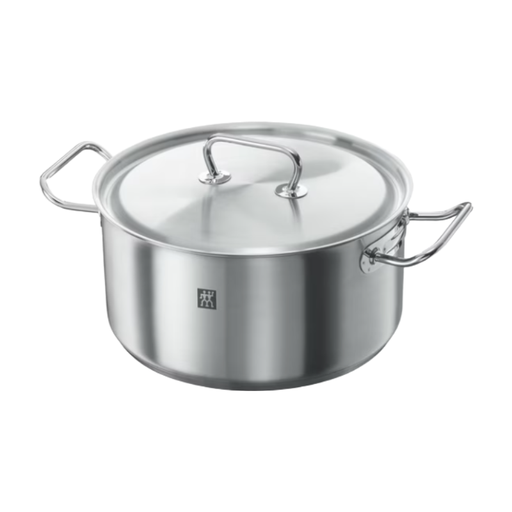
Why This Fits Their Persona: For cooks who value durability and excellent heat distribution. This roaster is an investment that pays off with regular use for braises, roasts, and large family meals.
It bypasses the trap of inferior materials by using 18/10 stainless steel and a SIGMA Classic sandwich base with an aluminium core. This prevents rust and ensures even heat distribution.
Key Advantage: Optimal heat retention and distribution. Pros: Scratch-resistant, hygienic, and suitable for all stovetops, including induction.
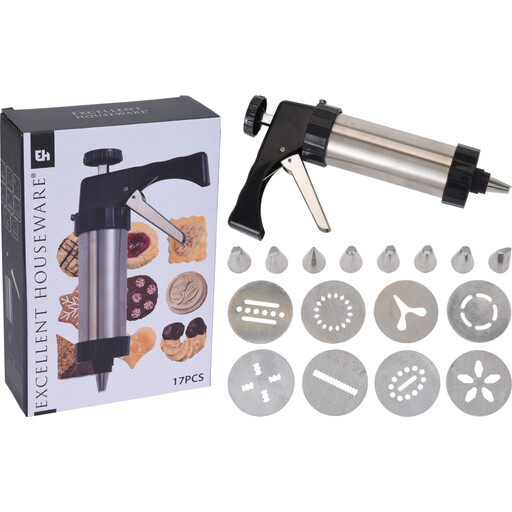
Why This Fits Their Persona: Perfect for home bakers who enjoy making spritz cookies and other decorative biscuits. This tool provides consistency and a variety of shapes that are difficult to achieve with a simple piping bag.
Instead of being an unreliable multi-function gadget, this is a specialised tool. The sturdy stainless steel construction ensures durability and uniform results, unlike flimsy plastic presses.
Key Advantage: Creates uniform cookie shapes with minimal effort. Pros: 16 interchangeable discs for creative variety.
We've compiled a complete, up-to-date list of products that fully meet these strict selection criteria and rigorous safety standards.
How can I identify food-grade silicone? Food-grade silicone is usually labelled as such (e.g., "food-grade," "BPA-free"). It should be odourless and not turn white when bent or twisted (a so-called "pinch test"). High-quality silicone retains its colour, whereas fillers often leave a white line.
Are stainless steel kitchen tools always dishwasher-safe? Most cooking utensils made from high-quality stainless steel (like 18/10) are dishwasher-safe. However, it is often recommended to wash sharp items like a good bread knife by hand to maintain the blade's sharpness. For tools with wooden handles or other material combinations, you should always check the manufacturer's instructions.
What does 18/10 mean for stainless steel cookware? The number combination 18/10 describes the composition of the stainless steel alloy. It contains 18% chromium and 10% nickel. The chromium content provides rust resistance, while the nickel increases acid resistance and gives the material a slight sheen. This composition is considered particularly high-quality, durable, and safe for contact with food.