
Lieferung heute & morgen

Qualitätsgarantie

Willkommens-Angebote freischalten: KOSTENLOSE Lieferung | Bis zu 80 % RABATT | Kostenlose 30-Tage-JoyPlus-Testphase
App herunterladen
Whether you’re making a quick salad, preparing a family meal or doing your weekly meal prep, kitchen gadgets and appliances should make tasks easier, take up little space and suit the way you cook. The options range from kitchen utensil sets, vegetable slicers and peelers to hand blenders, jug blenders and food processors.
Many disappointing purchases aren’t down to a lack of features, but to unclear product information. Check the materials, cleaning instructions and space requirements before you buy, and you’ll be better placed to assess the marketing claims.
A multi-functional kitchen gadget can replace several individual products. That’s useful if you’ll use its functions regularly. But if it comes with lots of attachments that are rarely used, they’ll mainly take up storage space.
So check:
A 2-in-1 product may be a better choice for a small kitchen or rented flat than a large set.
Stainless steel kitchen utensils can be durable and easy to care for. But the description alone doesn’t tell you whether a product is dishwasher-safe, rust-proof in all conditions or suitable for particular foods. The specific material information, build quality and care instructions all matter.
For knives, also consider blade length, handle design and storage. A kitchen knife set with a chef’s knife and a paring knife covers many everyday tasks, but it needs to be stored safely and often washed by hand.
For electrical appliances, only the detachable accessories are usually dishwasher-safe. The motor unit, cable and permanently fitted parts must not be put in water. Blades, wires and wooden handles on manual kitchen gadgets may also need special care.
So check what ‘dishwasher-safe kitchen gadgets’ means: does it apply to the whole product or just certain parts?
Stainless steel blades are common for cutting and peeling tools. For plastic parts, details such as BPA-free or suitability for food contact may be relevant. EU Regulation (EC) No 1935/2004 sets general requirements for materials that come into contact with food. However, this information doesn’t replace checking the product’s care instructions.
Make sure wooden handles are dried thoroughly. Wood isn’t automatically suitable for the dishwasher. For knives, blade hardness also affects care: an HRC range listed in the product specifications is more specific than the general claim ‘extra sharp’.
Before you buy, measure the space available in your drawer, kitchen cupboard or on your worktop. For appliances, these details are particularly important:
A 1.5-litre jug may suit family-sized portions, while a hand blender takes up less storage space when you’re preparing smaller quantities.
Cutting tools such as mandoline slicers, vegetable slicers, kitchen scissors and egg slicers need a secure grip and careful handling. A finger guard or pusher reduces direct contact with the blade, but you’ll still need to use the tool with care.
With blenders and meat mincers, check the lid, safety lock and overheat protection. Always unplug the appliance before cleaning it or changing attachments. Don’t touch moving blades until they have come to a complete stop.
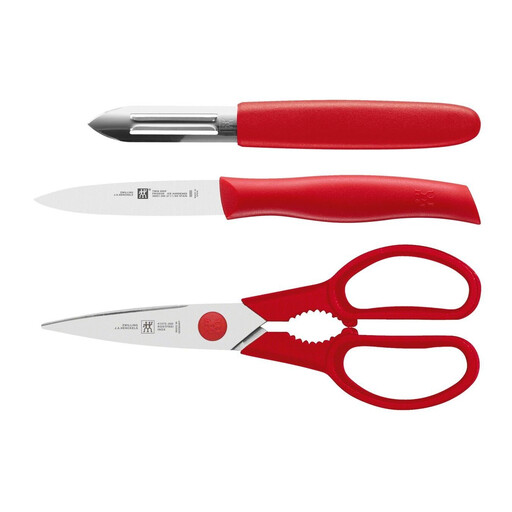
Why it suits this profile: This set brings together a paring knife, peeler and kitchen scissors for everyday food preparation at home.
The manageable set size means less unused kit. The product details specify 18/10 stainless steel and recommend hand-washing.
Three frequently used tools; non-slip handles according to the product description.
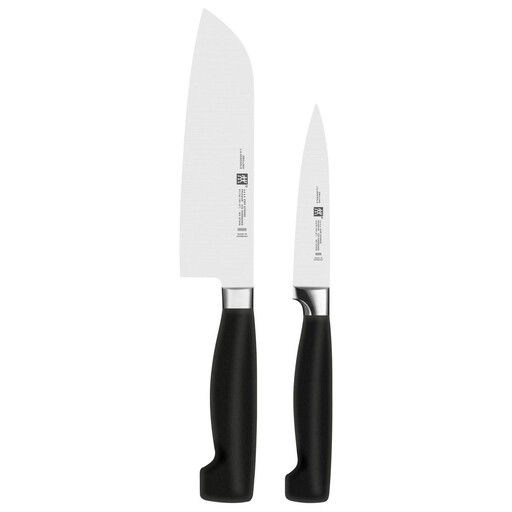
Why it suits this profile: This kitchen knife set includes a 20-cm chef’s knife and a 10-cm paring knife for larger and more precise cutting tasks.
The product details give an HRC range of 55 to 58 and clearly recommend hand-washing rather than using the dishwasher.
Two clearly specified blade lengths; special steel treated with FRIODUR according to the manufacturer.
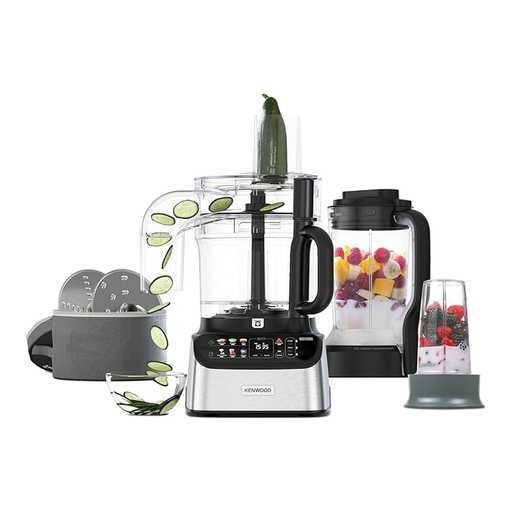
Why it suits this profile: This food processor is designed for households that regularly slice, grate, knead, purée or blend.
Its features are clearly specified: 1,000 watts, a 3-litre bowl, a 1.5-litre blender attachment and six pre-set programmes.
Built-in scales and timer; according to the product specifications, detachable parts are dishwasher-safe.
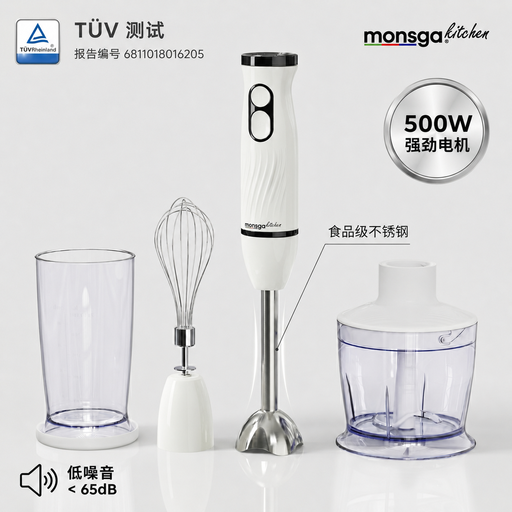
Why it suits this profile: This hand blender combines a blending shaft, chopper bowl, whisk and measuring beaker for soups, sauces, dips and baking preparation.
The features are limited to a small number of attachments. The detachable accessories are dishwasher-safe according to the product description; the motor housing must not be immersed in water.
A 500 ml chopper bowl, 500 ml measuring beaker and two operating modes in a compact design.
We’ve put together a complete, regularly updated list of products that meet these strict selection criteria and the applicable EU safety regulations.
For many households, a good kitchen knife, a peeler, kitchen scissors, a chopping board and a measuring beaker are enough to get started. Depending on how you cook, you could add an egg slicer, vegetable slicer or melon baller. If you often make soups, dips or smoothies, you can choose between a hand blender and a jug blender.
Their lifespan depends on the materials, how often they’re used and how they’re cared for. Blades stay in good working order for longer when used with suitable chopping boards and cleaned correctly. Don’t run electrical appliances for longer than the stated operating time, and take care to prevent them from overheating. Drying them thoroughly and following the manufacturer’s instructions matter more than any general estimate in years.
A set may cost less per tool and make it easier to keep everything together. Individual tools make sense if you already have the basics or only need a particular kitchen gadget. So compare what’s included, the materials, cleaning requirements and how often you’ll use each item, rather than just counting the pieces in the set.