
Lieferung heute & morgen

Qualitätsgarantie

Willkommens-Angebote freischalten: KOSTENLOSE Lieferung | Bis zu 80 % RABATT | Kostenlose 30-Tage-JoyPlus-Testphase
App herunterladen
A high-quality kitchen grater can significantly simplify meal prep, while an unsuitable model can quickly lead to frustration and even injury. But the market is flooded with products whose marketing promises often fail to deliver. Before you make a decision, it's important to understand the common pitfalls that can lead to a bad purchase.
This guide will help you identify the crucial features and find a kitchen grater that meets your needs for efficiency, safety, and durability.
Many buyers are drawn to attractive designs or seemingly low prices, but overlook functional flaws that only become apparent with use.
To avoid these problems, you should focus your attention on a few core technical parameters that determine the quality and functionality of a kitchen grater.
The heart of any grater is its blades. Stainless steel is the material of choice here, but there are differences in quality. Look for designations like 18/10 stainless steel or 430 stainless steel, which stand for high corrosion resistance and durability. Sharpness is determined not only by the material but also by the manufacturing process. Etched blades are often sharper and produce a finer grate than stamped versions. Some models feature special blade geometries that allow for bi-directional grating, speeding up the work.
The shape of the grater should match your primary use case:
Safe handling is essential. Check if the grater has a stable, non-slip base made of silicone or rubber. An ergonomically shaped handle provides a secure grip and control. For a vegetable slicer or a mandoline, a food holder with a finger guard is an indispensable component to prevent injuries.
Based on these objective criteria, we have identified some products that represent a suitable solution for different user profiles.

Why it's a great fit: This model is designed for users seeking a versatile fine grater for daily use who place the highest value on safety. Ideal for hard cheese, nuts, or chocolate.
Directly addresses the safety pitfall with an integrated finger guard and non-slip pads. The 18/10 stainless steel blade prevents the problem of rapid dulling.
Patented Z-Cut blade technology for efficient bi-directional grating. The device is fully dishwasher-safe and comes with a practical collection container.
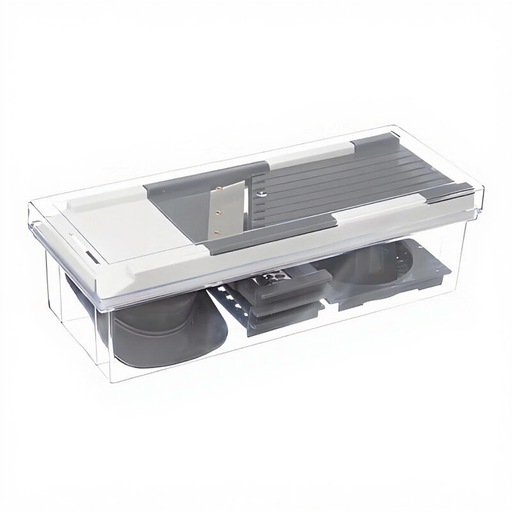
Why it's a great fit: For home cooks looking for an all-in-one solution to handle a wide variety of cutting, grating, and spiralizing tasks with a single, organized system.
This set replaces multiple individual tools of potentially lower quality. The stable base serves as a collection container and ensures a secure footing, thus avoiding the stability pitfall.
Comprehensive 11-piece set for maximum versatility, including blades for slices, julienne, and spirals. All parts can be stored compactly within the station.
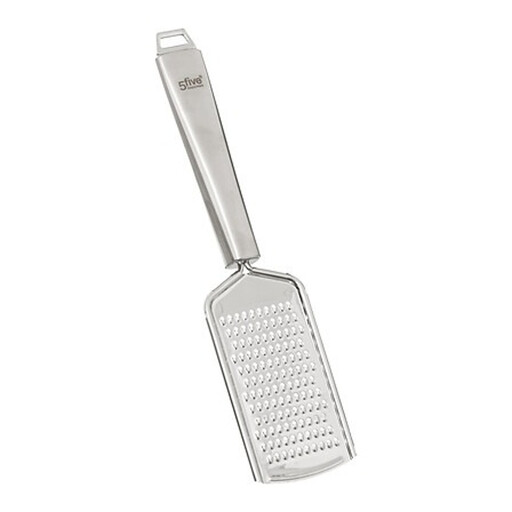
Why it's a great fit: Ideal for users who need a specialized, high-quality tool for precise tasks like zesting citrus fruits or finely grating hard cheese, ginger, or chocolate.
Focuses on one function and executes it with high-quality material. The 430 stainless steel ensures long-lasting sharpness. The simple design with no awkward corners avoids the cleaning pitfall.
Robust and durable stainless steel construction. The ergonomic handle allows for good control for precise results when used as a cheese grater or zester.
We have compiled a complete, up-to-date list of products that fully meet these strict selection criteria and safety standards.
First, check if your grater is marked as dishwasher-safe. If so, this is the easiest way. For hand washing, it's best to clean the grater immediately after use under running water with a dish brush. Brush in the opposite direction of the blades to protect the bristles. For sticky cheese, it can help to lightly coat the grater with a little cooking oil before use.
For long-lasting sharpness and rust resistance, high-quality stainless steel is essential. Materials like 18/10 stainless steel (containing 18% chromium and 10% nickel) or 430 stainless steel offer a good balance of hardness, sharpness, and corrosion protection, significantly extending the life of the kitchen tool.
Although the terms are sometimes used interchangeably, there is a functional difference. A cheese grater or vegetable grater is designed to shred food into small particles, shreds, or strips by rubbing it against the blades. A vegetable slicer, often called a mandoline, is primarily designed to cut food into uniform slices with a straight or wavy blade.