
Lieferung heute & morgen

Qualitätsgarantie

Willkommens-Angebote freischalten: KOSTENLOSE Lieferung | Bis zu 80 % RABATT | Kostenlose 30-Tage-JoyPlus-Testphase
App herunterladen
A kitchen grater and cheese slicer are among the kitchen tools we reach for most often. Whether you’re grating Gouda for sandwiches, Parmesan for pasta, carrots for salads or lemon zest for baking, different foods call for different features. The wrong grater can quickly become impractical.
A multi-purpose grater may seem versatile at first. What matters, though, is whether its grating surfaces are suited to the foods you actually use. Very fine surfaces, for example, are ideal for citrus zest, garlic or ginger, while coarse surfaces are more practical for vegetables and softer cheeses. If you mainly want to cut slices, you’re more likely to need a cheese plane or an adjustable cheese slicer.
“Stainless steel” isn’t a complete quality specification in itself. Check whether the material used for the cutting or grating surface is specified, and whether information is provided about rust resistance, the handle and cleaning. If you use the tool frequently, sturdy connections between the blade, frame and handle are particularly important.
Fine grating surfaces can trap food residue. A model that’s difficult to clean may end up being used less often. A dishwasher-safe grater can make cleaning easier, but always check the specific manufacturer’s instructions. Some metal parts or accessories are expressly intended for hand-washing only.
For hard cheeses such as Parmesan, a sturdy Parmesan grater or fine stainless steel grater is a good choice. For vegetables, consider a coarse grating surface or a box grater. A zester grater creates particularly fine strips of zest, while a drum grater makes larger quantities easier to process with its crank mechanism.
The cutting wire on a cheese slicer should be evenly tensioned. An adjustable cheese slicer also lets you tailor the slice thickness for sandwiches, burgers or cheese boards. The product description should clearly state whether and how the thickness can be adjusted.
Stainless steel is widely used for grating and cutting surfaces because it is sturdy and, when made to the right specification, can be rust-resistant. Terms such as INOX 430 or Cromargan 18/10 describe the type of stainless steel used. They don’t replace the need to check the care instructions.
An ergonomic, non-slip handle gives you better control. With handheld graters, you should also consider how securely they sit on the chopping board. Silicone or rubber elements can improve grip, but they should still be easy to clean.
Before you buy, check:
An electric or machine-powered option can save time when you’re preparing larger quantities. However, it takes up more storage space and costs more to buy. Some appliances must also be washed by hand.
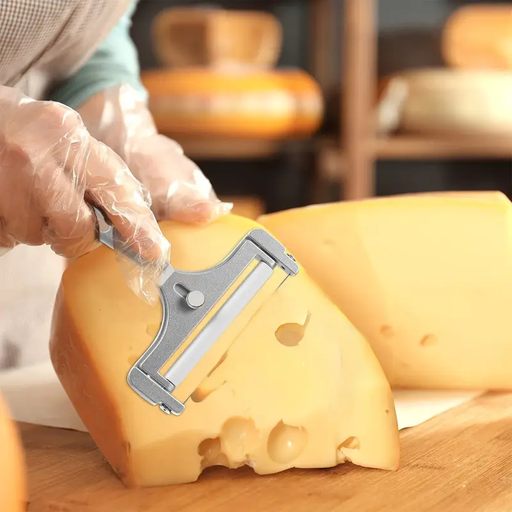
Why it suits this user: The adjustable cutting wire is ideal for households that want to cut cheese to different thicknesses for bread, burgers or cheese boards.
The adjustable slice thickness means you’re not limited to a single standard size. The stainless steel construction and the non-slip handle mentioned in the product description address key material and handling considerations.
Adjustable slice thickness; stainless steel cutting wire according to the product description.
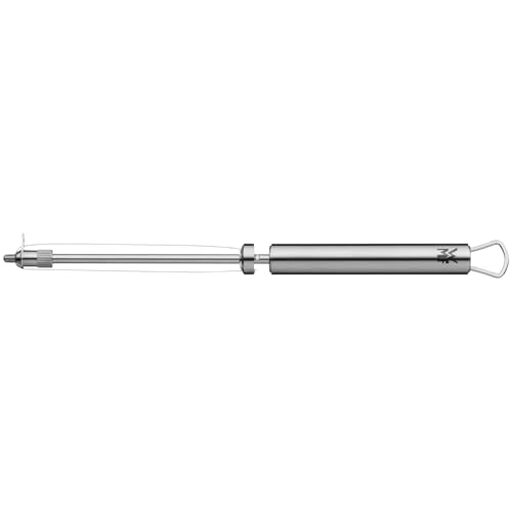
Why it suits this user: This cheese slicer is designed for regularly slicing semi-hard cheeses such as Gouda, Emmental, Pecorino and Parmigiano.
The product information specifies Cromargan 18/10 stainless steel, a uniformly made wire and clear care instructions. This makes key buying criteria easy to check.
25.5 cm long; dishwasher-safe according to the product description.
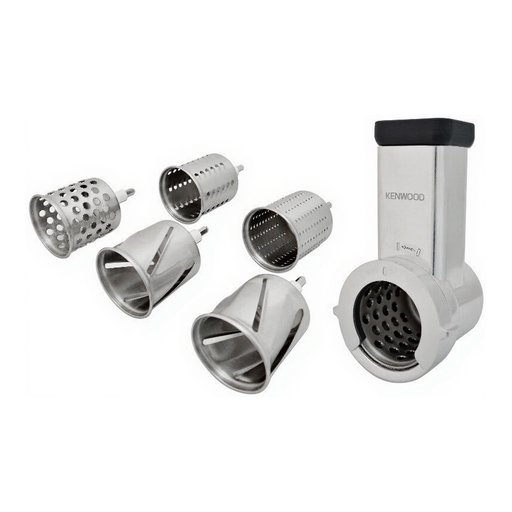
Why it suits this user: This drum grater attachment is designed for owners of compatible Kenwood kitchen machines who want to process larger quantities of cheese, vegetables or other foods.
Compatibility with specific Kenwood Chef and kMix models is clearly listed. The product information also points out that the drums are sharp and should be washed by hand.
Five interchangeable drums; options for coarse and fine grating, as well as coarse and fine slicing.
We’ve put together a complete, regularly updated list of products that meet these strict selection criteria and the safety regulations in force across the EU.
A fine Parmesan grater or a sturdy stainless steel grater produces fine shavings. For larger quantities, a drum grater may be a good choice, provided it’s compatible with your kitchen machine.
It depends on how you plan to use it. If you regularly cut cheese to different thicknesses for bread, burgers or serving boards, an adjustable slice thickness can be useful. If you always want the same standard thickness, a simple cheese slicer is often enough.
Its lifespan depends on the material, how heavily it’s used, how it’s cleaned and how it’s stored. Rust-resistant stainless steel surfaces, sturdy connections and proper cleaning can help keep it in good working order. For kitchen machine attachments, also check the manufacturer’s compatibility and care information.