
Lieferung heute & morgen

Qualitätsgarantie

Willkommens-Angebote freischalten: KOSTENLOSE Lieferung | Bis zu 80 % RABATT | Kostenlose 30-Tage-JoyPlus-Testphase
App herunterladen
Whether you enjoy home cooking, run a busy family kitchen or love baking, kitchen helpers should make everyday tasks easier, be safe to use and suit the kitchen you already have. Many disappointing purchases are not caused by the price, but by unclear material details, impractical dimensions or demanding cleaning requirements.
This buying guide from the Joybuy Product Recommendation Officer explains what to look for in practical kitchen utensils and which products suit different user profiles.
Descriptions such as “robust”, “long-lasting” or “hygienic” are not particularly meaningful on their own. What matters is whether the material and construction are clearly stated. For example, with a chopping board, there is a significant difference between one with 304 stainless steel on one side and a PP-wheat-straw composite on the other, and one that is simply described as “metal”.
The same applies to a kitchen sieve: the material, mesh size and cleaning method should be clearly stated. Stainless steel is corrosion-resistant, but not every model automatically offers the same mesh fineness or stability.
A kitchen helper can become impractical in everyday use if it can only be cleaned by hand. According to the product description, the Potato Cutter PP White is not dishwasher-safe. This is just as important to know before buying as the warning that sharp blades should not be used with hard or frozen foods.
For bamboo products such as the DAY chopping board with collection tray, hand washing, thorough drying and occasional oiling are recommended. If you are looking for a low-maintenance product, you should take these requirements into account when making your decision.
A measuring jug that is too small can make larger baking quantities difficult, while an expandable colander may not sit securely in a small sink. Before buying, check the length, diameter, capacity and support surfaces.
A set of three colanders measuring 20, 24 and 28 cm can be useful for different quantities. By contrast, a 3.6-litre strainer measuring 53.5 cm in length is primarily designed for larger sinks and bigger portions.
Kitchen utensils used with food should have clear, verifiable material information. Commonly used materials include:
Also look for information about suitability for food contact, safe handling and cleaning. Product names may contain promotional wording. The specific technical details remain the decisive factor.
For everyday food preparation, the dimensions should suit your workspace. The 500 ml measuring jug with pouring spout is suitable for smaller quantities of liquids and ingredients. Its stated dimensions of approximately 16.3 × 8.4 × 7.8 cm make it easy to store in small drawers.
With an ice cube tray, it is not just the number of compartments that matters. The 5Five ICE CUBE + TRAY TPE 32 ASR measures 33.4 × 18.5 × 3.5 cm. Make sure there is enough room in the freezer for the tray to stand level, so that no liquid spills out.
A quick checklist is worthwhile before buying:
With sealing clips, it is also important to check whether they are suitable for the thickness of the bags you intend to use. The 5Five LOT SEALING CLIP X25 PP pack contains 25 clips and is designed for resealing opened packaging.
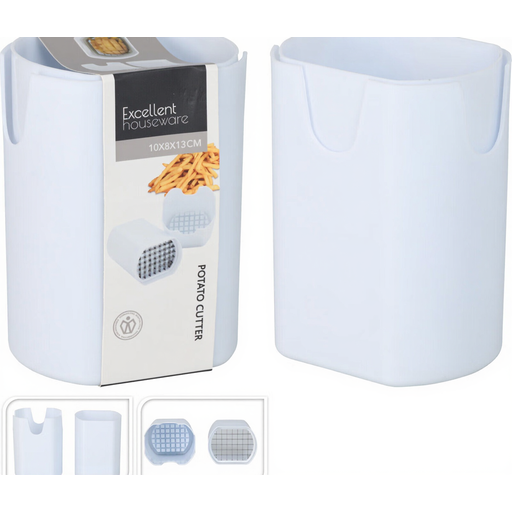
Why this product suits this profile: The potato cutter helps you create even chips or side-dish strips and has a straightforward, lightweight design.
The description clearly states that it features PP plastic, stainless steel blades and cleaning that is not suitable for the dishwasher.
Lightweight PP housing, stainless steel blades and consistently shaped cuts.
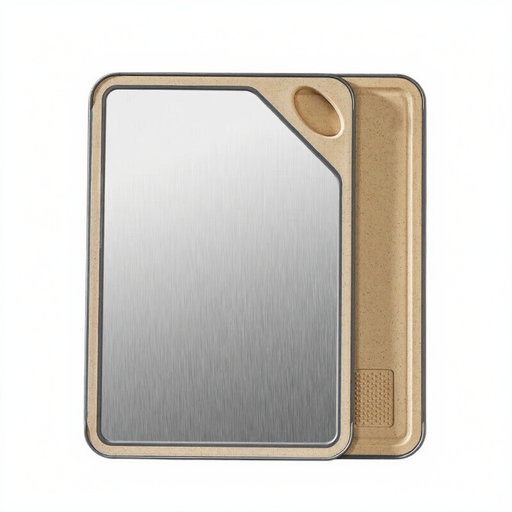
Why this product suits this profile: Two different cutting surfaces allow separate use for different foods and preparation methods.
The material combination and 25 × 36 cm format are clearly specified, making it easier to check the product before buying.
Double-sided design, 304 stainless steel on one side and a hanging hole for storage.
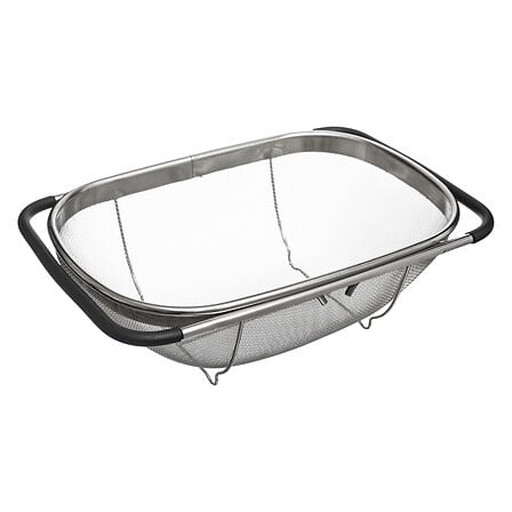
Why this product suits this profile: The expandable strainer is designed for larger quantities, pasta, vegetables and rinsing food in the sink.
The expandable length of 53.5 cm and 3.6-litre capacity are clearly stated.
Stainless steel construction, 3.6-litre capacity and flexible use across sinks of different widths.
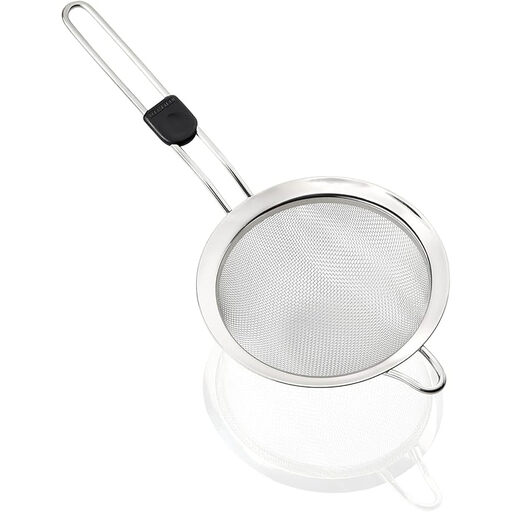
Why this product suits this profile: The fine kitchen sieve is ideal for sifting flour, icing sugar and other dry ingredients when baking.
The diameter, 1.5 mm mesh opening and dishwasher suitability are clearly described.
Fine stainless steel mesh, thumb rest, hanging loop and dishwasher cleaning.
Other suitable kitchen helpers can be added depending on the task. A cheese grater with several grating surfaces is useful for cheese and vegetables. A ceramic peeler is suitable for potatoes, carrots, apples and cucumbers, but should be handled carefully and washed by hand because of its sharp blade. A 500 ml measuring jug is ideal for drinks and baking recipes. According to the product description, the 5Five ice cube tray made from TPE, TPR and ABS is dishwasher-safe; do not use sharp objects when releasing the ice cubes.
We have put together a complete, regularly updated list of products that fully meet these strict selection criteria and the safety regulations applicable in the EU.
A useful basic selection includes a chopping board, kitchen knife, measuring jug, kitchen sieve or colander, peeler and sealing clips. Depending on your cooking habits, you may also want a potato cutter, cheese grater or ice cube tray. The key is to choose products whose size and cleaning requirements suit your everyday use.
Stainless steel is corrosion-resistant in many products and less prone to discolouration. Plastic, on the other hand, is usually lighter and can be practical for measuring jugs, sealing clips and certain cutting aids. Product lifespan depends on material quality, workload, cleaning and proper use.
A kitchen sieve often has a finer mesh and can also be used to sift flour or icing sugar. A colander or strainer is generally designed for draining pasta, vegetables or fruit. An expandable strainer combines flexible dimensions with a larger capacity and is positioned directly over the sink.