
Lieferung heute & morgen

Qualitätsgarantie

Willkommens-Angebote freischalten: KOSTENLOSE Lieferung | Bis zu 80 % RABATT | Kostenlose 30-Tage-JoyPlus-Testphase
App herunterladen
Whether you are preparing coffee, spices, meat, vegetables or soups, kitchen helpers can simplify a wide range of tasks. Options range from manual salt and pepper mills to electric meat grinders and multifunctional blenders. However, the key consideration is not the longest product description, but the right combination of intended use, materials, capacity, operation and cleaning.
Hobby cooks, families and coffee enthusiasts in particular often purchase appliances whose functions are rarely used in everyday life. The following guidance helps you avoid common purchasing mistakes and choose a model that suits your cooking habits.
A multifunctional blender can blend, chop and, depending on its configuration, even process spices. This sounds versatile, but it can also mean more individual components, more cleaning and greater storage requirements. If you mainly purée soups, you may not need a comprehensive food chopper with numerous attachments.
Before buying, consider the following:
Wattage alone says little about the final result. With an electric coffee grinder, the burr system, grind-size adjustment and operating concept also play an important role. For an electric chopper, the shape of the container, blade arrangement and permitted operating time are relevant.
A 600 W appliance may be suitable for smoothies, sauces or soft ingredients. For hard foods or longer operating cycles, however, it also matters whether the manufacturer specifies a particular pause duration. Such instructions should not be overlooked.
Sharp blades, fine coffee particles and spice residue require regular cleaning. Some motor units must not come into contact with water. Certain appliances also have short operating cycles followed by a cooling period.
For example, according to the product specifications, the Bear Food Chopper QSJ-D03W5 is designed for a maximum of 40 seconds of continuous operation. A pause of at least two minutes is then required; after three cycles, a longer cooling period is necessary. These instructions are more important in practice than a general claim of “high performance”.
Anyone looking to grind coffee beans should distinguish between a conical or flat-burr grinder and a blade grinder. An electric burr grinder generally offers defined grind-size adjustment and is better suited to different brewing methods such as espresso, moka pot, pour-over or French press.
A blade coffee grinder works through short pulses. This allows coffee to be chopped quickly, but the grind size is influenced more heavily by operating time and movement. For occasional use, this design may be sufficient. For repeatable coffee settings, however, the precision of the grind adjustment should be examined carefully.
The container size should match your typical requirements:
A large bowl is not automatically more practical if you usually prepare small portions. For smaller quantities, a compact spice grinder or immersion blender may be easier to store and clean.
Stainless-steel containers and stainless-steel blades are clearly identifiable in the product specifications and can be taken into account when making your choice. Equally important are a stable base, a securely closing lid and intuitive operation.
For electrical appliances intended for use in Germany, check for:
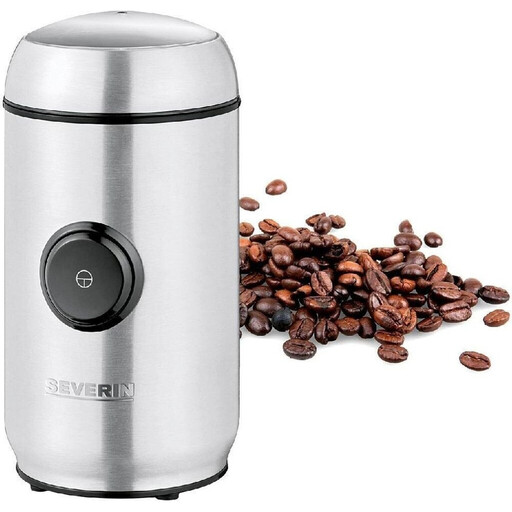
Why it suits this profile: This compact electric coffee grinder is suitable for households that want to process small quantities of coffee or spices at the touch of a button.
The product specifications state a capacity of approximately 50 g, a transparent viewing window and pulse operation. This allows the desired level of fineness to be adjusted gradually.
150 W, stainless-steel housing, push buttons and a cable-winding system. Designed for coffee and spices; follow the operating and cleaning instructions.

Why it suits this profile: This rechargeable coffee grinder is designed for coffee enthusiasts who want to switch between a fine espresso grind and a coarser French press grind.
The appliance uses a stainless-steel burr grinder rather than a blade and, according to the product specifications, offers adjustable grind-size control.
Metal housing, 1000 mAh battery, USB-C charging and one-touch operation. The removable parts should be cleaned dry with a brush.

Why it suits this profile: The 2-litre bowl is suitable for vegetables, meat and other moist ingredients in larger household quantities.
The stated maximum operating time of 40 seconds makes the load limit clear. According to the product specifications, the model is not intended for coffee, grains, ice or bones.
300 W, 2-litre glass bowl, two speed settings and 304 stainless-steel blades. The lid features a safety lock.
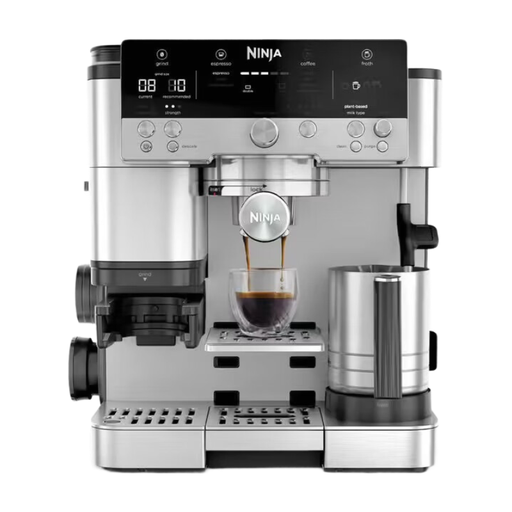
Why it suits this profile: An espresso machine with an integrated grinder is an appealing choice for households that want to prepare espresso, filter coffee and cold brew with a single appliance.
The product description lists 25 grind settings, an integrated scale and four milk-frothing programmes. Before buying, consider the space required and the maintenance involved.
1.5-litre water tank, 1650 W, integrated grinder and milk frother. According to the product specifications, the appliance weighs 16.54 kg and requires a permanent, stable position.
For everyday table use, a salt and pepper mill or spice mill set can be a practical choice. The Alpina Pepper and Salt Mill Set is 25 cm tall and, according to the description, offers adjustable grind fineness. The Spice Grinder Set 5 Flavors contains five flavoured salt blends weighing 351 g in total. Consider whether you prefer refillable mills or units that arrive pre-filled.
If you want to process meat yourself, look for an electric meat grinder with different perforated discs, a sausage-filling attachment and kubbe accessories. With an immersion blender, removable attachments, container sizes and speed settings are the key considerations. A 4-in-1 model with a whisk, chopper and blending beaker may be suitable for soups, sauces, purées and baby food.
We have put together a current selection of products that can be compared based on intended use, features and the product information available.
For occasional grinding, a blade coffee grinder may be sufficient. If you use different brewing methods, consider an electric burr grinder with multiple settings. Cleaning, capacity and suitability for dry coffee beans are also important factors.
There is no reliable one-size-fits-all answer. Service life depends on frequency of use, operating time, cleaning and the type of food being processed. Following the recommended pauses and care instructions helps limit stress on the motor. Before buying, check whether wear parts such as blades, seals or burrs are available as replacements.
Energy consumption depends on power and operating time. An appliance with a higher wattage does not necessarily use more energy in everyday use if it runs only briefly. When choosing a model, it is therefore worth considering actual usage duration rather than comparing wattage alone.