
Lieferung heute & morgen

Qualitätsgarantie

Willkommens-Angebote freischalten: KOSTENLOSE Lieferung | Bis zu 80 % RABATT | Kostenlose 30-Tage-JoyPlus-Testphase
App herunterladen
A modern pendant light over a kitchen island is more than just a light source; it's a central design element that shapes the ambiance of the entire room. However, the selection is vast, and not every model that looks impressive in product photos proves its worth in daily use. Many buyers invest in a fixture that looks stylish but has functional shortcomings. This guide will help you identify common pitfalls and make an informed decision.
Before we dive into the technical details, it's important to understand the most common problems that often only become apparent after installation.
To avoid the problems mentioned above, you should check three core parameters. These define the quality and everyday usability of a modern pendant light.
The ability to adjust light intensity is essential for a pendant light over the kitchen island. A dimmable feature allows for a seamless transition from bright task lighting to subdued mood lighting. Check whether the light is compatible with common leading-edge or trailing-edge dimmers, or if it has integrated controls, such as a remote or sensor.
Equally important is the color temperature, measured in Kelvin (K):
Models with adjustable color temperature offer the greatest flexibility here.
The longevity of a light fixture depends directly on the materials used. Solid metal like powder-coated aluminum or steel is significantly more robust than thin sheet metal or plastic-coated parts. For a black and gold pendant lamp, for example, the golden inner coating should be applied in multiple layers to ensure a lasting warm light reflection and to prevent peeling over time.
Another critical feature is a height-adjustable pendant light. The ideal mounting height over a kitchen island or a dining table pendant light is typically between 75 and 90 cm above the surface. An adjustable suspension allows for precise adaptation to your ceiling height and ensures the light neither hangs too high nor obstructs the line of sight.
Modern pendant lights increasingly rely on integrated LED modules. Such an LED ceiling light for the kitchen offers advantages like a very long lifespan (often over 20,000 hours), high energy efficiency, and extremely slim profiles that wouldn't be possible with traditional sockets. The downside is that if the light source fails, the entire fixture must be replaced. Models with standard sockets (e.g., E27) offer more flexibility in choosing a bulb but often limit the design.
Here are some recommendations tailored to specific user profiles and their requirements.
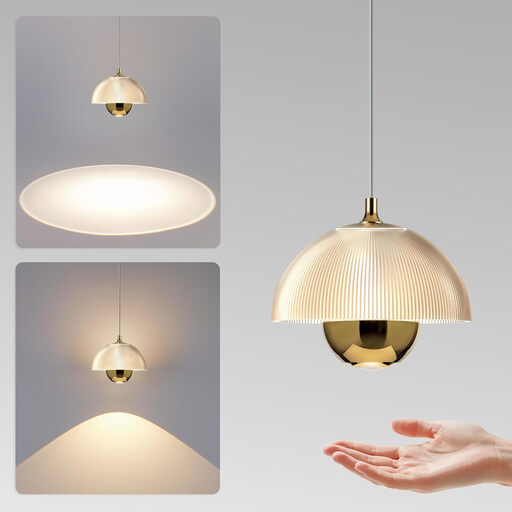
Why This Fits Their Persona: Ideal for users who value convenience and innovative technology. The touchless control is hygienic and modern, while the adjustable light color and brightness offer maximum functionality for any situation in the kitchen.
Solves the "inflexible functionality" problem by combining stepless dimming and three selectable color temperatures (2700K/3850K/5000K) via sensor control.
Touchless gesture control for on/off and brightness; dual light emission (direct downlight and indirect uplight) for balanced room illumination.
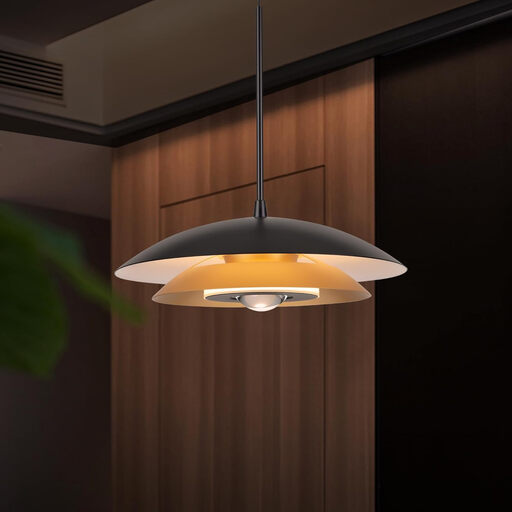
Why This Fits Their Persona: Perfect for anyone looking to make a bold visual statement. The combination of a matte black exterior and a gold interior shade embodies the aesthetic of a modern industrial design lamp and fits perfectly in loft or minimalist environments.
The double-shade construction prevents direct glare, a common problem with open industrial lights. The light is softly reflected by the inner shade and directed downward without glare.
Robust metal construction from aluminum and steel; integrated 12W LED module with a warm 3000K color temperature; dimmable with a compatible switch.
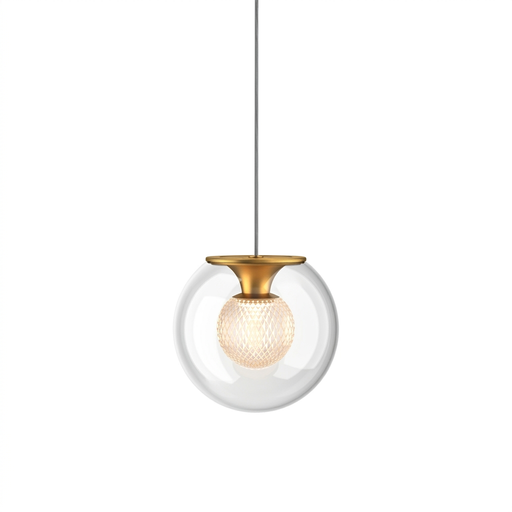
Why This Fits Their Persona: For users who prefer a subtle yet luxurious mid-century aesthetic. The combination of hand-blown glass and golden metal elements creates an elegant and timeless focal point without being overpowering.
Circumvents the problem of poor light quality. The inner sphere of frosted glass acts as a diffuser, ensuring a very soft, even, and glare-free light distribution.
High-quality material combination of glass and metal; produces a particularly soft, diffuse light; dimmability with compatible switches for flexible moods.
We've compiled a complete, up-to-date list of products that fully meet these strict selection criteria and safety regulations.
As a general guideline, there should be a distance of 75 cm to 90 cm between the bottom of the light fixture and the surface of the kitchen island or table. This ensures good illumination of the work surface without obstructing the line of sight when standing or sitting. A height-adjustable pendant light is a great advantage here, as it allows for fine-tuning based on ceiling height and personal preference.
"Integrated LED" means that the LED chips are permanently built into the fixture and cannot be changed like a conventional light bulb. This is not a fundamental disadvantage. The benefits include a very long lifespan (often 20,000 to 50,000 operating hours), high energy efficiency, and the potential for very slim, modern designs. Since the LEDs last for many years with normal use, a replacement is often only necessary when the design of the fixture itself has become dated.
In most cases, yes. If the product description states "dimmable," this usually refers to its compatibility with an external dimmer. You will need a suitable LED wall dimmer (e.g., a leading-edge or trailing-edge dimmer) to control the brightness. Exceptions are lights with a built-in dimming function via remote control or sensor, which do not require a special wall switch. Always check the manufacturer's specifications for compatibility.