
Lieferung heute & morgen

Qualitätsgarantie
App herunterladen
Kategorien
Choosing a pendant light for your kitchen island is a decision that involves both functional and aesthetic considerations. This type of fixture primarily serves as task lighting for food preparation, but it also significantly influences the room's overall atmosphere and style. The right light combines adequate output with a design that complements the kitchen's architecture.
This guide focuses on the technical parameters and material properties relevant to making an informed decision.
The decision for a specific model should be based on an analysis of four key areas: Lighting Technology, Dimensions, Materials, and Functionality.
The size and number of pendant lights must be proportional to the kitchen island. A common guideline states that the distance between the bottom of the light and the work surface should be 75 to 90 cm. This ensures glare-free illumination without obstructing the line of sight.
The choice of material affects not only the appearance but also the durability and ease of maintenance.
The following models have been analysed based on their technical specifications, design, and functional applications.
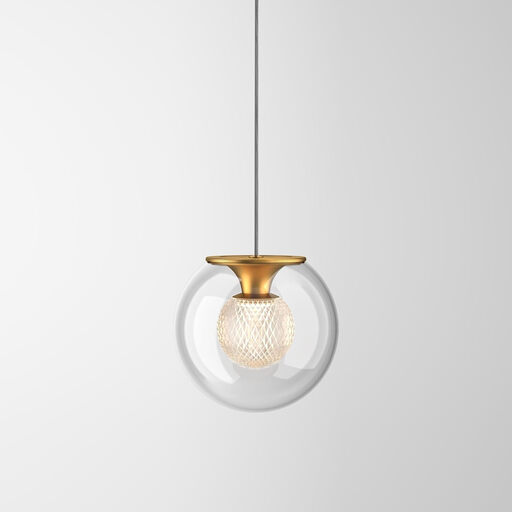
Design and Functional Analysis This model reinterprets the Mid-Century Modern light design. Its structure is based on a "globe-in-globe" principle: an outer, clear glass body (17 cm diameter) encloses an inner, frosted diffuser. This construction provides multi-layered light diffusion to minimise glare and produce a soft, even light. The electroplated steel finish in gold gives the fixture a commanding, high-end appearance.
Objective Specifications
Best Suited For Users seeking glare-free, warm illumination who want to make a bold design statement in Mid-Century Modern or minimalist interiors.
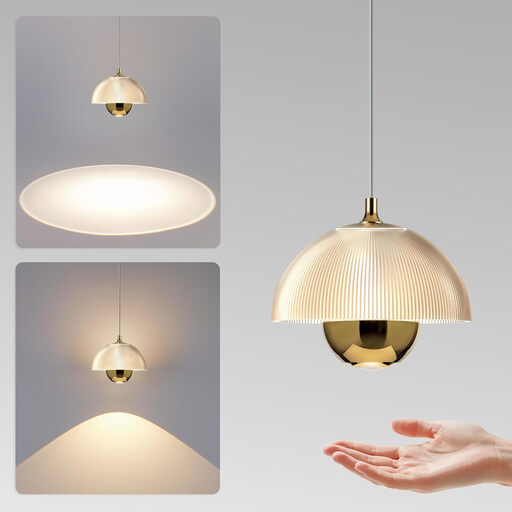
Design and Functional Analysis This gold pendant light combines a geometric shape reminiscent of a flowerpot with touchless control technology. An integrated infrared sensor allows the light to be switched on/off and dimmed with a wave of the hand. The design provides dual light emission: a strong, downward-facing cone of light for the work surface and a gentle, upward glow to illuminate the ceiling.
Objective Specifications
Best Suited For Users who value technological innovation, hygienic operation, and maximum flexibility in light adjustment. The adjustable colour temperature makes it ideal for multifunctional kitchen islands used for both work and socialising.
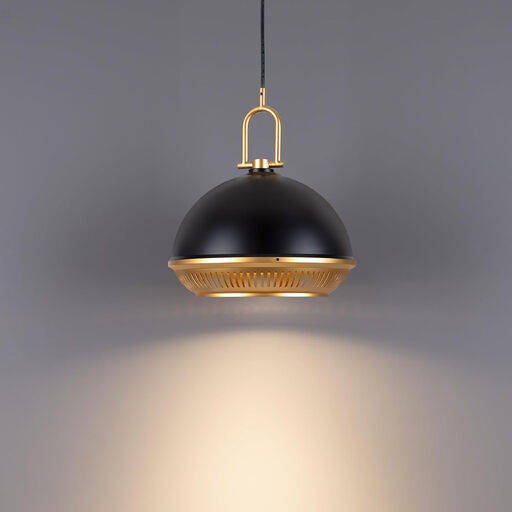
Design and Functional Analysis This model blends industrial-style elements with modern elegance. The contrast between the matte black exterior and the gold-coloured interior of the 24.9 cm wide shade is the central design feature. The golden inner coating acts as a reflector, focusing the light and giving it a warm tone. This creates directed, intense illumination on the surface below.
Objective Specifications
Best Suited For Kitchens with an industrial or modern farmhouse style. Users who prefer the flexibility of a standard socket to choose their own bulb and require focused, warm illumination.
If the models presented do not exactly meet your requirements, the market offers a wide variety of other designs and technical configurations. You can find a broader selection of designs and features in our main category for Modern Ceiling Lights.
1. How high should a pendant light hang over a kitchen island? A distance of 75 to 90 centimetres between the bottom of the light fixture and the surface of the kitchen island is an established guideline. This height prevents the light from blocking the line of sight while providing effective, glare-free illumination for the work surface.
2. How many pendant lights are needed over a kitchen island? The number depends on the length of the island and the diameter of the lights. For even illumination over a long island (over 2 metres), three smaller or two medium-sized lights are often ideal. For shorter islands, a single larger pendant or a pair of smaller ones may suffice. As a rule of thumb, keep the distance between the lights roughly equal to their diameter.
3. What light colour (Kelvin) is best for a kitchen island? The optimal light colour depends on the primary use. For areas where food is prepared, Neutral White (approx. 4000 K) is advantageous as it provides clear visibility and good colour rendering. If the kitchen island also serves as a dining spot or social hub, Warm White (2700 K to 3000 K) is a great choice for creating an inviting atmosphere. A dimmable light with adjustable colour temperature offers the greatest flexibility here.