
Lieferung heute & morgen

Qualitätsgarantie

Willkommens-Angebote freischalten: KOSTENLOSE Lieferung | Bis zu 80 % RABATT | Kostenlose 30-Tage-JoyPlus-Testphase
App herunterladen
The world of kitchen knives can be overwhelming. Manufacturers advertise special steel alloys, ultra-sharp blades, and universal applications. However, not every promise holds up to the rigours of daily kitchen use. As your Joybuy Product Recommendation Officer, I'm here to help you identify the key features, avoid buyer's remorse, and find a tool that truly fits your cooking style.
Before we dive into the details, let's clear up three common assumptions that often lead to the wrong purchase.
To make an informed decision, you should evaluate three core aspects of a knife: the blade steel, the blade shape, and the handle construction.
The steel is the primary determinant of sharpness, edge retention, and corrosion resistance. Common terms like Stainless Steel Knives are a good starting point, but the details are what count.
The shape of the blade is optimised for its function. A small Knife Set with various shapes is often more practical than a single, large knife.
A good handle should feel secure and fatigue-free in your hand. Materials like synthetic polymers (POM, PP) are hygienic and durable. Wooden handles offer a pleasant feel but require more maintenance. Look for seamless construction with no gaps where dirt could accumulate. The balance between the blade and handle determines how well the knife feels in hand and how much control you have while working.
Instead of making a blanket recommendation, we've selected products that cater to specific needs and cooking styles.
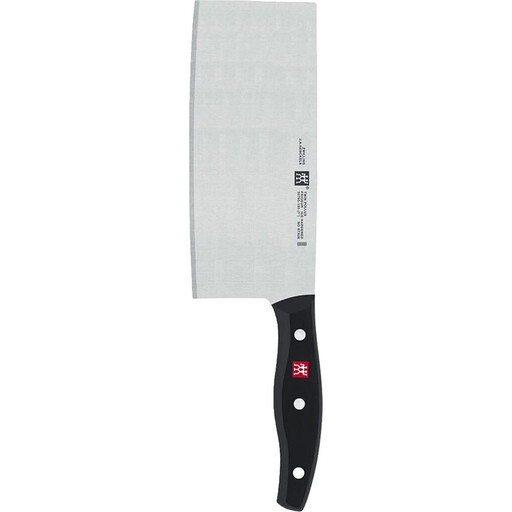
Why it's a great fit: Perfect for home cooks who love preparing Asian dishes. The wide blade is ideal for chopping vegetables and then transferring the ingredients—a technique common in Chinese cooking.
This knife is a specialised tool, avoiding the "do-it-all" trap. The material specifications are precise: The FRIODUR ice-hardened blade made from ZWILLING's special formula steel stands for proven high edge retention and corrosion resistance.
The wide blade surface is not just for cutting but also serves as a practical scoop. The ergonomic, three-rivet design handle ensures excellent balance.
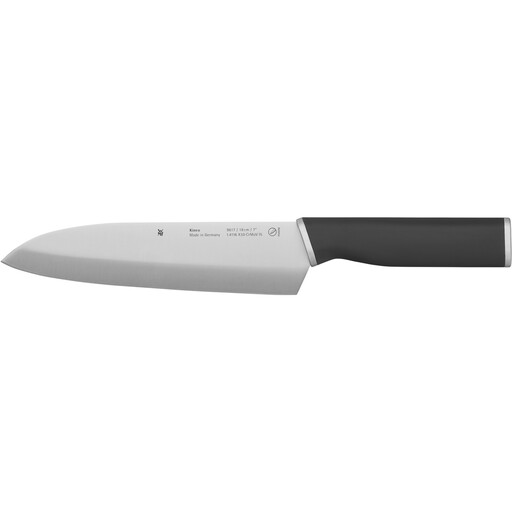
Why it's a great fit: A versatile Santoku knife for the daily preparation of vegetables, salads, and fish. Its shape is well-suited for precise cuts and is a popular alternative to the classic chef's knife.
Instead of vague promises, WMF provides a specific claim: The Performance Cut Technology combines an optimised hardening process with a precision-ground angle. According to WMF, this ensures long-lasting sharpness.
Made in Germany from hardened special blade steel. The kinetic handle design provides a comfortable feel and balanced handling during use.
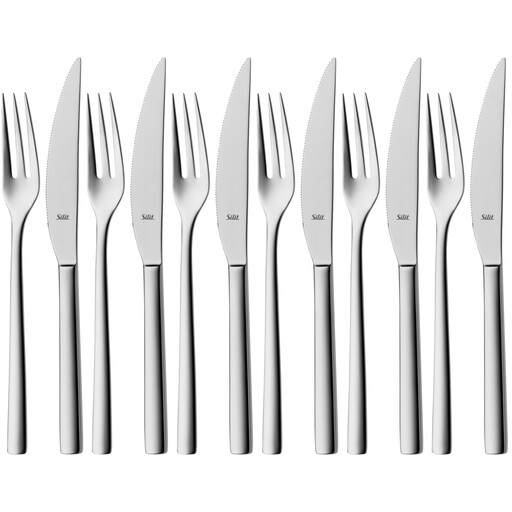
Why this set is a great fit: Anyone who loves serving steaks, pizza, or quiche needs special knives that cut effortlessly without tearing the meat. This Steak Knife Set is designed for exactly that purpose and equips you for larger gatherings.
This set isn't a compromise; it's a specialised solution. The material is clearly defined: Crominox 18/10 stainless steel. The serrated edge is a deliberate design choice for long-lasting sharpness on fibrous foods like meat.
The blades are forged from a single piece of stainless blade steel and hardened as a whole, ensuring stability. The set is dishwasher-safe, making it very low-maintenance.
We have compiled a complete, up-to-date list of products that fully meet these strict selection criteria and German safety regulations.
The frequency depends on usage and the quality of the blade steel. With daily household use, a high-quality knife should be honed with a honing steel every few months to realign the edge. A full re-sharpening on a whetstone is necessary about once or twice a year, depending on its edge retention. Serrated knives should only be sharpened by professionals.
For most home users, a good stainless steel, like those used by brands such as WMF, Zwilling, or Victorinox, is an excellent choice. These steels offer a great balance of edge retention, easy maintenance, and corrosion resistance. They don't need to be dried immediately after every use and are forgiving of minor oversights in a busy kitchen.
A higher price often correlates with higher-quality materials (e.g., more complex steel alloys), superior craftsmanship (e.g., hand-honed, seamless handle), and longer edge retention. However, for average home use, a mid-range knife from an established brand is often the most sensible investment. Extremely expensive, hand-forged knives from Japan, for example, also require very meticulous care and are not the right choice for every user.