
Lieferung heute & morgen

Qualitätsgarantie

Willkommens-Angebote freischalten: KOSTENLOSE Lieferung | Bis zu 80 % RABATT | Kostenlose 30-Tage-JoyPlus-Testphase
App herunterladen
A good kitchen knife can transform meal preparation from a tedious chore into a true pleasure. However, the market is flooded with tempting offers, and not every knife delivers on its promise. As your Joybuy Product Recommendation Officer, I'm here to help you recognise the common pitfalls and make an informed decision that will pay off in the long run. Instead of falling for marketing hype, we'll focus on the facts that define a sharp, durable, and safe kitchen knife.
Many buyers regret their decision within a few months because the supposed bargain quickly loses its edge or proves to be impractical. Watch out for these three widespread problems:
To avoid a bad purchase, you should focus on verifiable technical specifications. These three aspects are crucial for the performance and longevity of your kitchen knife.
The type of steel is the main factor determining edge retention (how long a knife stays sharp), corrosion resistance, and ease of sharpening. Instead of vague descriptions, you should look for specific steel designations.
The way the blade and handle are joined is a clear indicator of a knife's stability and durability.
A well-equipped kitchen doesn't need countless knives, but the right ones. A knife set or a well-stocked knife block is often a good starting point.
Here are some recommendations tailored to different needs and budgets, all of which meet the quality criteria mentioned above.
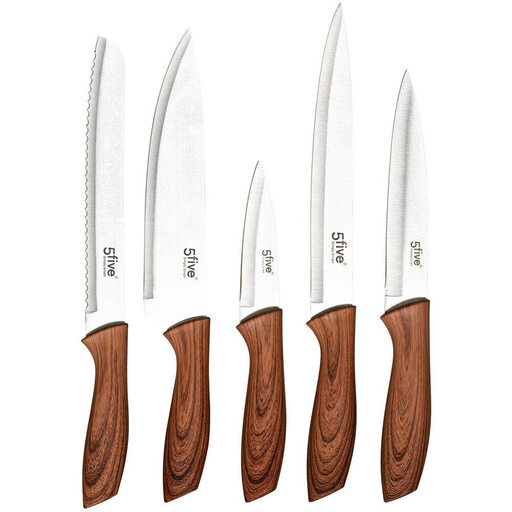
Why This Fits Their Persona: Ideal as a starter kit or for anyone looking for an organised and functional solution. This set covers the most important tasks with a chef's, bread, carving, utility, and paring knife, and offers modern, space-saving storage.
The magnetic stand is more hygienic than a classic wooden knife block, as the blades air-dry and dirt cannot accumulate in slots. The set provides the right knife for every task.
Complete knife set with the five most essential knife types. The magnetic stand ensures organisation and quick access.
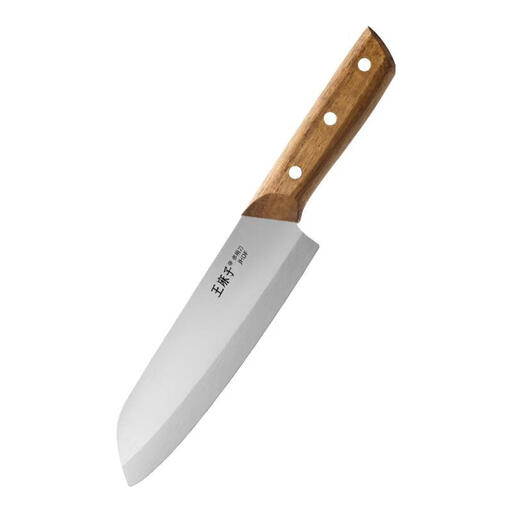
Why This Fits Their Persona: For ambitious cooks who want a versatile and high-performance tool for daily use. A Santoku knife is perfect for precise cuts on vegetables, fish, and boneless meat.
The blade is specified as "400 Series Stainless Steel," which goes beyond the vague "stainless" label. The acacia wood handle suggests a solid and ergonomic construction that sits well in the hand.
Versatile all-purpose knife for precise cutting tasks. The combination of a specific blade steel and a wooden handle offers a good balance of performance and feel.
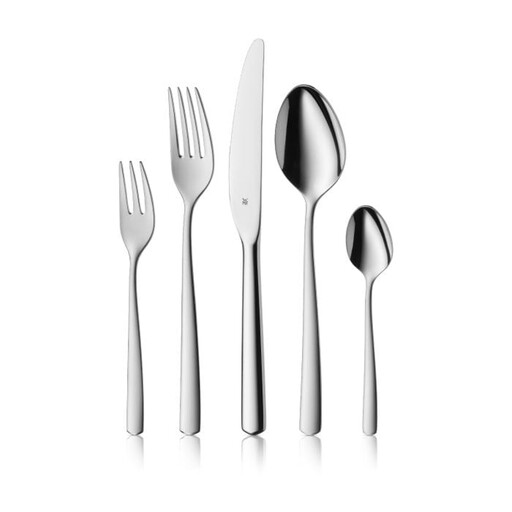
Why This Fits Their Persona: Perfect for those who frequently host guests or value a uniform, high-quality table setting. This cutlery set from WMF for 12 people combines timeless design with proven material quality for everyday use and special occasions.
WMF uses Cromargan 18/10 stainless steel, a high-quality and precisely defined alloy. The monobloc knives are forged from a single piece, which guarantees maximum stability and eliminates the weak point of an attached handle.
Comprehensive set made of durable, dishwasher-safe, and taste-neutral material. The forged knives offer long-lasting sharpness.
We have compiled a complete, up-to-date list of products that fully meet these strict selection criteria and German safety regulations.
The frequency depends on usage and the quality of the blade steel. With daily household use, it's advisable to maintain the knife every few weeks with a honing steel to realign the blade's edge. A full resharpening on a whetstone is necessary about once or twice a year, depending on the steel's edge retention. A dull knife is more dangerous than a sharp one because you have to apply more pressure, making it easier to slip.
The classic European chef's knife has a curved blade, which is well-suited for a rocking motion cutting technique. The Japanese Santoku knife has a straighter blade with a tip that curves down. It is ideal for pulling and pushing cuts and is often preferred for precise dicing and chopping of vegetables. Many chefs find the Santoku to be more agile and lightweight.
A higher price often correlates with better material quality and craftsmanship. Brands like WMF or Zwilling invest in developing specific steel alloys, precise hardening processes, and ergonomic, durable construction (e.g., full tang). This results in knives that hold their edge longer, are better balanced, and perform reliably for many years. A cheap knife may be sharp initially, but the longevity and joy of use are typically much greater with a high-quality product.