
Lieferung heute & morgen

Qualitätsgarantie

Willkommens-Angebote freischalten: KOSTENLOSE Lieferung | Bis zu 80 % RABATT | Kostenlose 30-Tage-JoyPlus-Testphase
App herunterladen
The search for the right kitchen knife can quickly become overwhelming. Manufacturers advertise special steel alloys, ergonomic designs, and a level of versatility that often overpromises and underdelivers. As a Joybuy Product Recommendation Officer, I see it as my duty to provide you with objective and practical guidance. Instead of falling for marketing hype, you should focus on the crucial features that separate a good knife from an unsuitable one.
Many well-intentioned purchases turn into disappointments after a short time. This is often due to three common problems that are overlooked during the buying process.
To avoid a bad purchase, you should focus your attention on three verifiable criteria. These determine the longevity, functionality, and safety of your tool.
The quality of a knife lives and dies by the steel used. Instead of being guided by marketing terms, pay attention to concrete material specifications.
The way the blade and handle are joined has a direct impact on handling and durability.
A good kitchen setup consists of several specialised knives. A knife set is often a good starting point.
Based on these objective criteria, we have compiled a few products for different needs and applications.
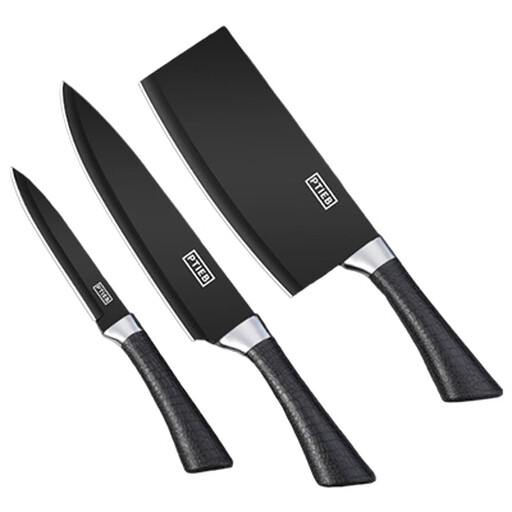
Why This Fits Their Persona: This set provides a solid foundation for everyday kitchen tasks. It is ideal for individuals setting up their first kitchen or seeking a functional basic kit without a high initial investment.
It bypasses the "one-knife-fits-all" trap by providing three separate knives for different tasks (slicing, cooking, peeling) and focuses on fundamental functionality rather than making exaggerated claims.
Offers a complete starter knife set for various cutting jobs at an accessible price. The stainless steel blades are low-maintenance.
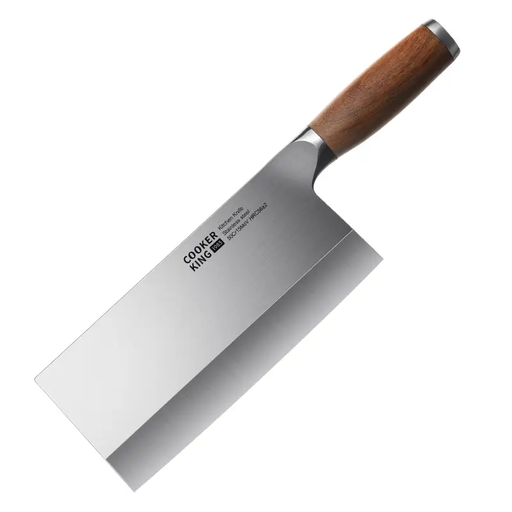
Why This Fits Their Persona: For home chefs looking to expand their skills and who need a higher-performance tool for precise and demanding cutting tasks. Ideal for preparing meat and vegetables with a professional touch.
This knife avoids the "miracle steel" myth with clear specifications: the blade is made of 7Cr17MoV stainless steel with a hardness of 58±2 HRC. The full-tang construction ensures excellent balance, avoiding the unbalanced design trap.
High edge retention and corrosion resistance from forged steel. The ergonomic Pakkawood handle provides a secure grip and durability.
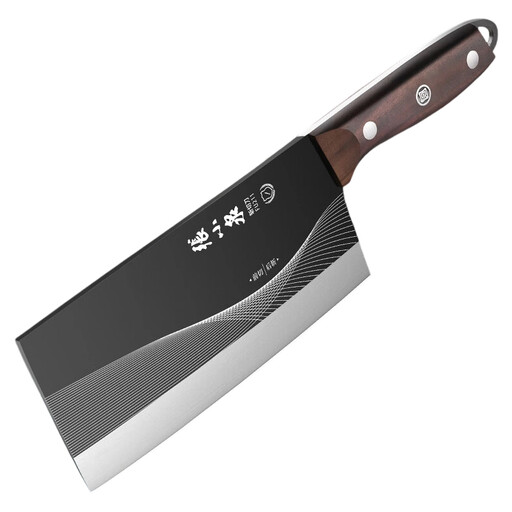
Why This Fits Their Persona: This knife is designed for users who regularly need to break down tough materials like bones or poultry carcasses. It is a specialised tool that takes over where regular chef's knives reach their limits.
It is clearly positioned as a bone cleaver, thus avoiding the "one-knife-fits-all" trap. Its heavy, thick blade is not a design flaw but a necessity for its function, which inverts the unbalanced design trap for its intended purpose.
Thickened and heavy stainless steel blade, specifically designed for cutting through bone. The robust construction ensures safety and efficiency during heavy-duty tasks.
We have compiled a complete, up-to-date list of products that fully meet these strict selection criteria and UK safety regulations.
The frequency depends on usage and steel quality. A simple rule: as soon as you notice you need to apply more pressure to cut (e.g., with a tomato), it's time to sharpen. For average home use, this might be every few months. Regular honing with a honing steel between sharpening sessions helps keep the blade's edge aligned and sharp.
A European chef's knife typically has a pointed, slightly curved blade that allows for a rocking motion while cutting. A Chinese chef's knife has a wide, rectangular blade. Although it looks like a cleaver, it is primarily used for fine slicing, dicing, and mincing. Its broad surface is also excellent for crushing garlic or transferring ingredients from the board to the pot.
Not necessarily. A high price can be due to rare materials, elaborate craftsmanship, or a famous brand name, which doesn't always equate to better everyday performance. A solid knife made of good stainless steel with a balanced construction can be a better investment for most home cooks than an expensive collector's item that requires special care. Focus on the core parameters mentioned above rather than just the price.