
Lieferung heute & morgen

Qualitätsgarantie

Willkommens-Angebote freischalten: KOSTENLOSE Lieferung | Bis zu 80 % RABATT | Kostenlose 30-Tage-JoyPlus-Testphase
App herunterladen
A kitchen knife should cut reliably, feel secure in your hand and suit the food you’re preparing. Yet product descriptions don’t always lead you straight to the right model. Features like “extra sharp”, “stainless” or “ergonomic” are often mentioned without explaining the knife’s practical limitations.
That’s why the most important buying decisions aren’t just about price or brand name. What really matters are knife type, blade length, steel quality, handle design and how much care it needs.
A utility knife is great for many smaller cutting tasks, but it won’t replace a chef’s knife, vegetable knife or bread knife. A short blade gives you control when peeling and portioning. However, for large vegetables, herbs or pieces of meat, it simply doesn’t offer enough cutting surface.
Even a Chinese chef’s knife with a wide blade isn’t automatically right for every task. Models like the Stainless Steel Kitchen Knife are designed for slicing, chopping and dicing. But you shouldn’t use them on bones, frozen food or hard shells unless the manufacturer explicitly says you can.
Stainless steel is more resistant to corrosion than unprotected carbon steel, but it’s not immune to moisture, salt or harsh cleaning agents. After washing, you should always dry your kitchen knife thoroughly.
Dishwasher safety also needs a closer look. Some products are labelled as dishwasher-safe by the manufacturer, while others should only be washed by hand. Heat, water jets and contact with other cutlery can damage both the blade and the handle.
A sharp kitchen knife will lose its edge faster on glass, stone, ceramic or metal surfaces. Wooden or plastic chopping boards are the best choice. When a knife becomes blunt, you need more pressure to cut. That makes it harder to control and increases the risk of injury.
A knife set with a knife block can be a sensible choice if you need to cover several basic tasks and want safe storage. If you already have some knives you like, buying a single knife is often more targeted.
The blade length should suit your hand size, work surface and typical ingredients. For cooking beginners, a knife that’s easy to control is often more practical than a very long blade.
When it comes to hardness, you’ll sometimes see values given in HRC. This number describes the steel’s resistance to deformation. A higher hardness can help the blade hold its edge, but it doesn’t automatically make the knife more durable. For everyday use, blade stability, grind and care are just as important.
Brand terms like FRIODUR-hardened refer to a process used by ZWILLING to treat the blade steel. According to product information, this helps support properties like corrosion resistance and edge retention. Still, the actual suitability depends on the specific model.
An ergonomic handle should feel secure and controlled in your hand. Look for:
A plastic handle can be lightweight and easy to care for. A riveted handle often feels different in the hand, but it isn’t automatically better. What matters is whether the shape and weight suit the way you work.
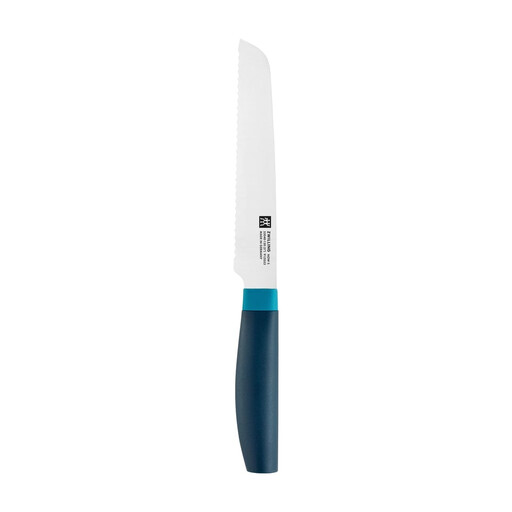
Why this product fits the profile: The 13 cm blade covers typical small to medium cutting tasks. The plastic handle is lightweight and designed for everyday use.
Its clearly defined role as a utility knife prevents you from mistakenly buying a short knife as a full replacement for every kitchen knife.
13 cm blade length, FRIODUR-hardened stainless steel according to product information and an ergonomic plastic handle; Made in Germany.
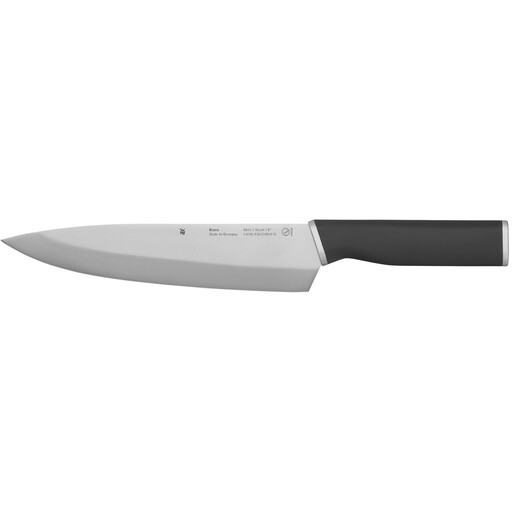
Why this product fits the profile: The 20 cm blade is designed for extensive prep work like slicing, dicing, chopping and rocking.
The stated values of 55–58 HRC and clear care recommendations help you make an objective assessment rather than a decision based purely on marketing claims.
20 cm blade made from specially hardened steel, stated corrosion resistance and an ergonomically balanced handle; handcrafted in Germany according to the product description.
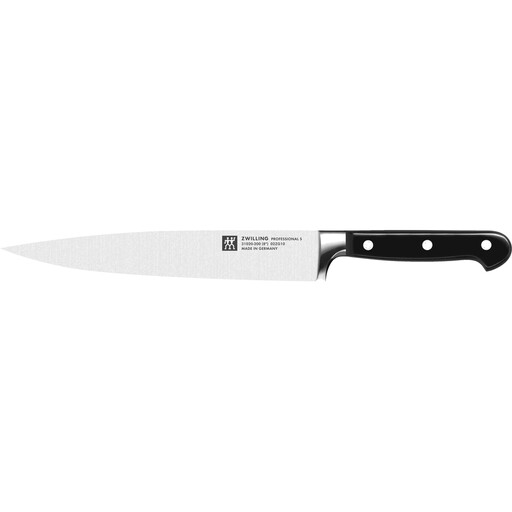
Why this product fits the profile: The longer blade is aimed at households that regularly prepare raw meat, roasts, poultry or diced meat.
Its clearly stated purpose prevents you from using it on bones, frozen food or other hard materials that could damage the blade.
Forged 20 cm blade made from FRIODUR-hardened stainless steel, finger guard and ergonomic three-rivet handle; Made in Germany according to product information.

Why this product fits the profile: The set combines a chef’s knife, bread knife, utility knife, vegetable knife, kitchen scissors, sharpening steel and bamboo block to cover all your basic needs.
Each knife type is clearly assigned to its task. That means a bread knife, for example, doesn’t have to be misused for fine vegetable work.
Seven components, FRIODUR-hardened special steel according to product information and storage in a knife block; origin Germany according to the description.
Wash your kitchen knives as soon as possible after use with warm water and mild washing-up liquid. Then dry the blade thoroughly. Even with models labelled as dishwasher-safe, hand washing can help protect the blade and surfaces.
For storage, a knife block, magnetic strip or blade guard are all good options. The blade should never be left loose in a drawer with other cutlery. Only use a sharpening steel to maintain the correct cutting angle; for actual material removal, you’ll need a suitable knife sharpener or whetstone, depending on the blade.
We’ve put together a full, regularly updated list of products that meet these strict selection criteria and fully comply with EU safety regulations.
A 13 to 18 cm utility knife or chef’s knife offers a manageable starting point. For very precise work, a vegetable knife makes a good addition to your basic kit. If you often prepare bread, meat and vegetables, you can gradually add more knife types.
How long the edge lasts depends on the steel, grind, usage, chopping board and care. Glass or stone surfaces, incorrect cutting motions and washing with other cutlery can dull the blade more quickly. Regular sharpening and proper storage will extend its practical lifespan.
That depends on the specific product. Some models are labelled as dishwasher-safe by the manufacturer, while others – particularly certain meat knives or Santoku knives – should be washed by hand. Always follow the information on the product page.