
Lieferung heute & morgen

Qualitätsgarantie

Willkommens-Angebote freischalten: KOSTENLOSE Lieferung | Bis zu 80 % RABATT | Kostenlose 30-Tage-JoyPlus-Testphase
App herunterladen
If you’re looking to buy a kitchen knife, you’ll find a wide range of chef’s knives, Santoku knives, slicing knives and Chinese cleavers. Product names alone don’t tell you whether a knife will suit your cutting style, hand size and day-to-day use. The key is to check verifiable details such as blade length, blade material, handle design and care instructions.
A Damascus kitchen knife stands out thanks to its patterned blade. However, the pattern alone doesn’t indicate how well it cuts or how easy it is to care for. Check what steel is used for the cutting layer, whether a hardness rating is provided and how the knife should be cleaned.
Even with a stainless-steel kitchen knife, terms such as ‘rust-resistant’ or ‘stainless’ don’t tell the whole story. Acidic foods, moisture and incorrect cleaning can still affect the blade’s surface and edge.
A chef’s knife is suitable for many food preparation tasks, such as chopping herbs, cutting boneless meat and slicing larger vegetables. A paring or vegetable knife is usually easier to handle for smaller jobs. A Santoku knife has a wide, relatively short blade and is well suited to controlled cuts through vegetables, fish and meat.
Don’t choose a Chinese cleaver or cleaver based on weight alone. Its design determines whether it’s intended for fine slicing, rough chopping or specific tasks involving bones. Always follow the manufacturer’s guidance on how to use it.
Some knives are described as dishwasher-safe, while others should be washed by hand. Frequent machine washing can put more strain on the blade, edge and handle. To help keep a knife sharp for as long as possible, wash it with mild washing-up liquid after use, dry it thoroughly and store it safely.
The right length depends on your worktop and the task at hand:
A longer blade can cut through larger ingredients in a single stroke, but you’ll need enough space on your chopping board. A shorter blade is often easier to control in a smaller kitchen or for precise work.
When choosing a Japanese kitchen knife or Santoku knife, it’s important to check the edge geometry. A double-bevel V-edge can feel different from a blade sharpened on one side. For example, the Satake Japanese Knife Satake 20.7cm is described as having a single bevel on the left-hand side. This is relevant to both right- and left-handed users.
A hardness rating in HRC can give you an indication of wear resistance, but it shouldn’t be the only measure of quality. The Zwilling Twin Grip Paring/Garnishing Knife with an 8 cm blade is listed as 55–58 HRC. Blade thickness, edge angle, steel quality and care also affect how a knife performs in practice.
The handle should feel secure in your hand when dry and suit your hand size. Non-slip materials can be helpful during longer food preparation sessions. Also consider the weight: the Wangmaz i Chef Knife is listed as weighing 170 g, while the ZWILLING Gourmet Nakiri is described as weighing 260 g. These differences can affect how a knife feels when weighing, slicing and chopping.
Never leave sharp knives loose in a drawer. Use a knife block, a securely mounted magnetic strip, a blade guard or a protective sheath. Avoid cutting on glass, stone or ceramic surfaces, as these can damage the blade’s edge.
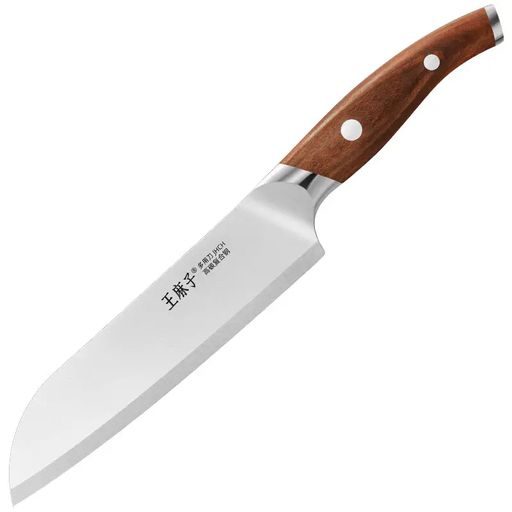
Why it suits this profile: With a 17 cm blade and a listed weight of 170 g, this Santoku knife is a good choice for households looking for a versatile knife for vegetables, fish and boneless meat.
The specified blade length and weight make it easier to compare with other knives, rather than choosing based on marketing terms alone.
Multipurpose Santoku knife made from 50Cr steel; listed weight: 170 g.
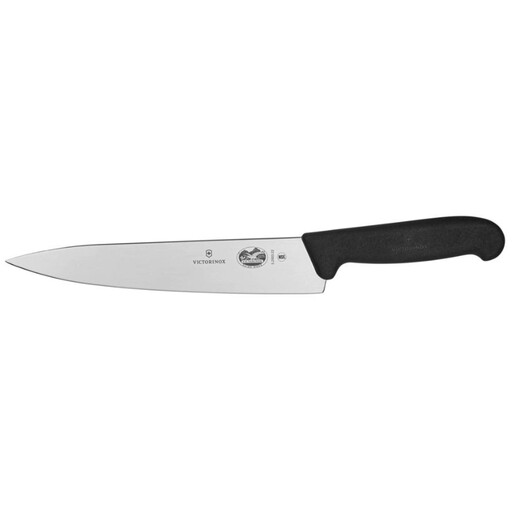
Why it suits this profile: The straight 22 cm blade and described non-slip Fibrox handle make this knife well suited to home cooks, catering businesses and anyone who regularly prepares food.
The product description specifies the blade length, material and handle design, and recommends storing the knife safely.
22 cm stainless-steel blade; plastic Fibrox handle with a non-slip design, according to the product details.
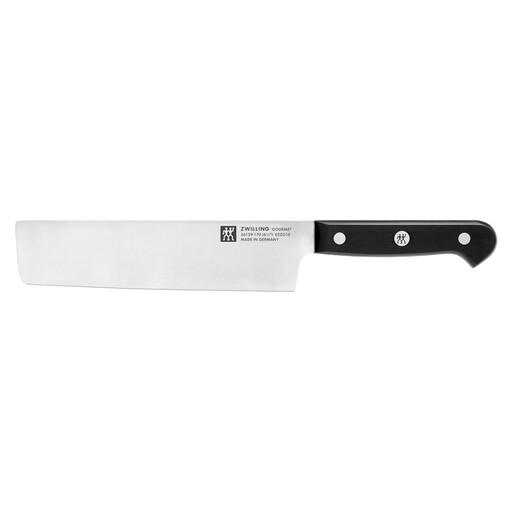
Why it suits this profile: The wide 17 cm blade is designed for preparing vegetables. Its shape is well suited to anyone who regularly chops herbs and firm vegetables, with a clear purpose in mind.
The description specifies a 17 cm blade, Friodur stainless steel, a V-edge of around 15° per side and hand washing for care.
Wide vegetable blade; Friodur stainless steel and a listed weight of 260 g.
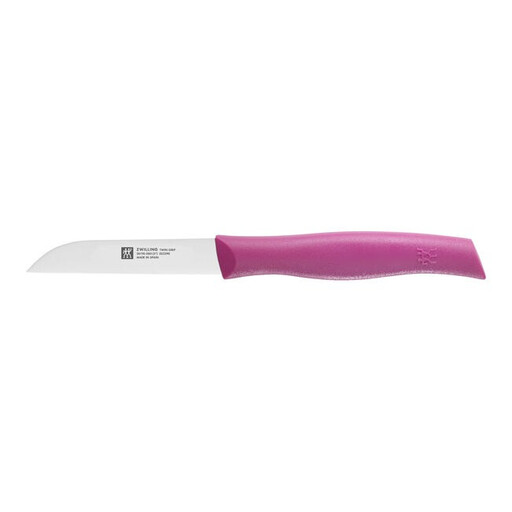
Why it suits this profile: The compact blade is designed for peeling, trimming and making fine cuts in fruit and vegetables. It’s a useful addition to a larger chef’s knife.
The 8 cm blade length, hardness of 55–58 HRC and recommendation to wash by hand are all clearly stated.
Compact FRIODUR stainless-steel blade; plastic handle and a precise edge for detailed tasks.
Use a sturdy chopping board made from wood or suitable plastic. Avoid hard surfaces, cutting frozen foods and using the blade as a lever. Dry the knife straight after washing. If you have a carbon-steel knife, as used in some Chinese cleavers, it’s particularly important to store it somewhere dry, as this type of steel can be more sensitive to moisture.
A honing steel can realign the edge to some extent, but it won’t replace proper sharpening. The right sharpening angle depends on the type of knife and the manufacturer’s guidance. With Japanese knives sharpened on one side, be sure to take the sharpened side into account.
We’ve put together a complete, regularly updated list of products that meet these strict selection criteria and fully comply with the safety regulations in force in the EU.
A chef’s knife or Santoku knife can handle many everyday tasks. A small vegetable or paring knife is a useful addition for peeling, trimming and garnishing. If you often cut bread, tomatoes or sausage, you could also consider adding a serrated slicing knife.
How long the edge lasts depends on the steel, edge angle, cutting surface, food being prepared and how you care for the knife. Using a knife on glass or stone can put considerably more strain on its edge. Regular honing and sharpening when needed will help maintain its performance.
It depends on what you’ll use the knife for. A long or heavy blade can be useful in a catering kitchen when preparing large quantities, but it won’t suit every home worktop. Before you buy, consider the blade length, weight and handle, as well as the types of food you’ll be preparing.