
Lieferung heute & morgen

Qualitätsgarantie

Willkommens-Angebote freischalten: KOSTENLOSE Lieferung | Bis zu 80 % RABATT | Kostenlose 30-Tage-JoyPlus-Testphase
App herunterladen
A good kitchen knife is the cornerstone of every meal. Yet, the market is flooded with options that promise more than they deliver. From overpriced marketing gimmicks to impractical designs, many home cooks and DIY enthusiasts invest in cutting tools that quickly lose their edge or feel uncomfortable in the hand. As your Joybuy Product Recommendation Officer, I'll help you identify the key features and avoid the common purchasing traps.
Before we dive into the important parameters, let's debunk the marketing tricks and design flaws that often lead to disappointment.
To make an informed decision, focus on these three objective criteria.
A knife's quality is defined by the steel used. A blade's hardness is measured in Rockwell (HRC) and provides insight into its edge retention (how long it stays sharp) and ease of sharpening.
The shape of the blade determines the cutting technique for which the knife is suited.
The handle is the interface between you and the blade. An ergonomic, non-slip handle is essential for safety and comfort. Look for a full-tang construction, where the blade's steel runs through the entire handle. This provides excellent balance and durability. Handle materials range from traditional wood to low-maintenance synthetic materials and durable composite materials.
Here are some recommendations tailored to specific user profiles that meet the criteria mentioned above.
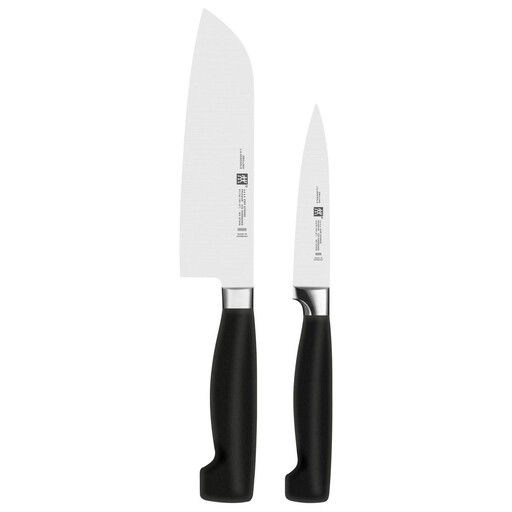
Why It Fits the Profile: This set provides the two most essential knives for daily kitchen tasks—a versatile chef's knife and a precise paring knife—with the proven quality of a traditional German manufacturer. It's the ideal starter set or an upgrade for anyone who values durability and functionality.
It bypasses the trap of superfluous knife sets by focusing on the two essential tools. Its quality is based on verifiable parameters, like the ice-hardened blade, not just aesthetics.
FRIODUR ice-hardened blades for exceptional durability and corrosion resistance. Seamless transition from handle to blade for optimal balance and hygiene.
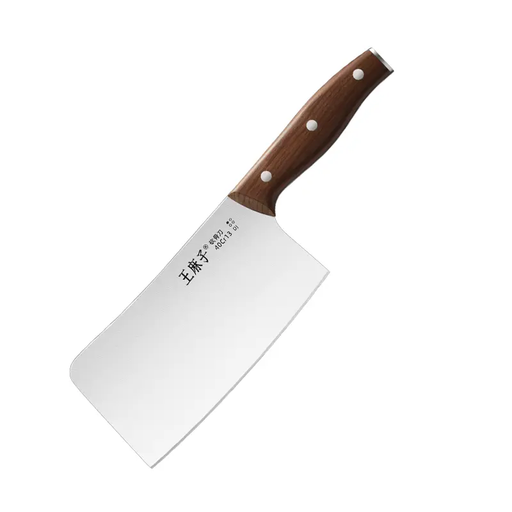
Why It Fits the Profile: This robust cleaver is not an all-rounder, but a specialized tool. It's designed for cooks who regularly process large cuts of meat or break down bones for broths and stocks. A tool built for power and efficiency.
It avoids the pitfall of an inadequate all-purpose knife. Instead of trying to do everything, it focuses on one task—chopping—and performs it reliably thanks to its massive construction and significant weight.
Specifically developed for chopping bones and thick cuts of meat. The full-tang construction and hardened steel ensure maximum durability and power transfer.
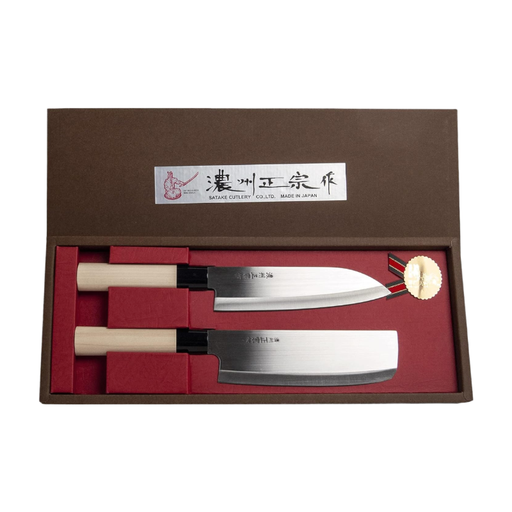
Why It Fits the Profile: For anyone who wants to explore the world of Japanese knives without immediately spending a fortune. This set includes two of the most important Japanese blade shapes, the Santoku and the Nakiri, and allows for learning specific cutting techniques.
Instead of offering a single, vague "Japanese-style" knife, this set provides two authentic blade shapes (Santoku and Nakiri). This allows users to practically experience the differences in application.
Offers two different, specialized blade shapes for a comprehensive introduction. The ultra-thin stainless steel blades enable effortless and precise cutting.
We have compiled a complete, up-to-date list of products that fully meet our strict selection criteria and safety standards.
The frequency depends on usage, steel hardness, and the cutting surface. As a rule of thumb, with daily use, the edge should be maintained weekly with a honing steel. A full resharpening on a whetstone is recommended every few months to once a year, depending on the blade's condition. A dull knife is more dangerous than a sharp one because it requires more pressure, making it more likely to slip.
The main difference lies in the blade shape and the associated cutting technique. The chef's knife has a curved blade, which is ideal for a rocking motion where the tip of the knife remains on the cutting board. The Santoku knife has a straighter cutting edge and a downturned tip. It is primarily used for chopping and pulling cuts and is particularly popular for processing vegetables.
Not always. A high price tag or a large number of knives does not guarantee quality or utility. It's often more sensible to invest in two or three high-quality individual knives that you will actually use daily—typically a chef's knife and a paring knife. Additional specialty knives, like a bread knife or a filleting knife, can be added later as needed. This ensures you only pay for what you truly need.