
Lieferung heute & morgen

Qualitätsgarantie

Willkommens-Angebote freischalten: KOSTENLOSE Lieferung | Bis zu 80 % RABATT | Kostenlose 30-Tage-JoyPlus-Testphase
App herunterladen
A good kitchen knife is the cornerstone of every meal. Yet the market is overwhelming, filled with marketing promises that often do more to obscure than to clarify. Many home cooks invest in tools that quickly lose their edge, are unwieldy, or are simply unsuitable for everyday use. Before you make a decision, it's crucial to understand the most common pitfalls to avoid a poor investment.
To find a durable and functional sharp knife, you should pay attention to a few core technical features. These objective criteria will help you assess quality independently of advertising claims.
The steel is the primary factor determining edge retention (how long a knife stays sharp), corrosion resistance, and how easily it can be resharpened.
The two most popular all-purpose knives are the European chef's knife and the Japanese Santoku knife. The choice depends on your preferred cutting technique.
A professional chef's knife should feel perfect in your hand. Look for an ergonomically shaped handle with no sharp edges. The material should be non-slip, even when wet. A full tang (the extension of the blade into the handle) provides stability and a balanced weight distribution. Classic designs with three rivets are not only visually appealing but also an indicator of robust construction.
Instead of making a one-size-fits-all recommendation, we have selected products for different needs and working styles.
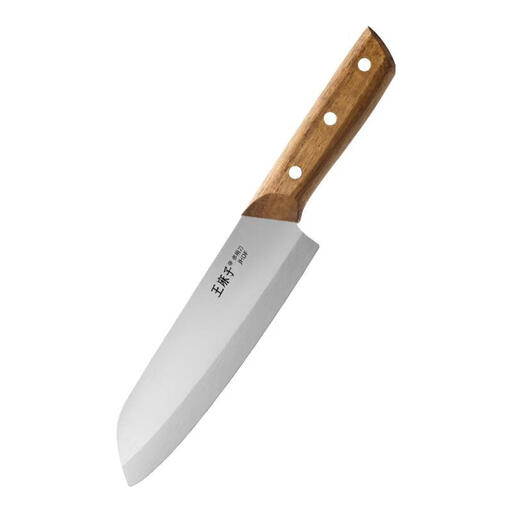
Why This Fits Their Persona: Ideal for anyone looking for a reliable, all-purpose knife for daily use without a large budget. The Santoku shape is versatile for vegetables and meat, and the acacia wood handle offers a classic look and feel.
This knife avoids the trap of an overpriced set. It is a targeted investment in a single, versatile tool. The 400-series steel is clearly declared and offers solid, honest performance for its price.
Excellent value for money; versatile Santoku blade shape for various cutting tasks.
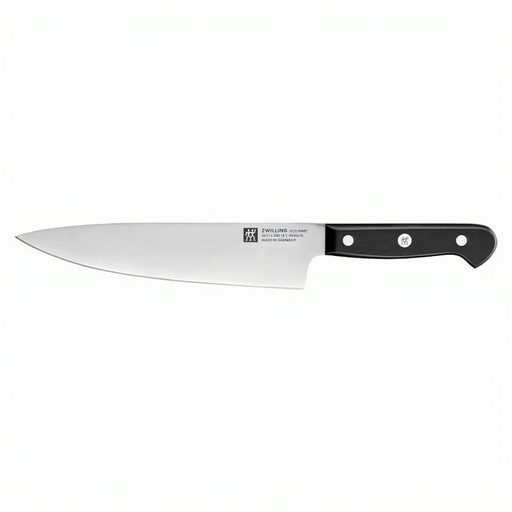
Why This Fits Their Persona: For ambitious home cooks seeking a durable, high-performance, and perfectly balanced all-purpose knife. This Solingen knife is a classic chef's knife, made in Germany, and ideal for a wide range of cutting tasks.
It solves the problem of poor balance. The ergonomic handle and thoughtful construction ensure fatigue-free work. The FRIODUR ice-hardened blade offers superior edge retention, debunking the myth of knives that dull quickly.
Made in Germany; ice-hardened blade for long-lasting sharpness and corrosion resistance; excellent balance.
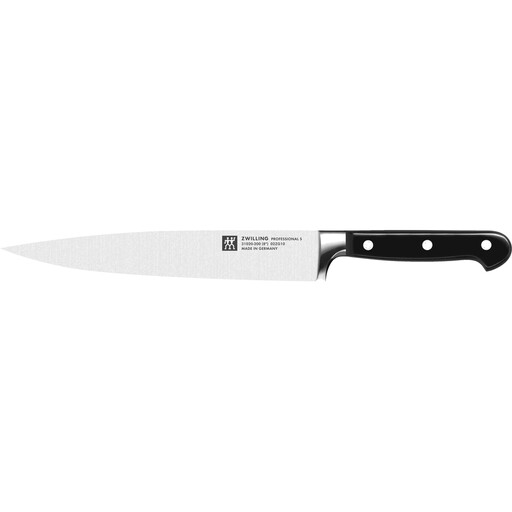
Why This Fits Their Persona: Perfect for users who frequently handle roasts, raw meat, or poultry and require a specialised, safe tool for the job. The long, sturdy blade glides effortlessly through meat, while the bolster provides additional safety.
This knife is the antithesis of the unused speciality knife in a set. It is a deliberate choice for a tool that excels at a specific task, making the work safer and more efficient than any all-purpose knife could.
Forged blade for high stability; integrated bolster for safe handling; ideal for carving and slicing meat.
We have compiled a complete, real-time list of products that fully satisfy these strict selection criteria and UK safety regulations.
The main difference lies in the blade shape and the associated cutting technique. The European chef's knife has a curved blade, which is suitable for a rocking chop. The Japanese Santoku knife has a straighter and often wider blade, optimised for chopping and pulling cuts. The choice is ultimately a matter of personal preference.
To maintain sharpness and longevity, high-quality knives should always be washed by hand with warm water and a mild detergent. Dry it immediately to prevent surface rust. Cleaning in the dishwasher is not recommended, as harsh salts, high temperatures, and contact with other dishes can damage the blade and handle. Store the knife in a knife block, on a magnetic strip, or in a blade guard.
For most households, a kitchen knife set is not the most efficient choice. It is often more sensible to invest in two or three high-quality individual knives that you will actually use daily: a good chef's knife or Santoku knife as an all-rounder, a small paring knife for peeling, and possibly a serrated bread knife. This way, you get higher quality for your money and avoid unused tools.