
Lieferung heute & morgen

Qualitätsgarantie

Willkommens-Angebote freischalten: KOSTENLOSE Lieferung | Bis zu 80 % RABATT | Kostenlose 30-Tage-JoyPlus-Testphase
App herunterladen
As a Joybuy Product Recommendation Officer, I see ambitious home cooks and professionals searching for the right kitchen tools every day. A high-quality knife is more than just a cutting instrument; it's an investment in precision, efficiency, and the joy of cooking. However, the market for professional kitchen knives is saturated with marketing claims that often conceal more than they reveal. Before you make a decision, it's crucial to understand the most common pitfalls that lead to disappointment and unnecessary expense.
Many knives look impressive at first glance but only reveal their weaknesses through daily use. Here are three widespread issues to look out for:
To avoid these traps, focus on verifiable technical specifications. These three parameters are crucial for your knife's longevity and performance.
The steel is the heart of every knife. A forged chef's knife made from a high-quality alloy offers superior edge retention and stability. Look for manufacturers who provide specific details about their steel composition.
The grind of the blade determines how effortlessly and cleanly a knife cuts.
A professional knife should feel like an extension of your hand. The manufacturing quality is critical to achieving this.
Instead of making a blanket recommendation, we have selected products tailored to clearly defined user profiles and their needs.
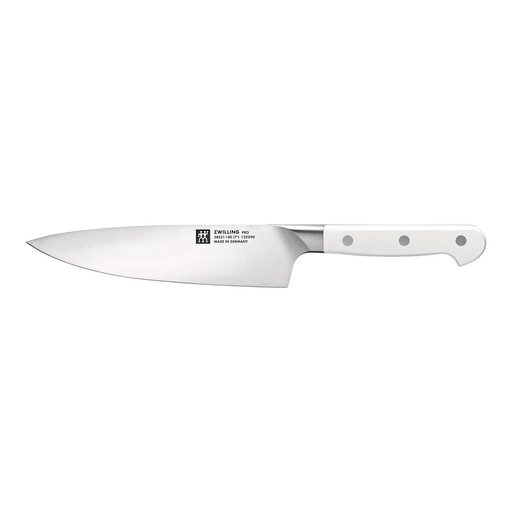
Why it's a great fit: This chef's knife is a versatile workhorse. With its 18 cm blade, it's large enough for most tasks—from chopping herbs to slicing meat—yet agile enough for precision work. Ideal for anyone seeking a single, high-quality tool for everyday kitchen duties.
It relies on proven technology: The FRIODUR ice-hardened blade made from a special formula steel and the curved bolster ensure balance and performance, rather than relying on aesthetic gimmicks.
The combination of a V-edge for extreme sharpness and a balanced, forged design makes it a highly efficient and fatigue-free tool.
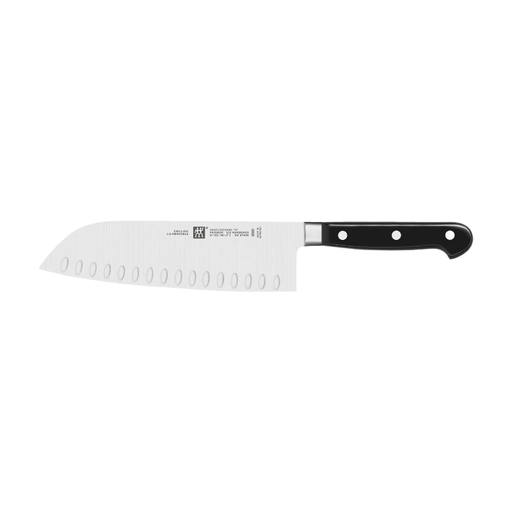
Why it's a great fit: For lovers of dishes that require finely sliced vegetables, fish, or meat. The wide blade and straight cutting edge are perfect for chopping motions, while the hollow edge prevents food from sticking—a must for quick, clean prep work.
Here, the hollow edge is a functional feature designed to reduce friction, not a purely decorative one. The full tang construction guarantees the stability and balance needed for precise cuts.
Allows for smooth, fast slicing of sticky foods. A genuine sharp vegetable knife and fish knife in one.
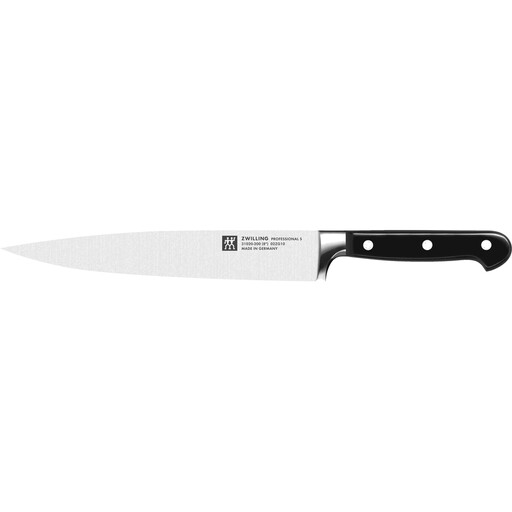
Why it's a great fit: Anyone who regularly carves roasts, portions poultry, or handles large cuts of meat needs a long, stable blade. Thanks to its slim profile and 20 cm length, this professional meat knife glides cleanly through meat without tearing the fibres.
This is a specialised tool, not a compromise. The forged blade with a finger guard and full tang provides the safety and stability required for meat processing.
The long, narrow, yet robust blade enables the clean, long strokes essential for carving roasts or filleting large fish.
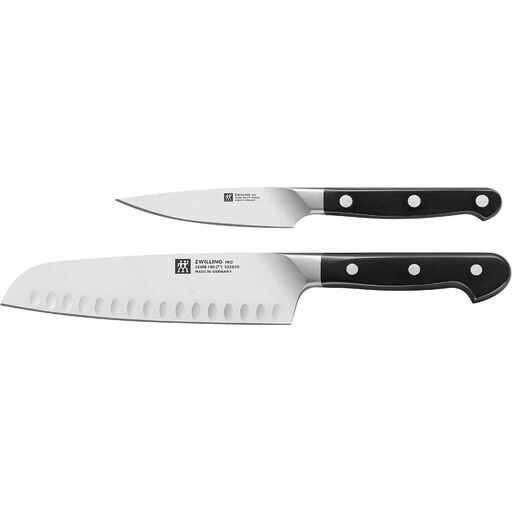
Why it's a great fit: For anyone seeking a solid foundational toolkit without investing in a large block of superfluous knives. This high-quality knife set combines the versatile Santoku knife for 90% of tasks with a small paring knife for detail work like peeling and garnishing.
Rather than prioritising quantity over quality, this Zwilling knife set focuses on two essential, high-performance knives from the proven Pro series. Both knives are forged and perfectly balanced.
Offers a professional and versatile foundation for any kitchen. The two knives cover the most essential cutting tasks and come from the same high-quality product line.
We have compiled a complete, up-to-date list of products that fully meet our strict selection criteria and all relevant safety standards.
1. What is the difference between a forged and a stamped chef's knife? A forged knife is heated and shaped from a single piece of steel. This process compacts the metal and allows for the seamless integration of a bolster, resulting in better balance and durability. A stamped knife is cut from a large sheet of steel, is lighter, and typically has no bolster or only a partial one. Forged knives are generally considered more robust and durable.
2. How often should I sharpen a high-quality chef's knife? This depends on the frequency of use and the blade steel. With daily use in a professional environment, weekly sharpening may be necessary. For typical home use, sharpening with a whetstone every few months is often sufficient. More important is regular honing with a honing steel (before or after each use) to realign the blade's fine edge and maintain its sharpness.
3. Is a Santoku knife or a classic chef's knife the better choice for me? That depends on your preferred cutting technique. A classic chef's knife, with its curved blade, is ideal for the rocking motion (rocking the blade on the cutting board). A Santoku knife, with its straighter edge and downward-sloping tip, is better suited for quick, chopping up-and-down movements. Many prefer the Santoku for finely cutting vegetables and fish, while the chef's knife is considered the ultimate all-rounder.