
Lieferung heute & morgen

Qualitätsgarantie

Willkommens-Angebote freischalten: KOSTENLOSE Lieferung | Bis zu 80 % RABATT | Kostenlose 30-Tage-JoyPlus-Testphase
App herunterladen
Purchasing a new kitchen knife set can be an investment that defines your cooking experience for years to come. However, the market is flooded with options that promise more than they deliver. Many home cooks invest in large sets, only to find that most of the knives remain unused in a drawer or quickly lose their edge. As your Joybuy Product Recommendation Officer, I'll help you identify the common pitfalls and make an informed decision.
Before you make a decision, it's crucial to understand the most common marketing traps that often lead to disappointment and unnecessary expense.
To avoid a bad purchase, you should focus on a few crucial technical parameters. These determine the longevity, performance, and safety of your tools.
The steel used is the most important factor for sharpness, edge retention, and corrosion resistance.
The shape of the blade determines which cutting techniques a knife is suited for.
A good knife should feel like an extension of your hand. Look for an ergonomically shaped handle that is slip-resistant even when wet. A professional knife set doesn't have to be large, but it should include the most important tools. Often, a good chef's knife, a small paring knife, and a sturdy pair of kitchen shears are sufficient. A high-quality knife sharpener is also essential to maintain the sharpness of your blades over the long term.
Instead of presenting an overwhelming list, we have selected products that meet specific user profiles and fulfill the quality criteria mentioned above.
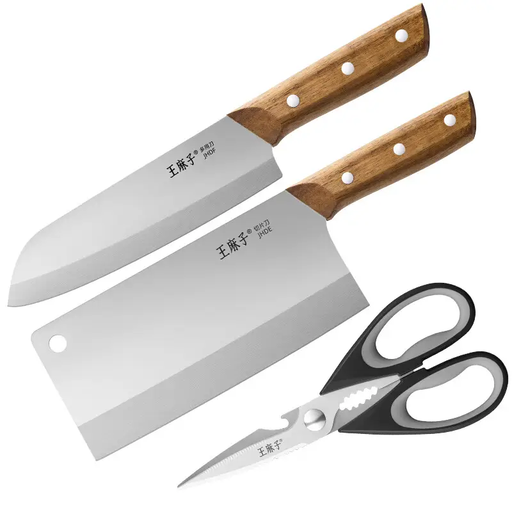
Why It's a Match: Ideal as a starter kit or for cooks seeking a solid foundation without redundant pieces. This set covers the most important daily tasks with a multipurpose knife, a slicing knife, and shears.
This set resists the quantity trap by focusing on three high-quality, forged knives and tools, rather than a multitude of inferior blades.
The blades are forged from high-quality stainless steel, promising good edge retention and durability. The included kitchen shears are a practical multi-function tool.
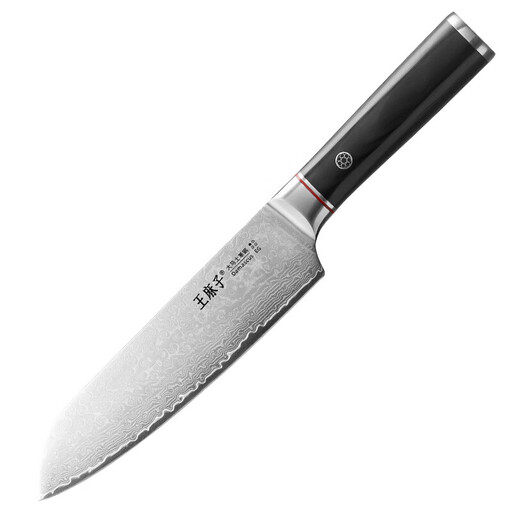
Why It's a Match: Perfect for users looking to upgrade their existing setup with a specialized, high-performance tool for precise cutting of vegetables and meat.
This knife avoids the trap of misleading material claims. It is a genuine Damascus knife, whose folded steel blade offers demonstrably higher performance than knives with a mere "Damascus look."
The genuine Damascus steel blade ensures exceptional sharpness and edge retention. The typical shape of the Santoku knife allows for precise and clean cuts.
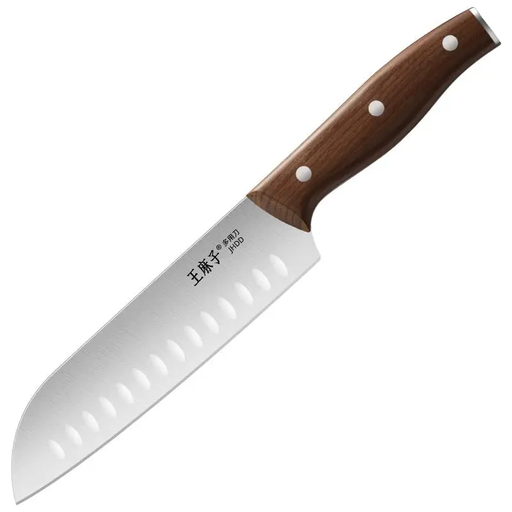
Why It's a Match: A reliable workhorse for daily kitchen tasks. This single multipurpose knife is designed for cooks who need one versatile tool for a wide range of jobs, from vegetables to meat.
This knife sidesteps the ergonomics trap with its contoured Shenmu wood handle and a well-balanced construction. It sits securely in the hand, allowing for fatigue-free use even during longer prep sessions.
The carbon steel blade offers high sharpness and excellent edge retention. The balance between the blade and handle ensures optimal control and maneuverability.
We have compiled a complete, up-to-date list of products that fully meet these strict selection criteria and German safety regulations.
The frequency depends on usage and the quality of the blade steel. With daily household use, a high-quality knife should be sharpened every 2-4 months with a knife sharpener or honing steel to maintain optimal cutting performance. A dull knife is more dangerous than a sharp one because it requires more pressure, increasing the risk of slipping.
Forged knives are shaped from a single piece of steel under heat. This process condenses the steel's molecular structure, resulting in a harder, more resilient blade with better edge retention. They typically have a bolster (the thick junction between the blade and handle), which provides better balance. Stamped knives are cut from a large sheet of steel, then heat-treated and ground. They are lighter and less expensive to produce, but often less robust.
For most home cooks, a complete kitchen knife set is not necessary. An effective basic setup consists of three core pieces: a versatile chef's knife or Santoku knife (approx. 8-inch blade) for most tasks, a small paring knife (approx. 3-4 inches) for detailed work, and a serrated bread knife. A good pair of kitchen shears is also a very useful addition. Buying individual, high-quality knives is often a better investment than purchasing a large but qualitatively mixed set.