
Lieferung heute & morgen

Qualitätsgarantie

Willkommens-Angebote freischalten: KOSTENLOSE Lieferung | Bis zu 80 % RABATT | Kostenlose 30-Tage-JoyPlus-Testphase
App herunterladen
A kitchen knife set can make everyday food preparation easier – provided the knives included are suited to the tasks you actually carry out. Many shoppers initially focus on the number of pieces or particularly eye-catching packaging. However, blade material, knife shapes, care instructions and safe storage are more meaningful factors.
A large kitchen knife set may contain several knives with similar uses, while an important chef’s knife or bread knife is missing. For a typical household, a chef’s knife, vegetable knife, bread knife and, where appropriate, a sharpening tool are often enough. Steak knives are a useful addition, but they do not replace a kitchen knife for food preparation.
A sharp kitchen knife can quickly lose its cutting performance through unsuitable chopping boards, the dishwasher or loose storage. Glass and ceramic boards are unsuitable for many blades. Bones, frozen food and hard nuts can also damage the edge unless the product is expressly designed for these tasks.
A knife block keeps everything tidy and protects blades from coming into contact with other objects. However, it is only practical if the knives are inserted dry and the slots match the blades. Wooden or wood-effect blocks should also not be soaked in water. An attractive handle alone says little about balance, cleaning or a secure grip.
When choosing a stainless steel knife, the material specification should be verifiable. The range includes, for example, 50Cr steel on certain Wangmazi models and HRC 53 on the Xiaotianzi Chinese Chef’s Knife. Rockwell hardness, HRC, describes a material’s resistance to indentation. A higher value is not automatically more suitable for every use: harder blades can retain their edge well, but require appropriate care and may be more sensitive to lateral force.
More important than a marketing description are:
The type of knife should suit the preparation tasks:
You should also check the dimensions and weight. The Xiaotianzi knife described here weighs 460 g, with a blade length of 214 mm and a blade width of 102 mm. These dimensions can be practical for larger cutting tasks, but may not always be comfortable for smaller hands or confined work surfaces.
Washing by hand with mild washing-up liquid and drying immediately protects many kitchen knives better than a dishwasher cycle. Whether a knife is dishwasher-safe must be stated in the relevant product description. The Victorinox Swiss Classic Gourmet Steak Knife is listed as dishwasher-safe; nevertheless, hand washing is recommended to help protect the edge. According to the product information, the ZWILLING VierSterne Set is not intended for use in the dishwasher.
The following practices have proved effective:
For catering and food-service businesses, a quick cleaning system, sufficient spare knives and clear allocation of knives to workstations are also important.
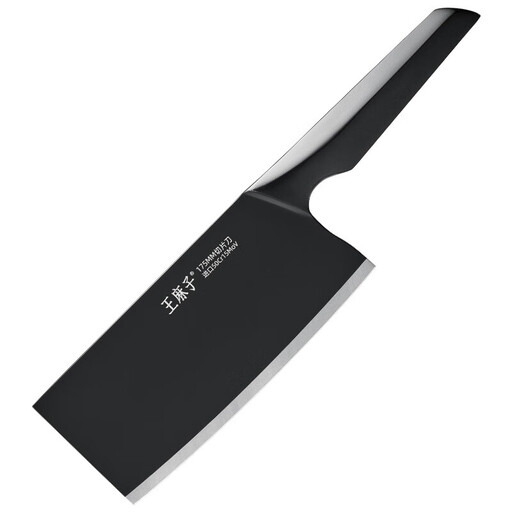
Why this product suits this profile: This set is aimed at households looking for a kitchen knife designed around vegetable preparation without needing an extensive range of equipment.
The specific 50Cr steel specification makes the material choice more transparent than a simple marketing claim about sharpness.
A compact focus on vegetables and clearly specified blade material.
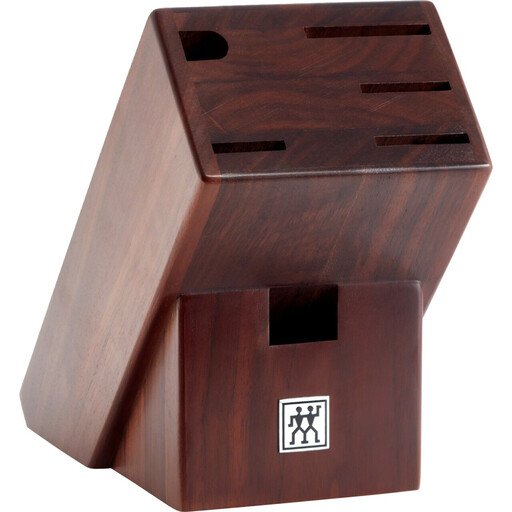
Why this product suits this profile: This set combines several kitchen knives and accessories for households that prefer a well-organised basic range.
The knives included are clearly listed: vegetable, carving, chef’s and bread knives, plus a honing steel, scissors and block.
FRIODUR ice-hardened stainless steel blades, a walnut-effect block and seven clearly defined components.
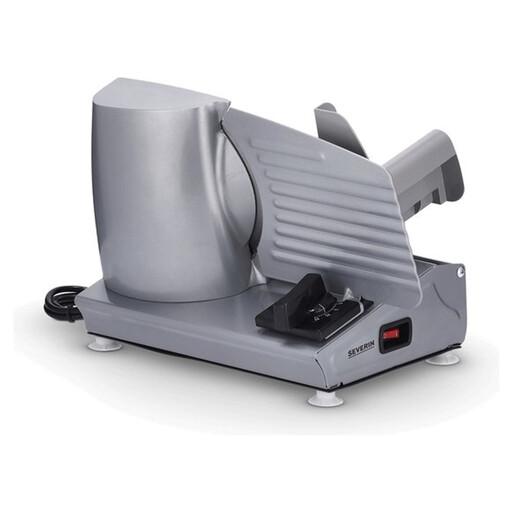
Why this product suits this profile: For households, buffets and catering tasks involving regular slicing, this electric food slicer offers an alternative to cutting by hand.
The slicing thickness can be adjusted from 0 to 15 mm. Finger and food holder protection, a safety switch and non-slip suction feet are all clearly specified.
A 180-watt motor, two removable stainless steel blades and an angled slicing area for bread, cheese, cold meats and vegetables.
We have put together a complete, regularly updated list of products that fully meet these strict selection criteria and the safety regulations applicable in the EU.
For a typical household, four basic types are usually sufficient: a chef’s knife, vegetable knife, bread knife and a knife for smaller cutting tasks. A set with additional steak knives, scissors, honing steel or a knife block is worthwhile if these components will be used regularly. For catering and food-service businesses, the quantity should be planned according to the number of workstations, menu and cleaning schedule.
The lifespan of an edge depends on the steel, frequency of use, chopping board, cutting technique and care. Soft or unsuitable surfaces and contact with the dishwasher can accelerate wear. A honing steel can regularly realign the existing edge geometry; if the blade is genuinely blunt, it needs to be sharpened using a suitable method. It is therefore not possible to give a reliable fixed timescale.
An electric food slicer is useful if you frequently need even slices of bread, cheese, cold meats or roast meat. Traditional kitchen knives remain more flexible for herbs, vegetables, fine cutting techniques and smaller ingredients. Before buying, you should check the space available, cleaning requirements, power connection, safety features and the slicing thickness you require.