
Lieferung heute & morgen

Qualitätsgarantie

Willkommens-Angebote freischalten: KOSTENLOSE Lieferung | Bis zu 80 % RABATT | Kostenlose 30-Tage-JoyPlus-Testphase
App herunterladen
A kitchen knife set can make everyday food preparation easier – provided the range of knives and their intended uses suit your household. Many offers seem particularly attractive because of their large number of pieces or terms such as “ultra-sharp”. In practice, however, the number of items alone does not determine how useful a set is.
The Joybuy Product Recommendation Officer provides an objective overview of the most important buying criteria and explains what keen home cooks, families and DIY users should look out for.
A kitchen knife set with ten or more pieces does not automatically include the knives you need every day. For many households, a chef’s knife, a small vegetable or paring knife and a bread knife are more useful than several almost identical blades.
Before buying, check the following:
The description sharp kitchen knives initially only refers to their condition when delivered. Information about the blade material, blade length, edge type and care is more meaningful. Stainless steel is corrosion-resistant, but depending on the design it still requires careful cleaning and drying.
Ceramic blades can be lightweight and corrosion-resistant. However, they are more brittle than steel and should not be used for levering, cutting bones or frozen food, or on hard chopping surfaces.
Loose knives in a drawer can damage the blades and increase the risk of injury when they are removed. A kitchen knife with knife block protects the edges and provides a secure place to store the knives. Alternatives include a suitable drawer insert, a knife bag or a magnetic strip. The latter should be securely fitted and hold the blade safely.
For steel blades, the precise type of steel and its manufacture are important points of comparison. The product details should clearly state whether the blade is made from stainless steel, carbon steel or another material. A serrated edge, for example, is suitable for bread and baked goods, while a smooth edge allows precise cuts through vegetables or meat.
A ceramic knife set is particularly useful for fruit, vegetables and cooked food. The blades are lightweight and do not absorb odours. At the same time, they require careful handling: do not cut on glass, stone or ceramic, and do not twist the knives.
The right length depends on the task and the available work surface:
A non-slip handle made from plastic, TPR or Fibrox can provide greater control when your hands are wet. The key is to choose a handle size and weight that feel right in your hand. A heavy knife block should also stand securely and stably on the work surface.
Always follow the manufacturer’s care instructions. Some models are dishwasher-safe, while others are recommended for hand washing. Regardless, blades should be dried promptly after cleaning and not left in water for extended periods. Chopping surfaces made from glass, stone or ceramic can wear edges more quickly; wood or suitable plastic is generally the more practical choice.
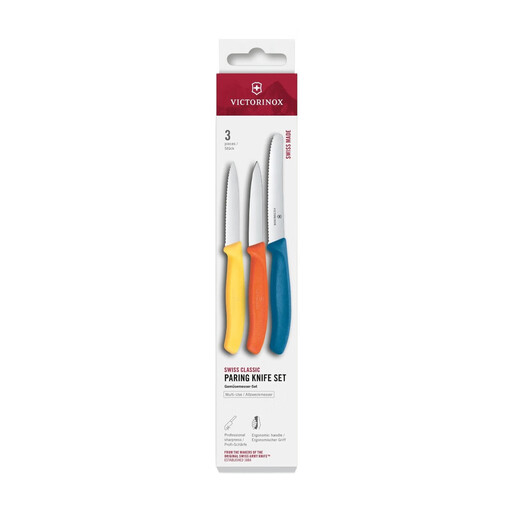
Why this product suits this profile: This compact set focuses on three 11 cm vegetable knives with straight, serrated and versatile edges. It is ideal for small kitchen tasks and households that do not need an extensive range of equipment.
The number and types of knives are clearly stated. This prevents you from paying for lots of unused pieces when you mainly prepare fruit and vegetables.
Three different blade types, 11 cm stainless-steel blades, PP handles and, according to the product details, dishwasher-safe.
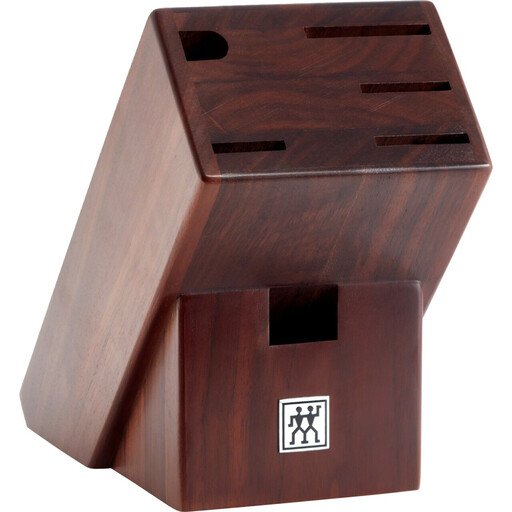
Why this product suits this profile: This set covers typical preparation tasks and includes a knife block, sharpening steel and kitchen scissors. It is aimed at households that prefer an organised, complete set-up.
The seven components and their respective blade lengths are listed. Hand washing is also expressly recommended, so the care requirements are clear before purchase.
FRIODUR ice-hardened blades according to the product details, 20 cm chef’s knife, 20 cm bread knife and block storage.
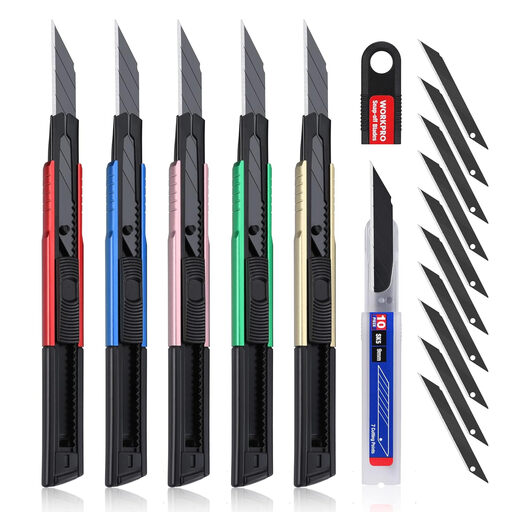
Why this product suits this profile: For cardboard, wallpaper, carpet, vinyl or leather, a cutter set is more suitable than a kitchen knife. This set provides several handy utility knives for the home, workshop or office.
The 9 mm blade width, Auto-Lock system and intended materials are clearly described. This makes it easy to distinguish the tool from a kitchen knife set.
Five cutters, ten replacement blades, aluminium handle, belt clip and replaceable SK5 carbon-steel blades.
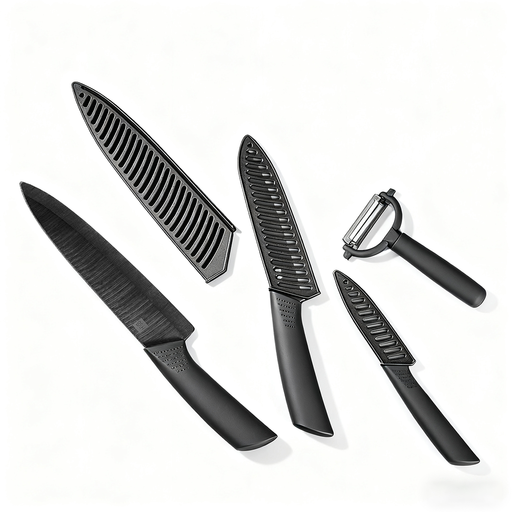
Why this product suits this profile: This set combines chef’s, utility and fruit knives with a peeler. It is designed for fruit, vegetables and cooked food, and appeals to buyers who prefer lightweight tools.
The care instructions specify hand washing and advise against cutting bones, frozen food or on hard surfaces. This keeps the risk of ceramic blades breaking visible during the selection process.
Zirconium oxide blades according to the product details, TPR handles, low weight and a package containing four kitchen tools.
We have put together a complete, regularly updated list of products that fully meet these strict selection criteria and the safety regulations applicable in the EU.
Kitchen knives should always be used with the appropriate chopping surface. Keep the fingers of your free hand outside the cutting line, and never use knives for levering or opening packaging. Utility knives, cutters or carpet knives are designed for cardboard and parcels.
With a snap-off blade cutter, the blunt blade section must be removed as instructed by the manufacturer and disposed of safely. SK5 replacement blades are available, for example, in 9 mm or 18 mm. The width must match the cutter in question. An 18 mm replacement blade set is not automatically compatible with a 9 mm cutter. Replacement blades should be stored in a puncture-resistant container, not loose in drawers.
For many households, a chef’s knife, vegetable knife and bread knife make up a practical basic set. If you regularly portion meat, you can add a meat or carving knife. A knife block, scissors and sharpening steel may also be useful, depending on your personal requirements.
How long an edge lasts depends on the material, edge type, chopping surface, pressure and care. Wood or suitable plastic generally puts less strain on the blade than hard stone, glass or ceramic surfaces. Steel knives can be sharpened; ceramic blades should not be treated with an ordinary sharpening steel.
This depends on the individual product. According to the product details, some Victorinox models are dishwasher-safe, while hand washing is recommended for the ZWILLING VierSterne set. Ceramic knives should be hand-washed with a mild cleaning product. Always follow the specific care instructions before buying and before each cleaning.