
Lieferung heute & morgen

Qualitätsgarantie

Willkommens-Angebote freischalten: KOSTENLOSE Lieferung | Bis zu 80 % RABATT | Kostenlose 30-Tage-JoyPlus-Testphase
App herunterladen
A good kitchen knife set is the foundation for preparing any meal. However, the market is filled with promises that often go unkept. Many home cooks invest in a seemingly high-quality set, only to find that the knives are dull, rusting, or feel unbalanced in their hand after just a few months. As your Joybuy Product Recommendation Officer, I'll help you identify the common pitfalls and make an informed decision.
Before you make a purchase, it's crucial to understand the most common issues that lead to disappointment.
To avoid buyer's remorse, you should focus on objective and verifiable criteria instead of marketing buzzwords.
A durable knife set starts with the material. German stainless steel, such as the X50CrMoV15 steel type, is known for its balanced combination of hardness, flexibility, and corrosion resistance. Even more important, however, is the hardening process. Innovative techniques that expose the blade to extreme temperatures after heating alter the steel's molecular structure. An example of this is Tefal's Ice Force technology, where the blade is cooled to -120°C, according to the manufacturer. Such processes aim to significantly increase edge retention (the ability to stay sharp) and the material's resilience.
A sharp knife set is defined not just by the material, but also by its grind. The sharpening angle of the blade is a key factor here. A smaller angle (e.g., 15° per side) results in an extremely sharp but also more delicate edge. A slightly larger angle (e.g., around a 26° total angle) offers a good compromise between initial sharpness and durability for daily use. Look for a precisely and evenly ground blade, as this is essential for clean cuts.
A good chef's knife set should include the most important tools for everyday kitchen tasks. Instead of a huge block with many specialty knives that are rarely used, a set with the following three components is often more practical:
Here are some recommendations tailored to different needs and priorities.
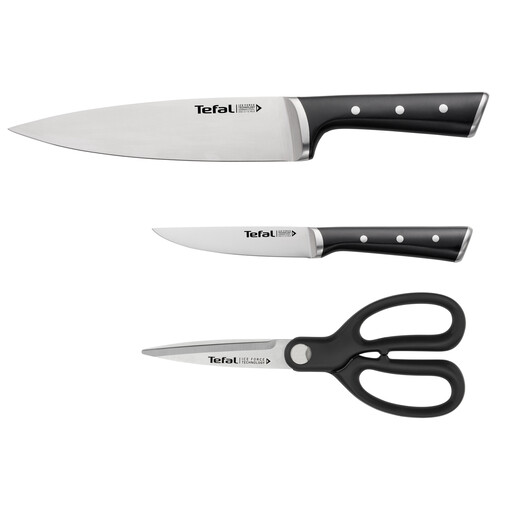
Why it's a great fit: Ideal for home cooks looking for a reliable and durable all-round set for daily meal prep. The combination of a chef's knife, utility knife, and shears covers the most common tasks without being excessive.
The Ice-Force technology (a cryogenic tempering process at -120°C) directly addresses the problem of rapidly dulling blades. The use of high-quality German stainless steel minimises the risk of corrosion.
Long-lasting cutting performance (up to 2x longer than the brand's other stainless steel series, according to Tefal) and a 10-year warranty on the blade provide investment security.
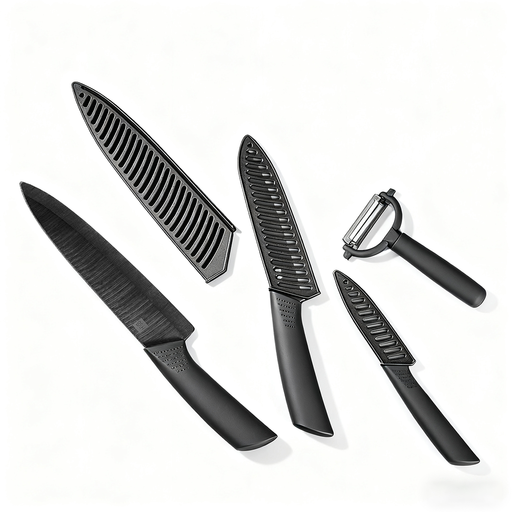
Why it's a great fit: For users who primarily cut fruits, vegetables, and boneless meat, and who value an extremely lightweight, odour-neutral, and low-maintenance tool.
Zirconium oxide ceramic blades cannot rust, completely resolving the "stainless" fallacy. Their extreme hardness ensures very long-lasting sharpness without the need for re-sharpening.
The material is chemically inert, does not absorb odours, and does not react with food acids. Its low weight significantly reduces fatigue during extended cutting tasks.
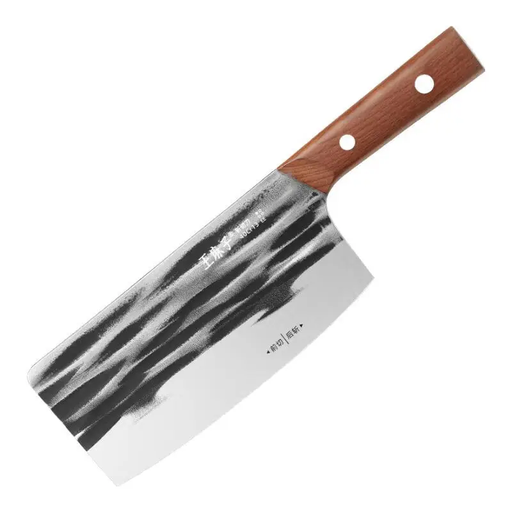
Why this knife is a great fit: For anyone who needs a starter knife for their kitchen or is looking for a single, functional knife without investing in a complete set. It focuses on the core function: a solid, all-purpose knife.
Instead of spending money on a cheap set with many useless pieces, you invest in a single, purposeful blade. This avoids buying filler items and concentrates the budget on one usable tool.
A functional and affordable cleaver-style design that is built for basic cutting tasks in the kitchen. A pragmatic choice for getting started or as a supplementary knife.
We have compiled a complete, up-to-date list of products that fully meet these strict selection criteria and German safety regulations.
Although the manufacturer states that the knives are dishwasher-safe, hand washing is recommended to maximize their lifespan. Use warm water, a mild detergent, and a soft sponge. Dry the knives immediately to prevent water spots or corrosion. Store the knives in a knife block or on a magnetic strip to protect the blades. Use cutting boards made of wood or plastic, never glass, stone, or ceramic.
Not necessarily. Stainless steel knife sets are excellent all-rounders—they are robust, relatively easy to care for, and can be easily re-sharpened when needed. However, for specific applications, other materials may be more advantageous. Ceramic knives are lighter, stay sharp for an extremely long time, and are chemically neutral, but they are also brittle and can chip if handled improperly (e.g., on bones or frozen foods). The choice depends on your cooking habits and priorities.
The term "German stainless steel" typically refers to specific steel grades that were developed in or meet the standards of Germany, such as the Thyssenkrupp steel X50CrMoV15. This steel is known for its excellent balance of corrosion resistance (from chromium), hardness and edge retention (from carbon), and toughness (from vanadium and molybdenum). It is considered the industry standard for high-quality kitchen knives in the mid-price range.