
Lieferung heute & morgen

Qualitätsgarantie

Willkommens-Angebote freischalten: KOSTENLOSE Lieferung | Bis zu 80 % RABATT | Kostenlose 30-Tage-JoyPlus-Testphase
App herunterladen
Blunt kitchen knives don’t just cut less effectively; they can also make it harder to cut with control. A manual kitchen knife sharpener can be a space-saving solution for many households. However, kitchen sharpeners vary considerably in their abrasive materials, sharpening stages and stability.
Before you buy, it’s worth looking out for these common pitfalls:
A knife sharpener with a ceramic wheel is often used for finer finishing on an edge that has already been shaped. Stainless steel or carbide wheels, on the other hand, may be designed to remove more material. The exact function depends on the model.
A 4-stage knife sharpener may combine several steps:
Not every knife needs every stage. For regular sharpening at home, a coarse and a fine stage are often enough. A scissor sharpener is only useful if you also want to sharpen kitchen scissors.
A preset angle makes it easier to guide the blade evenly. According to the product information, the ZWILLING TWINSHARP uses an angle of around 35°. It’s designed for knives with a straight edge. Only use a manual knife sharpener on serrated knives, ceramic knives or particularly thin specialist blades if the manufacturer explicitly says it’s suitable.
When sharpening a knife, you should generally draw the blade through the designated slot without applying heavy pressure. The number of strokes depends on the condition of the edge and the manufacturer’s instructions.
These details are worth considering for home use:
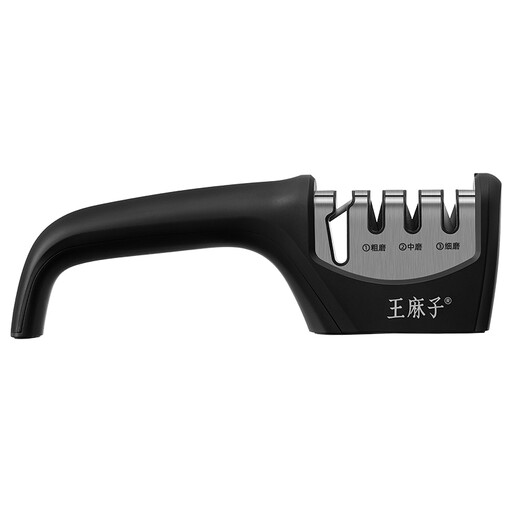
Why this product suits this profile: The name “Four in One” will appeal to households looking to combine several functions in one manual knife sharpener. Before buying, check the individual sharpening stages and whether they’re suitable for the knives you own.
Don’t judge a multi-function sharpener by the number of slots alone. The product page is a good place to start when checking the features and compatibility before ordering.
Described as a “Four in One” model; its multi-function design may cover several kitchen tasks.
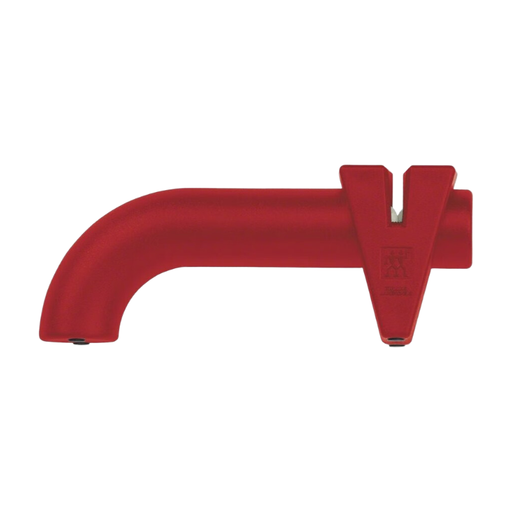
Why this product suits this profile: A good choice for those who value clear information about materials and dimensions: the model is 17 cm long, made from ABS plastic and, according to the product information, combines stainless steel and ceramic wheels.
The stated angle of around 35° and the indication that it’s for straight edges make it easier to understand where the sharpener can be used than a vague claim about sharpness alone.
Stainless steel and ceramic wheels; preset sharpening angle; 17 cm long and weighs 0.131 kg, according to the product information.
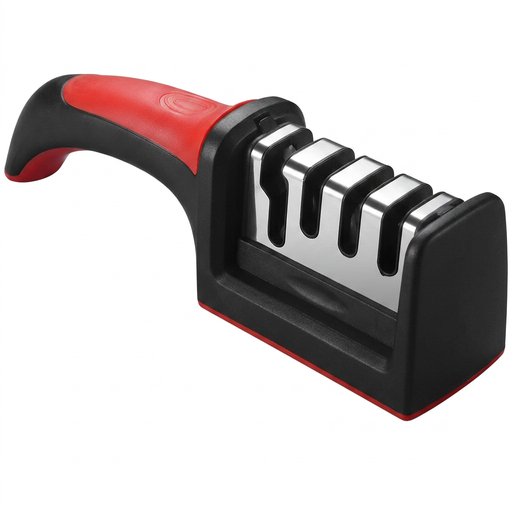
Why this product suits this profile: This model is for households looking to sharpen scissors as well as kitchen knives, and make use of several sharpening stages.
The four functions are listed individually: coarse sharpening, fine sharpening, scissor sharpening and polishing. This makes it easier to choose the right stage for the task.
Four separate slots, according to the product description; designed for knives and kitchen scissors; suitable for use on a worktop.
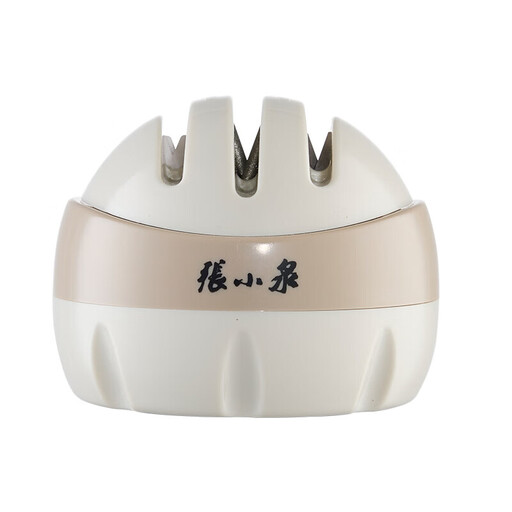
Why this product suits this profile: The product name specifies a suction cup and a single handle. This may appeal to anyone who wants the sharpener to stay firmly in place while sharpening a knife.
A suction cup doesn’t remove the need to check the worktop. Before use, make sure the surface is smooth, clean and suitable for attaching the sharpener.
Suction cup and single handle, according to the product name; designed to stay as firmly in place as possible during use.
We’ve put together a complete, regularly updated list of products that meet these strict selection criteria and comply fully with the safety regulations applicable in the EU.
Before using your sharpener for the first time, check the instructions and which types of blade it can be used on. The following applies to many models:
A knife sharpener won’t repair severely damaged or bent blades. For high-quality knives with a specialist blade profile, a suitable sharpening tool or professional repair may be a better option.
It depends on the knife steel, chopping board, how often you use the knife and what you’re cutting. With regular use, occasional fine sharpening is generally better than frequent coarse sharpening. If the knife no longer glides easily through soft foods, it may be time to check the edge.
No. Many sharpeners are designed for straight steel blades. Serrated knives, ceramic blades and very thin specialist knives may need a different method. Always follow the instructions from the manufacturer of your sharpener.
Manual knife sharpeners generally don’t use electricity, so there are no electricity costs. However, sharpening wheels or elements can wear out, and sharpening may remove material from the blade. Careful use when needed can help limit unnecessary wear.