Selecting the right kitchen knife requires an analysis of the technical parameters that define its performance and longevity. A blade's cutting efficiency is a direct result of its geometry, material composition, and overall craftsmanship. A thorough understanding of these factors is the foundation for an informed purchase. This guide focuses on the objective criteria that distinguish a high-quality cutting tool.
Buyer's Guide: Technical Selection Criteria
The characteristics of a kitchen knife are determined by the interplay of material, hardness, blade shape, and handle construction. These factors influence edge retention, corrosion resistance, and handling.
1. A Closer Look at Blade Materials
The blade material is the most critical factor for sharpness, durability, and maintenance requirements.
- Stainless Steel (e.g., 1.4116): Alloyed steels, such as German 1.4116 stainless steel, contain chromium, molybdenum, and vanadium. This composition provides high corrosion resistance and toughness. Knives made from this material are low-maintenance and robust, making them ideal for daily, intensive use.
- Damascus Steel: A Damascus knife consists of multiple layers of steel that are forge-welded and folded together. This process not only creates a distinctive pattern but also combines the properties of different types of steel. A hard, high-performance steel core provides the sharpness, while softer outer layers ensure flexibility and fracture resistance.
- Carbon Steel: This type of steel is characterized by a high carbon content, which allows for an extremely sharp edge and easy resharpening. However, these blades are more susceptible to corrosion and require meticulous care, such as immediate drying after use and regular oiling.
2. Hardness Rating (Rockwell HRC)
The hardness of a blade is measured in Rockwell (HRC) and describes the material's resistance to indentation.
- 53–58 HRC: This range offers a good balance between sharpness and flexibility. The blade is resistant to chipping and is easy to resharpen. It is ideal for all-purpose knives.
- Over 60 HRC: Blades with a very high hardness rating can be ground to an extremely sharp edge and maintain it for a very long time (high edge retention). However, they are more brittle and prone to blade damage if handled improperly.
3. Knife Types and Their Applications
- Chef's Knife: The universal tool in the kitchen. With its broad, tapering blade (typically 20 cm), a professional chef's knife is suitable for slicing meat, fish, and vegetables, as well as for mincing herbs.
- Santoku Knife: The Japanese equivalent of the chef's knife. Its blade shape, with a straighter edge and a rounded tip, is optimized for precise push and pull cuts. Many Santoku knives feature a hollow-ground edge (indentations on the blade) that reduces food from sticking.
4. Handle Material and Construction
The handle affects the knife's balance, control, and hygiene.
- Wooden Handle: Materials like rosewood or ebony offer a natural feel and a secure grip, even when wet. A knife with a wooden handle requires some maintenance to keep the material in good condition.
- Synthetic (e.g., ABS): Handles made of Acrylonitrile Butadiene Styrene (ABS) are extremely durable, water-resistant, and easy to clean. A seamless construction between the handle and the blade (tang) prevents bacteria buildup and increases stability.
Our Top Picks for 2026
The following products have been selected based on their technical specifications and functional design.
1. YOTSUBA 17.8 cm Santoku Knife
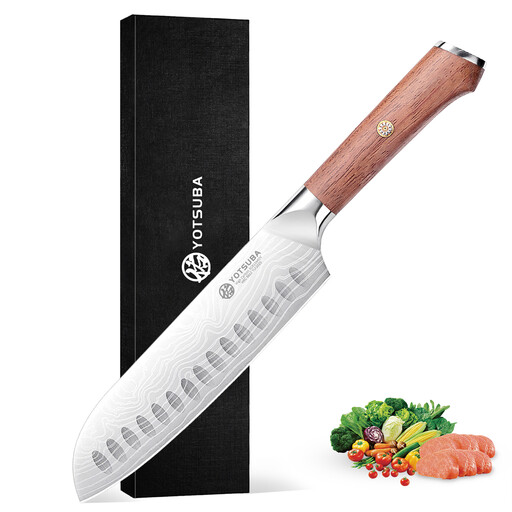
- Why we recommend it: This hand-forged Santoku knife combines traditional craftsmanship with functional details. The carbon steel blade, with a hardness of 56 HRC and a 14-degree grinding angle, allows for exceptionally precise cuts. The design featuring a hollow-ground edge (round indentations) reduces friction and prevents food from sticking.
- Advantages:
- Precise Cutting Performance: The thin blade and acute angle ensure superior sharpness.
- Reduced Sticking: The hollow-ground edge makes it easier to slice starchy vegetables or moist foods.
- Excellent Handling: The rosewood handle absorbs moisture and provides a secure grip.
- Balanced Hardness: 56 HRC strikes a compromise between edge retention and ease of sharpening.
- Who it's for: Home cooks looking for a specialized, sharp kitchen knife in the traditional Santoku style for everyday cutting tasks, who also appreciate artisanal details.
2. HuoHou Damascus Chef's Knife
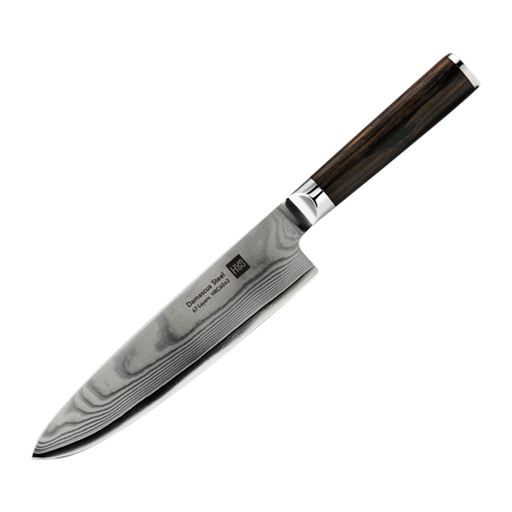
- Why we recommend it: This knife represents the fusion of material science and aesthetics. The blade is crafted from 67 layers of Damascus steel with a 90Cr14MoV steel core. This construction delivers high hardness for long-lasting sharpness while maintaining flexibility through the outer layers. The hand-honed 16-degree angle ensures superior cutting efficiency.
- Advantages:
- High-Performance Blade Steel: The 67-layer construction with a 90Cr14MoV core offers excellent edge retention and corrosion resistance.
- Hand-Honed Sharpness: The 16-degree edge allows it to glide effortlessly through food.
- Ergonomic Ebony Handle: The dense and durable wood provides excellent balance and comfortable control.
- Unique Aesthetics: The Damascus pattern makes each knife a one-of-a-kind piece.
- Who it's for: Ambitious home cooks and professional users seeking a high-performance and visually stunning Damascus knife for all types of precision cutting.
3. HuoHou Stainless Steel Slicing Knife
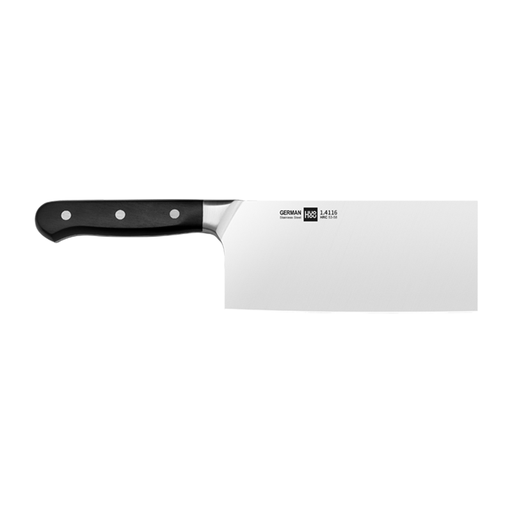
- Why we recommend it: This knife is designed for functionality, durability, and hygiene. The blade, made from German 1.4116 stainless steel with a hardness of 53–58 HRC, is a proven material for professional use. The seamless welded joint between the blade and handle prevents dirt buildup and enhances stability.
- Advantages:
- Robust and Corrosion-Resistant Steel: The Cr-Mo-V alloyed steel is durable and low-maintenance.
- Hygienic Design: The seamless joint between the blade and handle is easy to clean and prevents bacteria formation.
- Durable Handle: The triple-riveted ABS handle offers lasting stability and comfortable handling.
- Precise V-Grind: An 8-step, manual grinding process ensures a uniform and sharp cutting edge.
- Who it's for: Users who prefer a reliable, low-maintenance, and hygienic chef's knife for daily, intensive use in a home or professional kitchen.
More Options and Professional Chef's Knives
The models presented here cover specific use cases. For a broader selection of specialized blade shapes, steel types, and handle materials, you can find more models in our Chef's & Kitchen Knives category.
Frequently Asked Questions (FAQ)
1. What is the difference between a chef's knife and a Santoku knife? A classic chef's knife has a curved blade, which is well-suited for the rocking chop technique. A Santoku knife has a straighter edge and a shorter, wider blade optimized for precise, straight cuts (push and pull cuts). It is often lighter and more agile.
2. How do you properly care for a high-quality kitchen knife? Clean the knife by hand with warm water and a mild detergent. Dry it thoroughly immediately to prevent corrosion (especially with carbon steel). Never use a dishwasher, as the harsh detergents and high temperatures can damage the blade and handle. Store the knife in a knife block, on a magnetic strip, or with a blade guard.
3. What does the HRC value mean for a knife? The HRC value (Hardness on the Rockwell C scale) is a measure of the blade steel's hardness. A higher HRC value (e.g., 60+) means the blade is very hard and has high edge retention, but it can also be more brittle. A lower value (e.g., 55 HRC) indicates a tougher steel that is less prone to chipping but needs to be sharpened more frequently.

