
Lieferung heute & morgen

Qualitätsgarantie

Willkommens-Angebote freischalten: KOSTENLOSE Lieferung | Bis zu 80 % RABATT | Kostenlose 30-Tage-JoyPlus-Testphase
App herunterladen
A kitchen knife should suit the cutting task, your hand and the level of care you are prepared to provide. Even so, many shoppers choose a model that may be well advertised but fails to impress in everyday kitchen use. What matters is not just the brand name or eye-catching appearance, but clear information about blade length, edge type, material, handle design and cleaning.
A compact paring knife with a blade length of 8 to 10 cm is suitable for small ingredients, peeling and precise work. For larger cutting movements or chopping cabbage, a chef’s knife measuring around 20 cm is more practical. A knife that is too small can require more pressure and lead to uneven cuts, while a model that is too long can make delicate work more difficult.
A serrated vegetable knife can grip skins and soft foods such as tomatoes cleanly. However, a smooth edge is generally easier to control for rocking motions, herbs and cutting meat. A bread knife with a long serrated blade is designed for bread, cakes and pastries, and does not replace a small paring knife.
The dishwasher-safe label does not mean that the blade and handle will show no signs of wear. Impacts with other cutlery, high temperatures and detergents can put additional strain on the edge and certain handle materials. With high-quality or hand-sharpened kitchen knives, washing by hand with mild washing-up liquid and drying them afterwards is often the gentler option.
First, match the knife to its intended task:
When it comes to materials, stainless steel is easy to care for in everyday use. However, the term alone does not describe every characteristic of the blade. Also look for clear information about the edge type and the manufacturer’s care instructions. A serrated edge requires a different sharpening method from a smooth V-edge.
An ergonomic handle should sit securely in your hand and suit your individual hand size. Plastic and polypropylene handles are often easy to clean. For longer cutting tasks, balance, a non-slip surface and a secure transition between the blade and handle are all important. A handle with a finger guard can improve control, but it does not replace safe cutting technique.
For private households, easy cleaning is often more important than elaborate construction. In restaurants, catering and professional kitchens, consistent ranges, robust handles, safe storage and clear allocation of knives are also important. Blades stored loose in a drawer can become damaged and pose a risk of injury. Suitable options include a knife block, a magnetic strip with sufficient security, a drawer insert or a blade guard.
The following recommendations match specific kitchen knives to different usage situations. The information is based on the respective product descriptions.
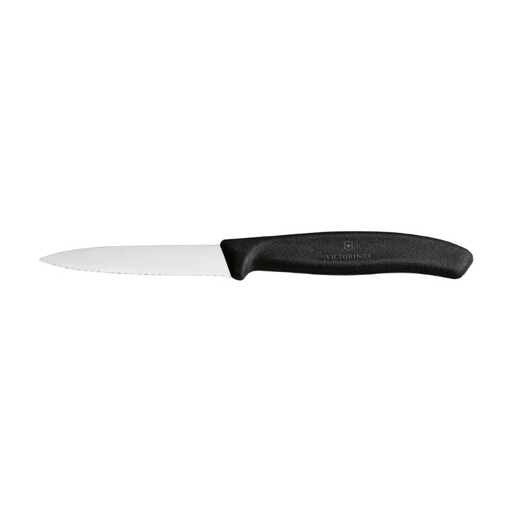
Why this product suits this profile: The 8 cm blade is designed for small cutting tasks, soft fruit and vegetables, and peeling. The lightweight polypropylene handle and 20 g weight make everyday handling easier.
The product details clearly state the blade length, serrated edge, handle material and weight. This makes it easier to assess whether it is suitable, rather than buying based on design alone.
Serrated stainless-steel blade, lightweight PP handle and dishwasher-safe design according to the product description. Hand washing is recommended to help protect the edge.
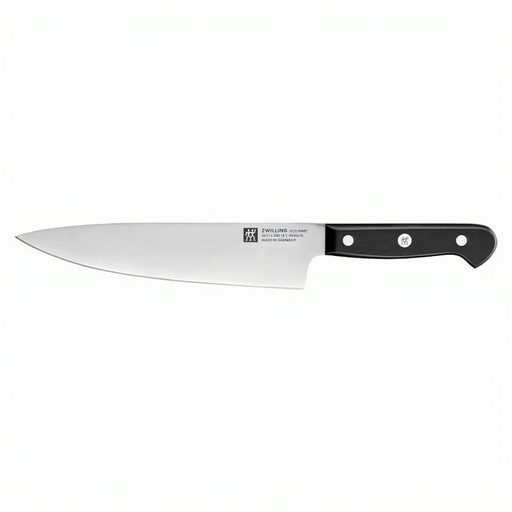
Why this product suits this profile: The 20 cm chef’s knife handles typical preparation tasks such as slicing, dicing, chopping and rocking. The straight edge and plastic handle are designed for regular kitchen use.
Its intended uses are clearer than those of a supposed all-purpose knife: the straight 20 cm blade is designed for larger ingredients, not delicate peeling tasks.
Special-alloy steel with FRIODUR ice hardening according to the product description, an approximately 30° edge angle and an ergonomic plastic handle with a three-rivet design.
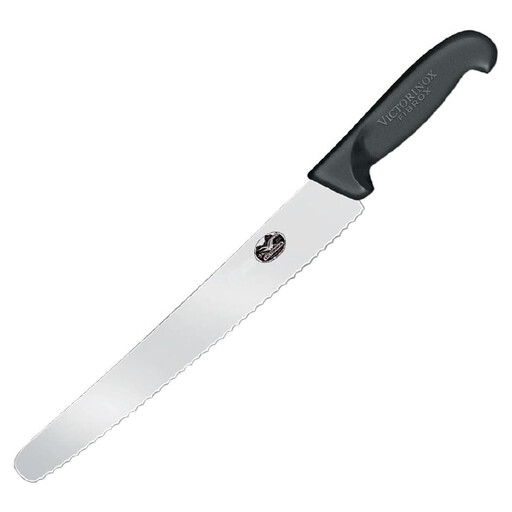
Why this product suits this profile: The 26 cm serrated blade is designed for bread, cakes and pastries. The non-slip handle and curved blade support repeated cutting movements in both domestic and professional kitchens.
The long blade and specialised serrated edge prevent a small vegetable knife from being used for large baked goods. It should not be used on stone, glass or ceramic boards.
26 cm stainless-steel serrated blade, curved shape and ergonomic, non-slip plastic handle. According to the product description, the knife is dishwasher-safe.
Clean kitchen knives as soon as possible after use, particularly after cutting acidic foods. Dry the blade thoroughly and store it so that the edge does not come into contact with other objects. Use wooden or suitable plastic chopping boards; hard surfaces such as glass, stone and ceramic can damage the edge more quickly.
A smooth edge can be maintained with a suitable honing steel, whetstone or appropriate knife sharpener. With serrated knives, the choice of sharpening tool is more limited. Before every use, check whether the blade is damaged. Kitchen knives should also be kept out of children’s reach and stored safely.
We have put together a complete, regularly updated list of products that fully meet these strict selection criteria and the safety regulations applicable in the EU.
For many households, a chef’s knife measuring around 18 to 20 cm is a useful kitchen essential. A paring knife or vegetable knife complements the selection for peeling, trimming and preparing small ingredients. A bread knife and steak knife are particularly useful if these cutting tasks come up regularly.
“Stainless steel” means increased resistance to corrosion in everyday kitchen use, not complete immunity. Residue, moisture, harsh cleaning products and prolonged contact with salt or acid can affect the surface. Cleaning, rinsing and thorough drying therefore remain important.
If a kitchen knife is explicitly labelled dishwasher-safe, it can generally be cleaned in the dishwasher. However, hand washing with a mild cleaning product is often gentler and helps preserve the edge, handle and surface. Always follow the specific care instructions provided by the manufacturer.