
Lieferung heute & morgen

Qualitätsgarantie

Willkommens-Angebote freischalten: KOSTENLOSE Lieferung | Bis zu 80 % RABATT | Kostenlose 30-Tage-JoyPlus-Testphase
App herunterladen
Whether you are a keen home cook, run a catering business or prepare meals in your kitchen every day, kitchen knives need to suit the task, your hand size and how much care you are prepared to give them. Eye-catching packaging or the word “professional” alone says little about how practical a knife really is. As a Joybuy Product Recommendation Officer, I will outline the key buying criteria objectively and show you which models suit different user profiles.
One knife may cover several tasks, but it does not automatically replace a meat knife, bread knife or cleaver. For example, a smooth, narrow blade is suitable for making precise cuts through meat. A bread knife with a serrated edge, on the other hand, works better on crusts, while a pizza knife with a serrated blade cuts through firm dough more effectively.
If you regularly work with bones or very hard ingredients, you should distinguish between a sturdy chopping knife and a cleaver designed for this purpose. A Chinese chef’s knife is versatile, but not every model is intended for bones or frozen food.
Stainless steel reduces the amount of maintenance required, but it does not make a knife immune to moisture, harsh cleaning products or prolonged contact with food residue. Acidic foods in particular should not be left on the blade for extended periods.
The claim “dishwasher-safe” should also be checked for each individual product. This feature is specified for the Tefal Ice Force Steak Knife and the Victorinox Swiss Classic Steak and Pizza Knife. Other models, such as the WMF KINEO Carving Knife and the ZWILLING Professional S Meat Knife, are intended for hand washing according to the product information.
Sharp kitchen knives need a suitable cutting surface and regular care. Glass, stone and ceramic boards can blunt blades more quickly. Storing knives loose in a kitchen drawer also increases the risk of injury and can damage the blade.
A knife block, drawer insert, magnetic strip or blade guard is a sensible choice. With high-quality knives, you should also check whether the manufacturer recommends hand washing, a honing steel or a whetstone.
The blade length should suit the task and the available work surface:
A carving knife with a straight blade allows you to cut even slices. A serrated edge, by contrast, is useful for crusts or firm surfaces, but cannot be sharpened in the same way as a smooth blade.
With stainless steel, corrosion resistance, hardness and blade geometry are more important than a general advertising claim. Product specifications may refer to stainless steel, specially hardened steel or carbon steel. Carbon steel can offer excellent hardness and edge retention, but it usually requires more attention to prevent moisture damage and discolouration.
When choosing a knife, compare the following details:
An ergonomic handle supports controlled movement. A finger guard, slip-resistant surface and dry hands can improve handling. Wooden handles should not be left in water and should generally not be put in the dishwasher. The same applies to every knife: prepare food on a stable board, keep your fingers away from the cutting area and do not continue using damaged blades.
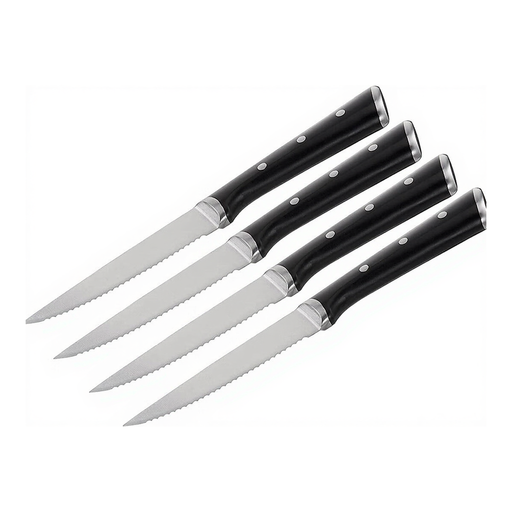
Why this product suits the profile: The set contains four steak knives with 11 cm blades, making it suitable for households that need several table knives for serving meat portions.
The clearly stated quantity and blade length make the intended use easy to understand. The stainless-steel blade, ABS handle and specified dishwasher-safe design make it easier to assess.
Four identical steak knives, stainless steel and a riveted handle according to the product information.
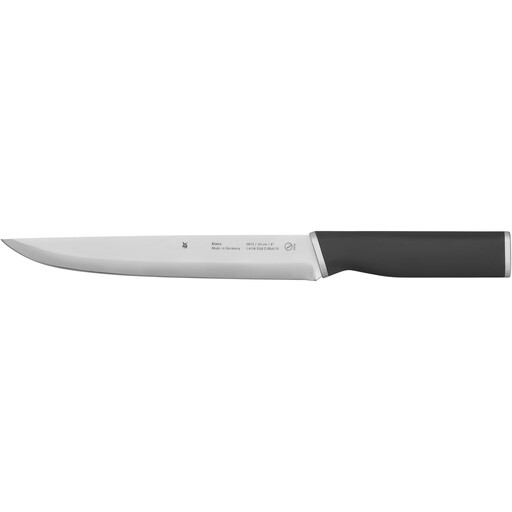
Why this product suits the profile: The 20 cm blade is designed for cutting roasted, cooked or raw meat and is well suited to regular kitchen use.
The product data specifies the blade length, specially hardened steel, corrosion resistance and hand washing as the care instruction.
Ergonomic handle, 20 cm blade and the described Performance Cut design.
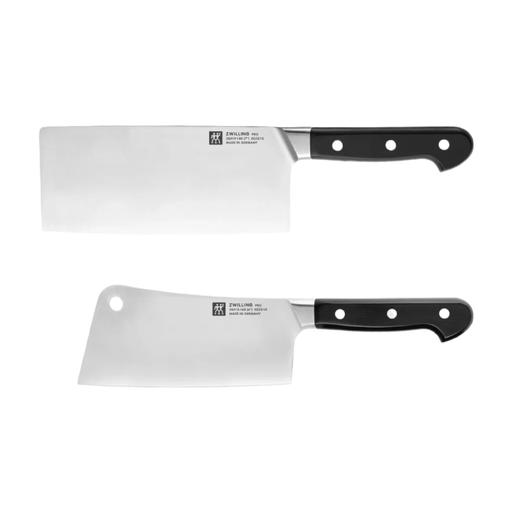
Why this product suits the profile: This kitchen knife set combines a cleaver with a Chinese chef’s knife for vegetables, fish, meat and selected chopping tasks.
The two knives have clearly defined roles. The specifications mention FRIODUR ice-hardened steel, SIGMAFORGE and hand washing.
The set includes a 16 cm cleaver and an 18 cm Chinese chef’s knife with an ergonomic three-rivet handle.
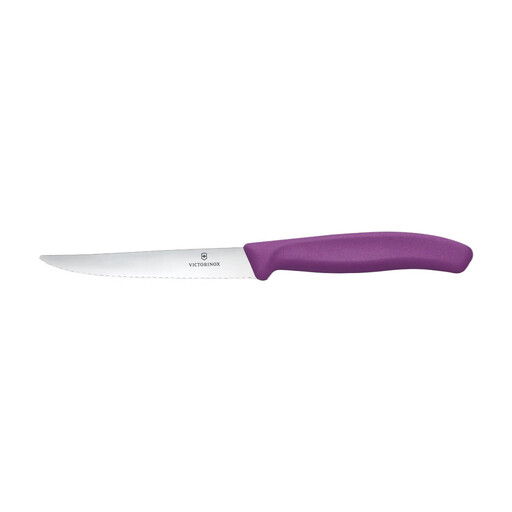
Why this product suits the profile: The 11 cm serrated blade is designed for steaks, pizza crusts and other firm foods.
The serrated edge is clearly specified and should not be confused with a smooth all-purpose blade. The product data lists stainless steel and dishwasher-safe construction.
Serrated stainless-steel edge, ergonomic polypropylene handle and a design intended for steak and pizza.
We have put together a complete, regularly updated list of products that fully meet these strict selection criteria and the safety regulations applicable in the EU.
For many households, a chef’s knife, a small paring or utility knife and a serrated bread knife are enough to start with. If you often prepare meat, add a meat knife or carving knife. A steak knife, pizza knife or cleaver can be useful depending on your personal cooking habits.
The lifespan of an edge depends on the steel, edge, cutting surface, frequency of use and care. A general time frame is therefore not reliable. Regular sharpening, dry storage and a suitable cutting board help maintain the knife’s performance for longer.
That depends on the individual model. According to the product information, some stainless-steel knives with plastic handles are dishwasher-safe. Forged knives, wooden handles and certain specialist steels should often be cleaned by hand. Always check the specific manufacturer’s instructions before buying and before cleaning the knife for the first time.